
AI Marketing Automation: The Ultimate Guide for 2026
Imagine having your marketing campaigns running perfectly optimized 24/7 while you sleep. This vision comes through AI marketing automation to reality. Companies that integrate artificial intelligence into their marketing processes increase their efficiency by an average of 80% while reducing their costs by up to 30%.
The digital marketing landscape is evolving rapidly, and AI marketing automation is at the center of this revolution. From personalized email campaigns to intelligent chatbots, artificial intelligence is transforming the way companies interact with their customers and achieve marketing goals.
Key takeaways
• AI marketing automation combines artificial intelligence with marketing automation for maximum efficiency and personalization
• Companies can save up to 80% of their time while achieving better results through intelligent automation
• Key application areas include email marketing, social media management, lead generation and customer service
• A structured implementation with clear goals and the right tool selection is crucial for success
• ROI increases of 300-500% are realistically achievable if implemented professionally
What is AI Marketing Automation?
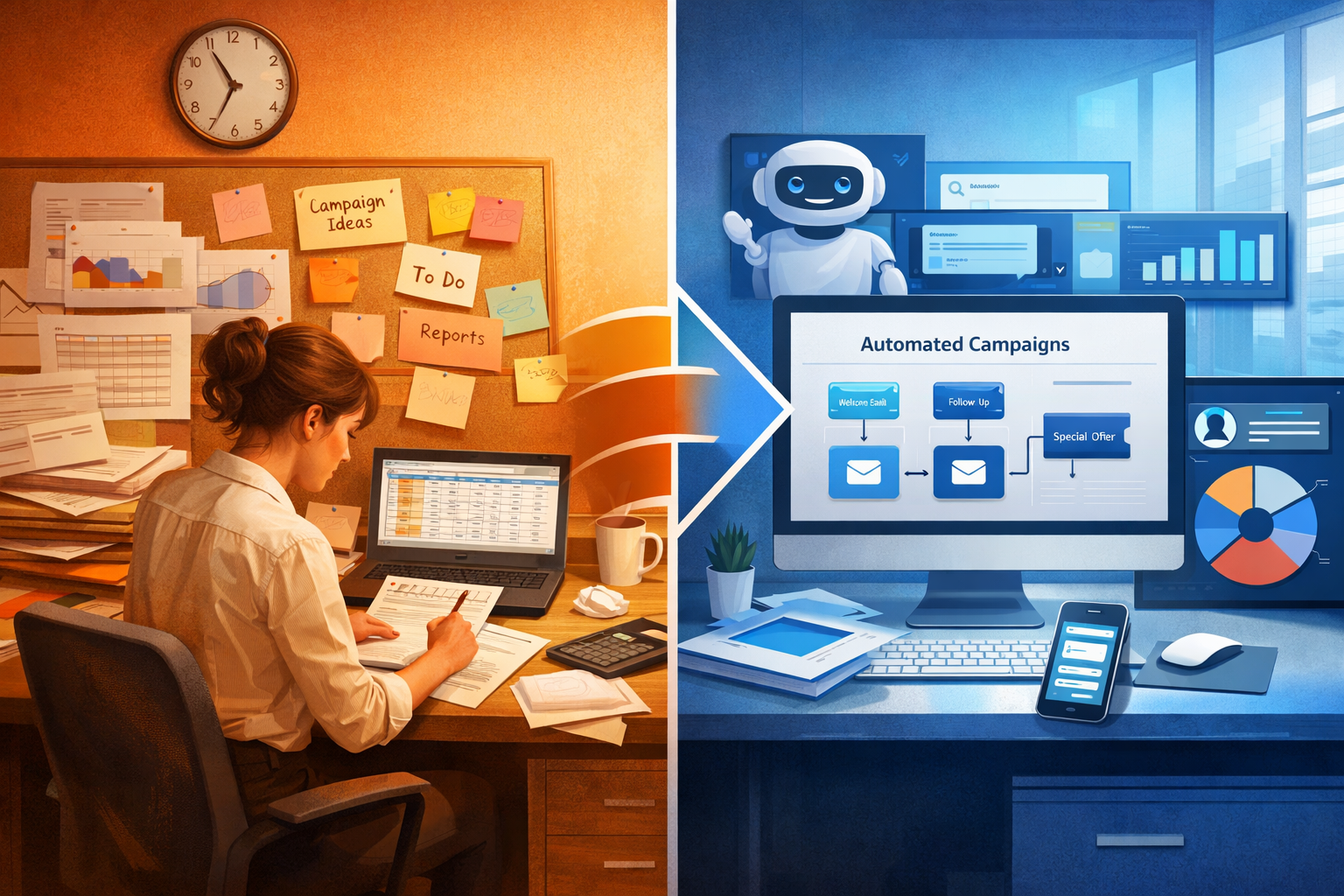
AI marketing automation refers to the combination of artificial intelligence and marketing automation technologies. This innovative approach allows companies to not only automate marketing processes, but also intelligently optimize them.
Understand the basics
Marketing automation alone follows predefined rules and workflows. AI marketing automation goes one step further:
- Machine learning analyzes customer data in real time
- Predictive Analytics predicts future customer behavior
- Natural Language Processing enables intelligent communication
- Computer vision automatically analyzes visual content
Difference from traditional marketing automation
| Traditional automation | AI marketing automation |
|---|---|
| Static rules | Dynamic adjustment |
| Limited personalization | Hyper-personalization |
| Manual optimization | Self-learning systems |
| Reactive approaches | Proactive predictions |
“AI marketing automation is like a personal marketing assistant that never sleeps and continually learns.”
 “AI marketing automation is like a personal marketing assistant that never sleeps and continually learns.”
Core components of AI-supported automation
Data collection and analysis: AI systems collect data from different touchpoints and analyze patterns that are difficult for humans to recognize.
Intelligent segmentation: Instead of static audiences, AI creates dynamic segments based on behavior, preferences and probabilities.
Automated decision making: Technology makes decisions in milliseconds about the best time, channel and content for each customer interaction.
The most important advantages of AI marketing automation
The implementation of AI marketing automation brings measurable benefits for companies of all sizes. This technology revolutionizes not only the efficiency but also the quality of customer relationships.
Real-time hyper-personalization
AI marketing automation allows personalization that goes far beyond adding names to emails:
- Dynamic content adjustment based on individual user behavior
- Product recommendations with 95% accuracy
- Optimal timing predictions for maximum engagement rates
- Consistency across channels with personalized messages
Dramatic efficiency gains
Companies report impressive improvements:
- 80% time savings in campaign management
- 300% higher conversion rates through intelligent lead qualification
- 50% reduction the customer acquisition costs
- 24/7 availability without additional personnel costs
Measurable ROI improvements
The financial benefits of AI marketing automation are impressive:
Cost reductions:
- Reduce manual tasks by up to 70%
- Optimization of the advertising budget through intelligent bid management
- Minimization of wastage through precise target group targeting
Increases in sales:
- Increase in customer lifetime value by an average of 25%
- Improve lead-to-customer conversion by up to 400%
- Cross-selling success increases by 35% through intelligent recommendations
Advanced analytics and insights
AI systems provide insights that traditional analytics tools cannot:
- Predictive customer insights: Predict customer churn with 90% accuracy
- Attribution Modeling: Complete customer journey analysis across all touchpoints
- Sentiment Analysis: Automatic assessment of customer satisfaction in real time
- Competitive intelligence: Market trends and competitive analysis
Success statistics: Companies with advanced AI marketing automation see an average of 451% higher qualified leads and 34% better sales close rates.
AI marketing automation tools and platforms
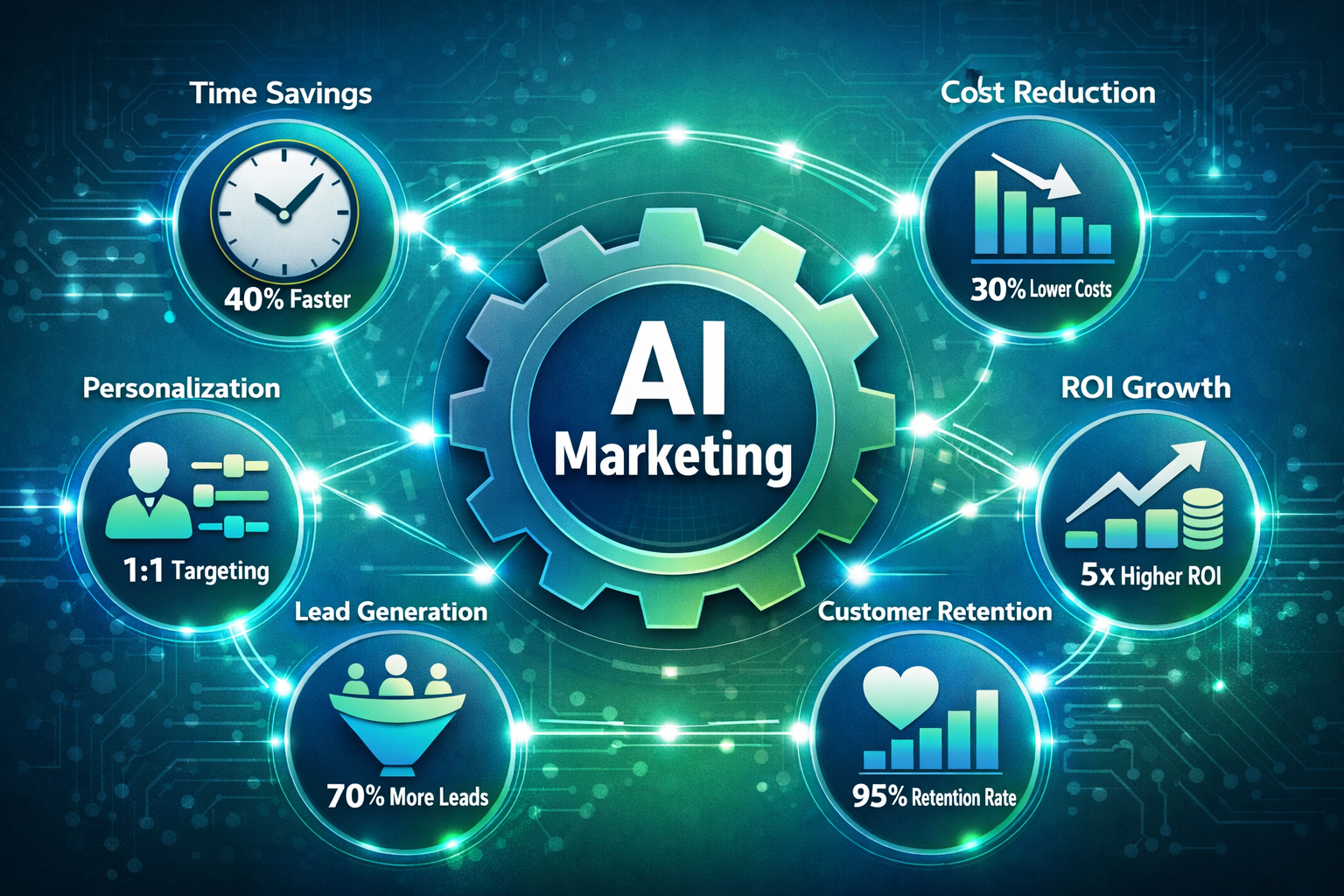
Choosing the right tools is crucial to your success AI marketing automation Strategy. The market offers different solutions for different requirements and budgets.
Leading enterprise solutions
Salesforce marketing Cloud Einstein
- Fully integrated AI capabilities
- Predictive Analytics and Journey Builder
- Ideal for large companies with complex requirements
Adobe Experience Platform
- Real-time Customer Data Platform
- AI-powered personalization (Adobe Sensei)
- Comprehensive omnichannel orchestration
- Perfect for data-driven marketing teams
HubSpot marketing Hub Enterprise
- User-friendly AI features
- Integrated CRM functionality
- Machine learning for lead scoring
- Ideal for medium-sized companies
Specialized AI marketing tools
| Tool category | Recommended solution | Main function | Price segment |
|---|---|---|---|
| Email marketing | Mailchimp (Intuit) | AI optimization | €10-300/month |
| Social media | Hootsuite Insights | Content optimization | €49-739/month |
| Chatbots | Drift Conversational AI | Lead qualification | €50-1,500/month |
| Predictive Analytics | 6sense | Account based marketing | Custom pricing |
Implementation criteria
When choosing AI marketing automation tools, the following factors should be taken into account:
Technical integration:
- API compatibility with existing systems
- Data import/export options
- Scalability of the solution
- GDPR compliance and data protection
Functional requirements:
- Desired AI features (machine learning, NLP, computer vision)
- Omnichannel capabilities
- Reporting and analytics depth
- Automation workflow complexity
Organizational factors:
- Available IT resources
- Team expertise and training needs
- Budget and ROI expectations
- Change management capacities
Emerging Technologies 2026
The AI marketing automation Landscape is evolving rapidly:
Voice AI integration: Voice-controlled marketing automation is becoming mainstream
Computer vision Marketing: Automatic image and video analysis for content optimization
Quantum Computing Applications: First applications for complex optimization problems
Augmented analytics: AI automatically explains marketing performance and provides recommendations for action
 Pro tip: Start with a tool that covers 80% of your current needs instead of waiting for the “perfect” all-in-one solution. Most successful implementations start focused and then expand gradually.
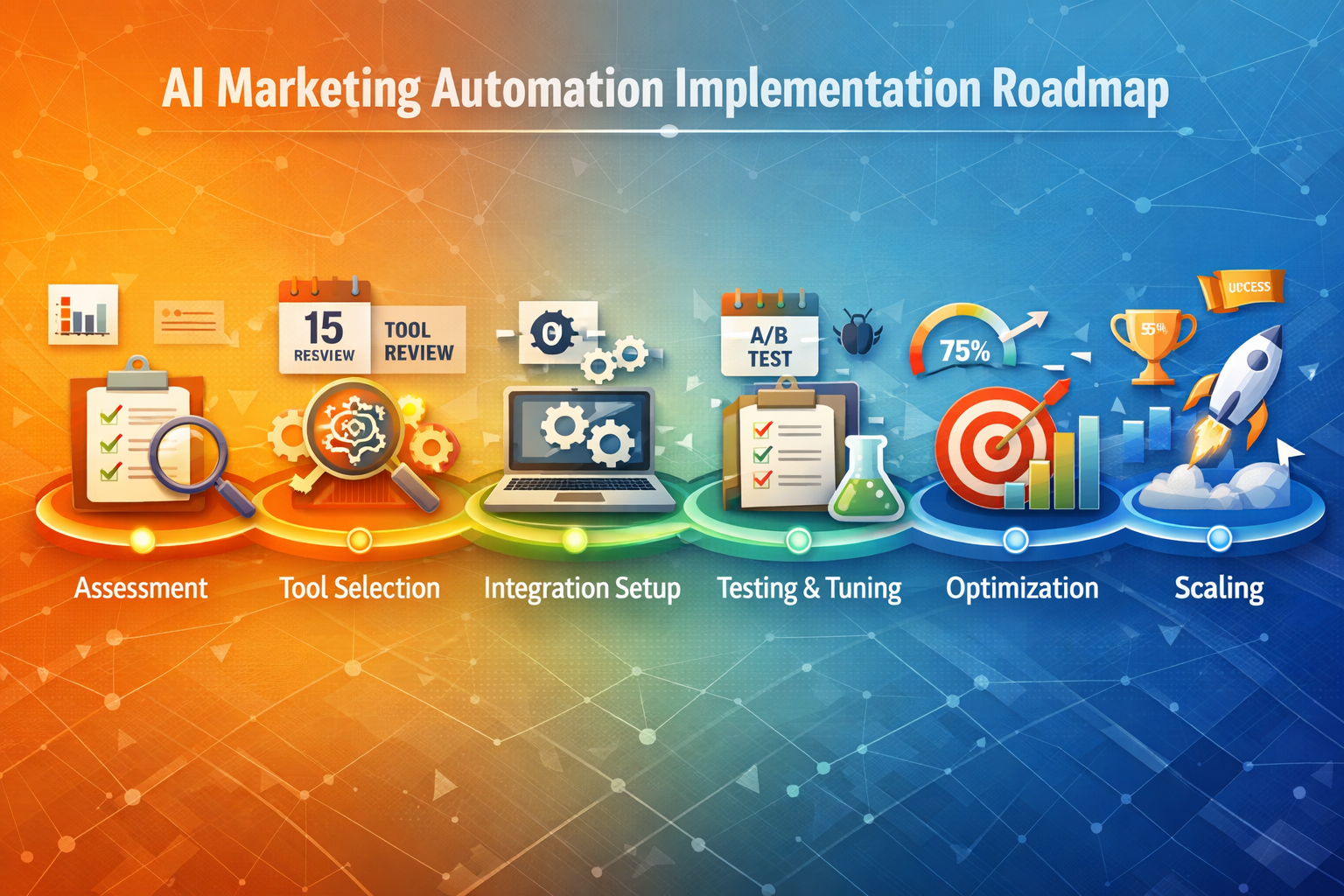
Strategic implementation of AI marketing automation
A successful one AI marketing automation Implementation requires a structured approach. Companies that approach strategically achieve 3x better results than those with ad hoc implementations.
Phase 1: Assessment and strategy development
Current state analysis
- Audit of existing marketing processes and tools
- Identification of automation potential
- Assessment of data quality and availability
- Assessment of team competencies
Define objectives and KPIs
- Specific, measurable goals for the AI marketing automation
- Establish baseline metrics (conversion rates, CAC, LTV)
- Set ROI expectations and timeframes
- Success metrics for different stakeholders
Phase 2: Tool selection and technical preparation
Vendor Evaluation Framework:
| Evaluation criterion | Weighting | Rating scale |
|---|---|---|
| Functional cover | 30% | 1-10 points |
| Integration Capabilities | 25% | 1-10 points |
| Scalability | 20% | 1-10 points |
| Support & Training | 15% | 1-10 points |
| Price-performance | 10% | 1-10 points |
Prepare data infrastructure:
- Customer Data Platform (CDP) setup
- Improve data quality and hygiene
- Ensure GDPR-compliant data collection
- Plan API integrations
Phase 3: Pilot implementation
Start small, scale fast approach:
- Select pilot use case: Email marketing or lead scoring as a start
- Limited Scope Testing: 20% of the target group for initial testing
- A/B testing framework: Comparison of AI vs. traditional methods
- Rapid iteration: Weekly optimization cycles
Success metrics for pilot phase:
- Engagement improvement: +25% open rates, +40% click rates
- Efficiency gains: -50% manual effort
- Quality increase: +30% lead quality
Phase 4: Scaling and optimization
Gradual expansion:
- Expand successful use cases to additional channels
- Integrate additional AI features (predictive analytics, chatbots)
- Develop cross-functional workflows (Marketing + Sales + Service)
- Implement advanced personalization
Change management strategies:
- Team training: Continuous training in AI marketing
- Process documentation: Best Practices and Standard Operating Procedures
- Performance monitoring: Dashboard for real-time performance tracking
- Stakeholder communication: Regular updates about successes and learnings
Phase 5: Continuous optimization
AI model maintenance:
- Regular model updates and re-training
- Performance monitoring and drift detection
- A/B testing new algorithms
- Feedback loops between marketing and data science
 Secret of success: The best AI marketing automation Implementations do not treat AI as a “set-and-forget” technology, but rather as continuously learning and improving systems.
Governance and compliance:
- Develop ethical AI guidelines
- Bias detection and mitigation
- Transparency in automated decisions
- Regular compliance audits
Best practices and success factors
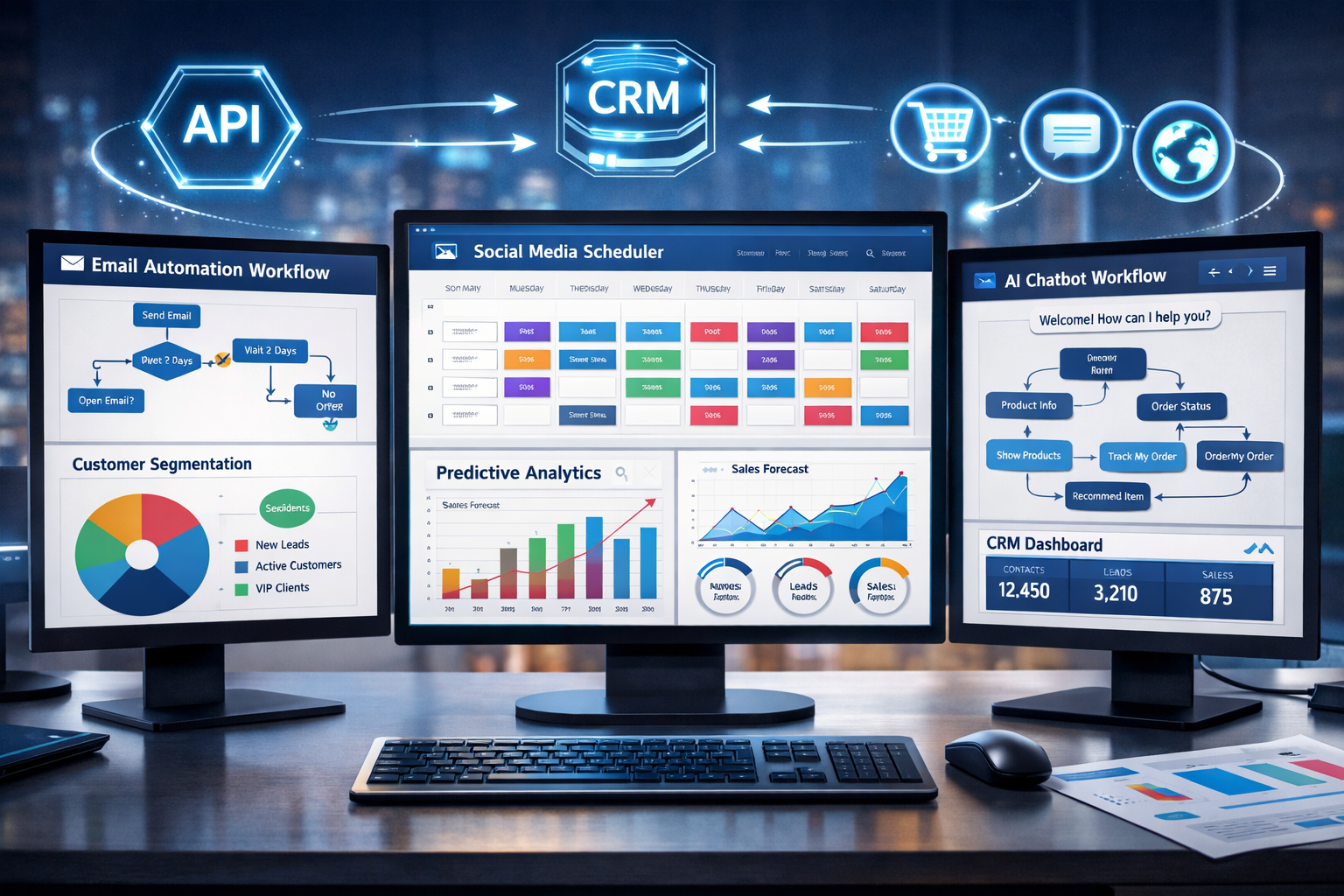
The most successful AI marketing automation is based on best practices developed and refined by leading companies. These success factors differentiate top performers from average implementations.
Data quality as a foundation
Data first mindset
- Clean Data Strategy: 80% of AI success depends on clean, consistent data
- Unified Customer Profiles: 360-degree view of every customer across all touchpoints
- Real-time data synchronization: Current data for precise AI decisions
- Privacy by design: GDPR-compliant data collection and processing
Data quality checklist: Completeness: At least 80% of the core fields filled out Consistency: Uniform formats and conventions Currentness: Data not older than 30 days Accuracy: Less than 5% error rate
Intelligent automation workflows
Progressive AUTOMATION Strategy:
- Level 1 – Basic AUTOMATION: Simple trigger-based workflows
- Level 2 – Smart AUTOMATION: Behavior-based decision trees
- Level 3 – AI automation: Machine learning-assisted optimization
- Level 4 – Autonomous marketing: Completely self-learning systems
Workflow optimization principles:
- Customer journey mapping: Every touchpoint strategically planned
- Multi-channel orchestration: Consistent experience across all channels
- Dynamic Content Personalization: Content adapts automatically
- Predictive Next Best Action: AI suggests optimal next steps
Performance Measurement Framework
Define AI-specific KPIs:
| category | Primary KPIs | Secondary metrics |
|---|---|---|
| Efficiency | Time-to-market reduction | Automation rate |
| effectiveness | Conversion Rate Lift | Engagement Quality Score |
| personalization | Relevance score | Content Performance Index |
| Predictive Accuracy | Model Precision/Recall | Prediction Confidence |
Advanced analytics setup:
- Attribution Modeling: Multi-touch attribution with AI algorithms
- Incrementality testing: Real lift through AI vs. baseline
- Cohort Analysis: Long-term impact of AI personalization
- Competitive benchmarking: Performance vs. industry standards
Team development and skills
Hybrid Skill Requirements:
- marketing Technologists: Combination of marketing know-how and technical understanding
- Data Driven Marketers: Ability to interpret AI insights
- Customer Experience Designers: Orchestrating AI-powered customer journeys
- Ethics Champions: Ensure responsible AI use
Continuous learning culture:
- Monthly AI marketing workshops
- Cross-functional projects between marketing and data science
- External training and certifications
- Innovation time for experiments with new AI tools
Agile Optimization Methodology
Rapid Experimentation Framework:
- Hypothesis-Driven Testing: Clear assumptions before every test
- MVP approach: Launch minimal viable AI features quickly
- Fast failure learning: Fail fast, learn fast, iterate fast
- Scale What Works: Systematically expand successful experiments
 Benchmark: Top performer in the AI marketing automation carry out an average of 50+ experiments per quarter and implement successful learnings within 2 weeks.
Stakeholder alignment:
- Executive sponsorship: C-Level Champion for AI initiatives
- Cross-departmental buy-in: Sales, service and IT as partners
- Customer centricity: Evaluate all AI decisions from the customer’s perspective
- Ethical Guidelines: Clear guidelines for responsible AI use
Future trends and outlook for 2026
The AI marketing automation is facing revolutionary developments. Leading companies are already preparing for the next generation of intelligent marketing technologies that will shape the industry in the coming years.
Emerging Technologies
Generative AI in marketing
- Content creation at scale: AI creates personalized text, images and videos for millions of customers
- Dynamic Creative Optimization: Automatic adjustment of advertising materials based on audience feedback
- Conversational marketing 2.0: Hyper-realistic chatbots with emotional intelligence
- Synthetic Media: AI-generated brand ambassadors and personalized video messages
Quantum Enhanced Marketing
- Complex optimization: Quantum Computing solves previously unsolvable marketing mix optimizations
- Real-time personalization: Instant calculation of optimal customer experiences
- Advanced Predictive Models: Quantum algorithms for more precise predictions
- Cryptographic Security: Quantum-secure customer data encryption
Omnichannel evolution
Unified Experience Orchestration:
- Cross reality marketing: Seamless integration of AR, VR and physical touchpoints
- IoT marketing integration: Smart devices as marketing channels
- Voice First Strategies: Voice-controlled customer journeys
- Biometric Personalization: Emotion recognition for ultra-personalized approach
Privacy-first innovation:
- Zero-Party Data Strategies: Customers voluntarily share preferences for better experiences
- Federated Learning: AI learns without central data collection
- Differential privacy: Personalization with complete data protection
- Consent Management 3.0: Dynamic, granular consent management
Market development and adoption
Investment trends 2026:
- €50+ billion global investments in marketing AI
- 85% of the Fortune 500 use advanced AI marketing automation
- 300% growth at AI marketing startups
- Democratization: AI tools are becoming accessible to small businesses
Skill transformation:
- 50% of marketing jobs require AI skills
- New roles emerge: AI marketing Strategists, Algorithm Auditors, Experience Orchestrators
- Upskilling programs: Massive training initiatives in the industry
- Human-AI Collaboration: Optimal division of labor between humans and machines
Predictions for the next 5 years
2026-2030 development forecasts:
| Year | Key innovation | Adoption rate | Impact |
|---|---|---|---|
| 2026 | Generative AI mainstream | 60% Enterprise | Revolutionary content creation |
| 2027 | Quantum marketing Computing | 15% early adopters | 10x optimization speed |
| 2028 | Autonomous marketing Agents | 40% Enterprise | Complete campaign autonomy |
| 2029 | Neural Interface marketing | 5% Pioneers | Mind-based personalization |
| 2030 | AGI marketing Integration | 25% Enterprise | Human-like marketing intelligence |
Regulatory evolution:
- EU AI Act Compliance: Strict regulation for marketing AI
- Global Privacy Standards: Unified data protection frameworks
- Algorithmic Transparency: Commitment to the explainability of AI decisions
- Ethical AI Certification: Industry standards for responsible AI use
Preparing for the future:
- Flexible technology architecture: Modular systems for rapid integration of new AI features
- Continuous learning mindset: Establish organizational culture of permanent learning
- Ethical AI Framework: Early development of responsible AI policies
- Partnership Ecosystem: Strategic alliances with AI technology providers
Conclusion
AI marketing automation has evolved from a futuristic concept to a business-critical necessity. Companies that strategically implement this technology achieve measurable competitive advantages: 80% increase in efficiency, 300-500% ROI improvement and significantly better customer experiences.
The success lies not in the technology itself, but in the strategic implementation. The most important success factors are:
Data quality as a foundation – Clean, consistent data is the basis of all AI successes Gradual scaling – Start with pilot projects, then systematic expansion Continuous learning – AI systems and teams must be constantly optimized Customer centricity – All automation must serve the customer experience Ethical responsibility – Transparency and data protection are non-negotiable
Your next steps
Can be implemented immediately (next 30 days):
- Conduct assessment: Evaluate your current marketing processes for automation potential
- Identify quick wins: Start with email personalization or chatbot implementation
- Evaluate team skills: Determine training needs for AI marketing skills
- Plan budget: Calculate ROI expectations for different AI tools
Medium-term development (3-6 months):
- Start pilot project with selected AI tool
- Prepare data infrastructure for expanded AI use
- Establish cross-functional AI marketing teams
- Measure and optimize initial success metrics
Long-term transformation (6-24 months):
- Complete AI marketing automation Implement strategy
- Introduce advanced features such as predictive analytics and autonomous campaigns
- Realize omnichannel AI orchestration
- Creating a continuous innovation culture for future AI developments
The future of marketing is intelligent, automated and hyper-personalized. AI marketing automation is no longer a question of “if”, but rather of “how quickly” and “how strategically” you approach this transformation.
Start today – because while you are thinking, your competitors are already automating their successes.
KI-Offenlegung: HINWEIS: Bilder wurden mit KI erstellt oder bearbeitet and sind keine realen Abbildungen. Teile der Texte wurden mit Hilfe von KI erstellt and redaktionell von einem Mensch bearbeitet.