
Website SEO Audit: The Ultimate Guide for 2026 


Did you know that 75% of users never visit the second page of Google search results? In the digital landscape of 2026, a professional SEO audit for websites no longer just a nice-to-have – it is vital for online success. As search engine algorithms continue to evolve and introduce new ranking factors, website operators must ensure that their online presence is optimally optimized for search engines and users alike.
Key takeaways

- An SEO audit for websites uncovers technical, content-related and structural weaknesses, which negatively affect the ranking
- Regular audits every 3-6 months are essential to keep up with changing search engine algorithms
- Technical SEO factors such as Core Web Vitals and mobile-first indexing have top priority in 2026
- Content quality and user intent are the focus of modern SEO strategies
- Professional SEO tools and systematic approach are essential for meaningful audit results
What is an SEO audit for websites?

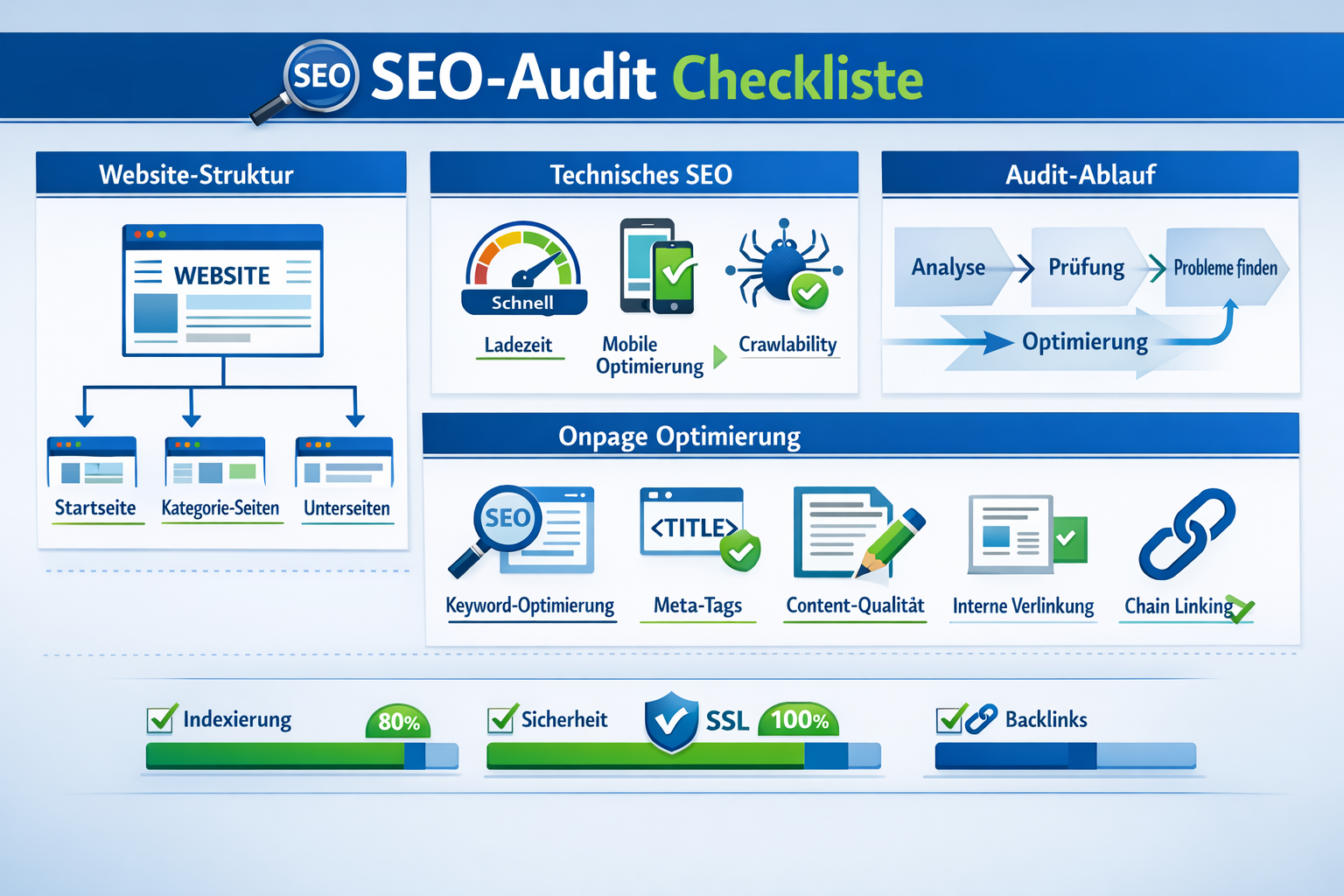
A SEO audit for websites is a comprehensive analysis of all factors that influence a website's ranking in search engines. It is a systematic process that examines technical aspects, content quality, usability and off-page factors.
The three pillars of a successful SEO audit
1. Technical SEO
- Crawlability and indexability
- Loading Speed and Core Web Vitals
- Mobile optimization
- Security (HTTPS)
- Structured data
2. On-Page SEO
- Keyword optimization
- Content quality and relevance
- Meta tags and heading structure
- Internal linking
- Ease of use
3. Off-Page SEO
- Backlink profile
- Domain Authority
- Social Signals
- Local SEO (if relevant)
“A thorough website SEO audit is like a health check for your online presence – it catches problems before they cause serious ranking losses.”
Why is an SEO audit for websites more important than ever in 2026?
The SEO landscape has changed dramatically in recent years. With the introduction of Google's Page Experience Update, the increased focus on E-A-T (Expertise, Authoritativeness, Trustworthiness) and the increasing importance of artificial intelligence In search engine algorithms, a regular SEO audit has become indispensable for websites.
Current challenges in 2026
| Challenge | impact | Solution through SEO Audit |
|---|---|---|
| Core Web Vitals | Direct ranking factor | Performance analysis and optimization recommendations |
| Mobile-first indexing | Primary Ranking Index | Mobile usability review |
| AI generated content | Quality standards are rising | Content quality rating |
| Voice search | New search intentions | Keyword and content strategy adjustment |
| Privacy updates | Tracking Restrictions | Alternative analysis methods |
Measurable benefits of a regular SEO audit
- Up to 40% increase of organic traffic within 6 months
- An average of 25% improvement the conversion rate
- Reducing bounce rate by up to 30%
- Increase visibility for relevant keywords by 50-80%
The technical basics: SEO audit for websites step by step

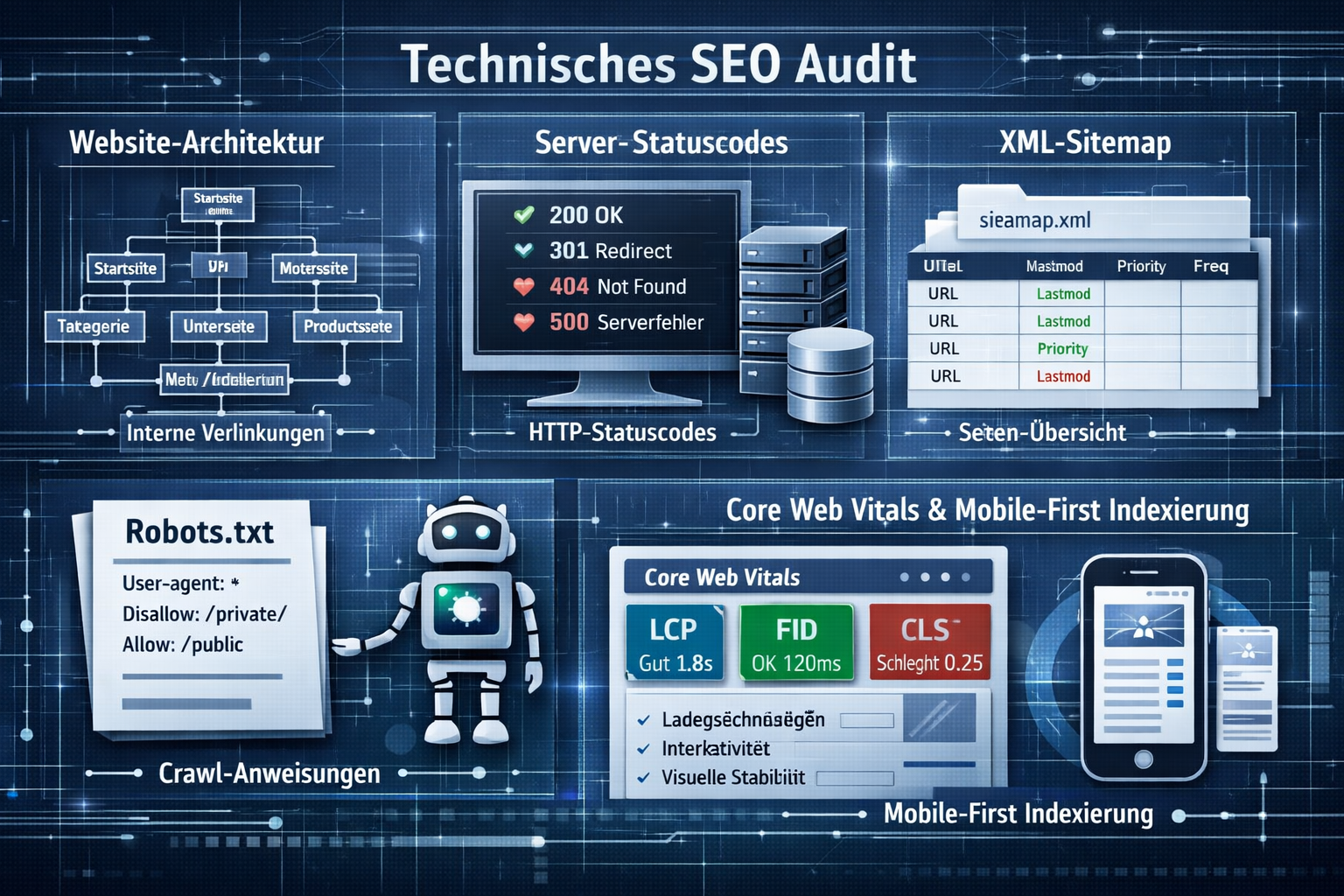
A systematic one SEO audit for websites always starts with technical analysis. This forms the foundation for all further optimization measures.
Phase 1: Check crawling and indexing
1. Robots.txt analysis
User-agent: * Disallow: /admin/ Disallow: /private/ Allow: / Sitemap: https://ihre-domain.de/sitemap.xml 2. XML sitemap verification
- Completeness of all important pages
- Correct URL structure
- Currentness of the last modified data
- Submission to Google Search Console
3. Check indexing status
- Site: query in Google
- Google Search Console Coverage Report
- Identification of indexing problems
Phase 2: Core Web Vitals and Performance
The Core Web Vitals have been a direct ranking factor since 2021 and have become even more important in 2026:
Largest Contentful Paint (LCP)
- Target value: < 2.5 seconds
- Optimization: Image compression, server response time, lazy loading
First Input Delay (FID)
- Target value: < 100 milliseconds
- Optimization: JavaScript optimization, code splitting
Cumulative Layout Shift (CLS)
- Target value: < 0.1
- Optimization: Fixed dimensions for media, font loading optimization
Phase 3: Mobile-first optimization
With Mobile-first indexing As a standard, websites must be primarily optimized for mobile devices:
- Responsive design with flexible layouts
- Touch-friendly navigation and buttons
- Optimized loading times for mobile connections
- Readable font sizes without zooming
- Avoiding Flash and other non-mobile technologies
Content and on-page optimization in the SEO audit for websites
The content area is the heart of every successful SEO strategy. A thorough one SEO audit for websites must evaluate the quality, relevance and optimization of all content.
Keyword analysis and content strategy
1. Keyword research and mapping
- Primary keywords: Main search terms with high search volume
- Long tail keywords: Specific phrases with lower competition
- Understand search intent: Informational, navigational, transactional
- Avoid keyword cannibalization: One keyword per page
2. Content quality assessment
| Quality Score | Evaluation criteria | Optimization measures |
|---|---|---|
| uniqueness | Duplicate Content Check | Create unique content |
| relevance | Keyword topic matching | Develop topic clusters |
| depth | Word count and details | Comprehensive content |
| Actuality | Publish and update data | Regular updates |
| Ease of use | Readability and structure | Optimize formatting |
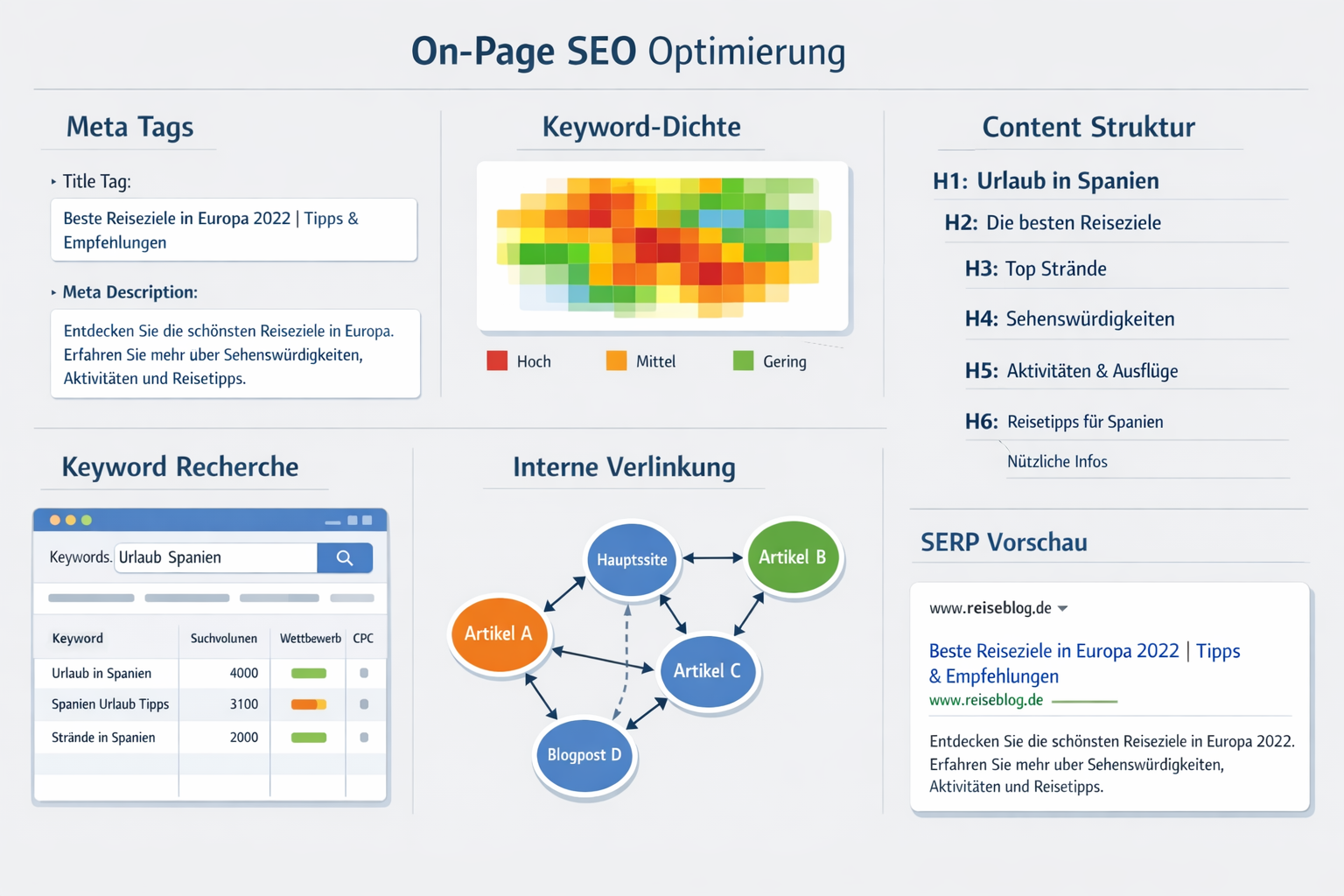
Meta tags and structured data
Title tag optimization 
SEO audit for websites: Kompletter Leitfaden 2026 | IhrUnternehmen Startseite - Willkommen Meta descriptions best practices
- length: 150-160 characters optimal
- Call to action integrate
- Unique selling proposition point out
- keyword install of course
Implement structured data
{ '@context': 'https://schema.org', '@type': 'Article', 'headline': 'SEO Audit for Websites', 'author': { '@type': 'Organization', 'name': 'Your Company' }, 'datePublished': '2026-01-15' } Internal linking strategy
A well thought out one Internal linking is an often overlooked aspect in the SEO audit for websites:
Strategic principles:
- Hub Pages for important subject areas
- Contextual links with relevant anchor texts
- Hierarchical structure with clear navigation
- Minimize link depth: Important pages accessible in 3 clicks
Anchor text optimization:
- “Learn more about SEO audit for websites”
- “Click here” or “Read more”
 “Learn more about SEO audit for websites”
 “Click here” or “Read more”
Technical SEO tools and metrics for the perfect audit
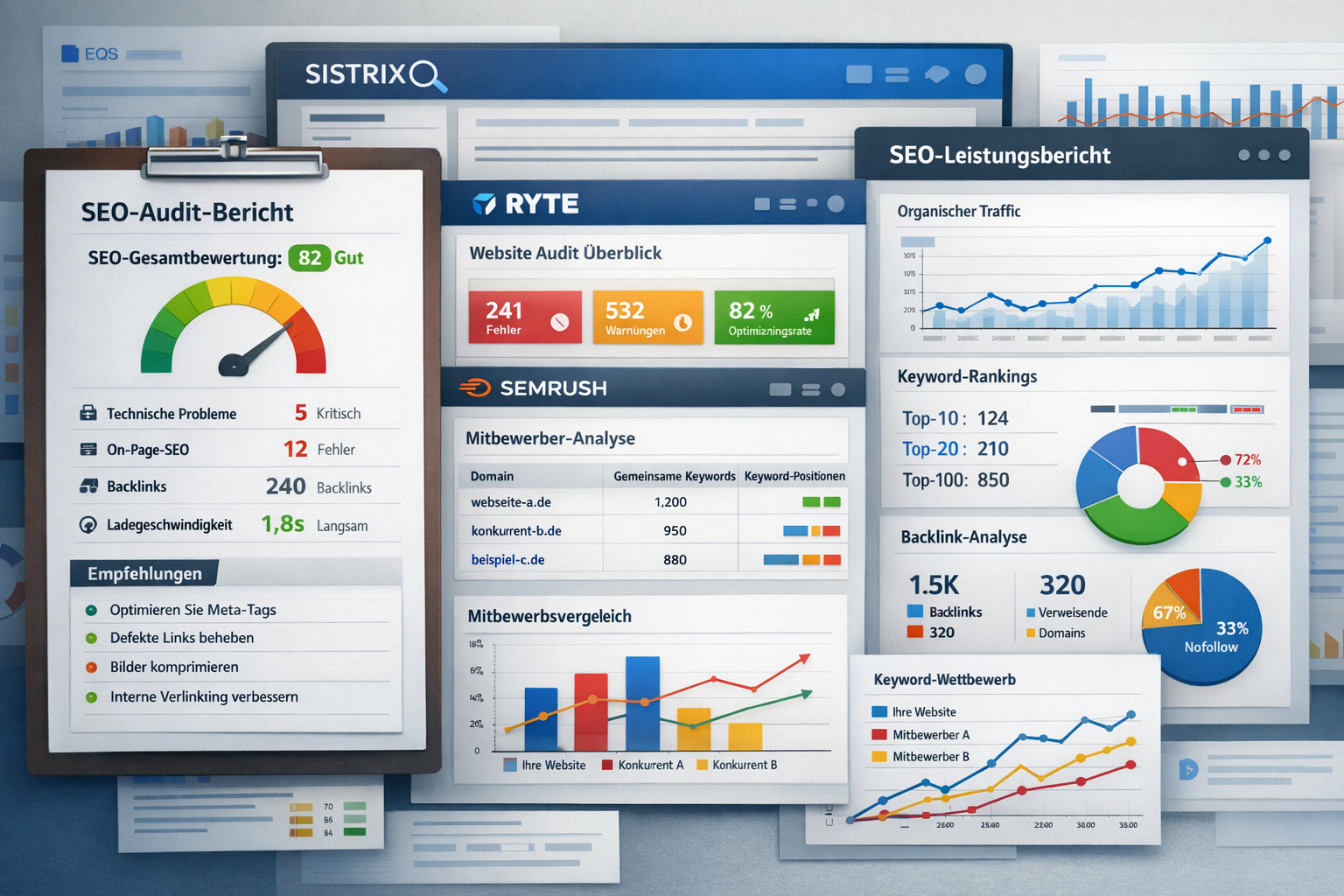
A professional SEO audit for websites requires the use of specialized tools and the interpretation of relevant metrics.
Essential SEO tools for 2026
Free tools
- Google Search Console: Indexing, performance, crawling errors
- Google PageSpeed Insights: Core Web Vitals and Performance
- Google Mobile Friendly Test: Mobile optimization
- Screaming Frog SEO Spider (Free Version): Technical analysis
Premium tools
- Ahrefs: Backlink analysis, keyword research, content gaps
- SEMrush: Comprehensive SEO suite, competitor analysis
- Sistrix: German SEO toolbox, visibility index
- Ryte: Technical SEO, content optimization
Core Web Vitals Deep Dive
The Core Web Vitals have been a direct ranking factor since 2021 and will have even more weight in 2026:
1. Largest Contentful Paint (LCP)
Excellent: < 2.5s Needs Improvement: 2.5s - 4.0s Poor: > 4.0s Optimization strategies:
- Server Response Time under 200ms
- Resource Hints (preload, prefetch)
- Image optimization (WebP, AVIF)
- Critical CSS load inline
2. First Input Delay (FID)
Excellent: < 100ms Needs Improvement: 100ms - 300ms Poor: > 300ms Improvement measures:
- JavaScript bundle optimize
- Code splitting implement
- Web Workers for heavy tasks
- Third party scripts minimize
3. Cumulative Layout Shift (CLS)
Excellent: < 0.1 Needs Improvement: 0.1 - 0.25 Poor: > 0.25 Ensure layout stability:
- Dimensions define for all media
- Font display: swap use
- Dynamic content reserve
- Transform animations instead of layout changes
Optimize crawling and indexing
Robots.txt Best Practices
User-agent: * Disallow: /admin/ Disallow: /wp-admin/ Disallow: /search? Allow: /wp-admin/admin-ajax.php # Important sitemaps Sitemap: https://ihre-domain.de/sitemap.xml Sitemap: https://ihre-domain.de/news-sitemap.xml XML sitemap optimization
- Hierarchical structure with priorities
- Last updated specify correctly
- Indexable URLs only include
- Maximum size: 50MB or 50,000 URLs
Status code management
- 200: Successful pages
- 301: Permanent redirects
- 404: Pages not found (custom 404-Page)
- 410: Content deliberately removed
- 500: Avoid server errors
Reporting and monitoring: Sustainable success through regular SEO audits
A one-off SEO audit for websites is not enough – continuous monitoring and regular reviews are essential for long-term success.
SEO KPIs and success measurement
Primary metrics
- Organic traffic: Monthly development
- Keyword rankings: Position for target keywords
- Click-through rate (CTR): SERP performance
- Conversion rate: Business impact
- Core Web Vitals: Technical performance
Secondary metrics
- Visibility index: domain authority
- Backlink profile: Quality and quantity
- Crawl budget: Indexing efficiency
- Dwell Time: User engagement
- Pages per session: Content quality
Create a monitoring dashboard
Weekly monitoring:
- Core Web Vitals Trends
- Crawling errors in Search Console
- New backlinks and lost links
- Ranking changes for top keywords
Monthly analysis:
- Traffic development by channel
- Content performance review
- Technical SEO health check
- Competitor analysis
Quarterly deep audits:
- More complete SEO audit for websites
- Content strategy review
- Technical SEO review
- Backlink profile analysis
Automation and alerts
Google Search Console Alerts
- Indexing problems
- Manual actions
- Security issues
- Core Web Vitals Deteriorations
Tool-based monitoring:
// Example: Automated Rank Tracking const rankingAlert = { keywords: ['SEO Audit for Websites', 'Website SEO Check'], threshold: -5, // Alert when 5+ positions are lost frequency: 'daily', notification: 'email' }; Reporting best practices
Executive summary for stakeholders:
- Traffic development in numbers and percent
- ROI calculation based on conversions
- Most important achievements and challenges
- Next Steps with priorities
Technical reporting for SEO teams:
- Detailed metrics with trends
- Technical issues with suggested solutions
- Content gaps and opportunities
- Competitive intelligence Insights
“A successful SEO audit for websites is only as good as the resulting measures and their consistent implementation.”
Conclusion: Your path to a successful SEO audit for websites
A professional SEO audit for websites is essential for digital success in 2026. The complexity of modern search engine algorithms, the importance of core web vitals and the mobile-first approach require a systematic and thorough approach.
Your next steps:
Can be implemented immediately:
- Google Search Console Set up and check crawling errors
- Core Web Vitals Test with PageSpeed Insights
- Mobile friendly test carry out
- Basic SEO tools install and configure
This week:
- Complete technical audit perform with Screaming Frog
- Content audit start: Identify duplicate content and keyword cannibalization
- Competitor analysis start
- Monitoring dashboard furnish
This month:
- Comprehensive SEO audit for websites implement
- Prioritized actions implement based on audit results
- Content strategy revise
- Regular monitoring establish
Investing in a thorough SEO audit for websites pays off in improved rankings, increased organic traffic and ultimately more conversions. Start optimizing your website today and gain a competitive advantage in the digital landscape of 2026.
Remember: SEO is a marathon, not a sprint. Continuous improvement and regular audits are the key to sustainable success in search engines.
KI-Offenlegung: HINWEIS: Bilder wurden With KI erstellt oder bearbeitet und sind keine realen Abbildungen. Teile der Texte wurden With Hilfe von KI erstellt und redaktionell von einem Mensch bearbeitet.