
Authenticity vs. AI: How companies can automate social posts without losing trust in 2026
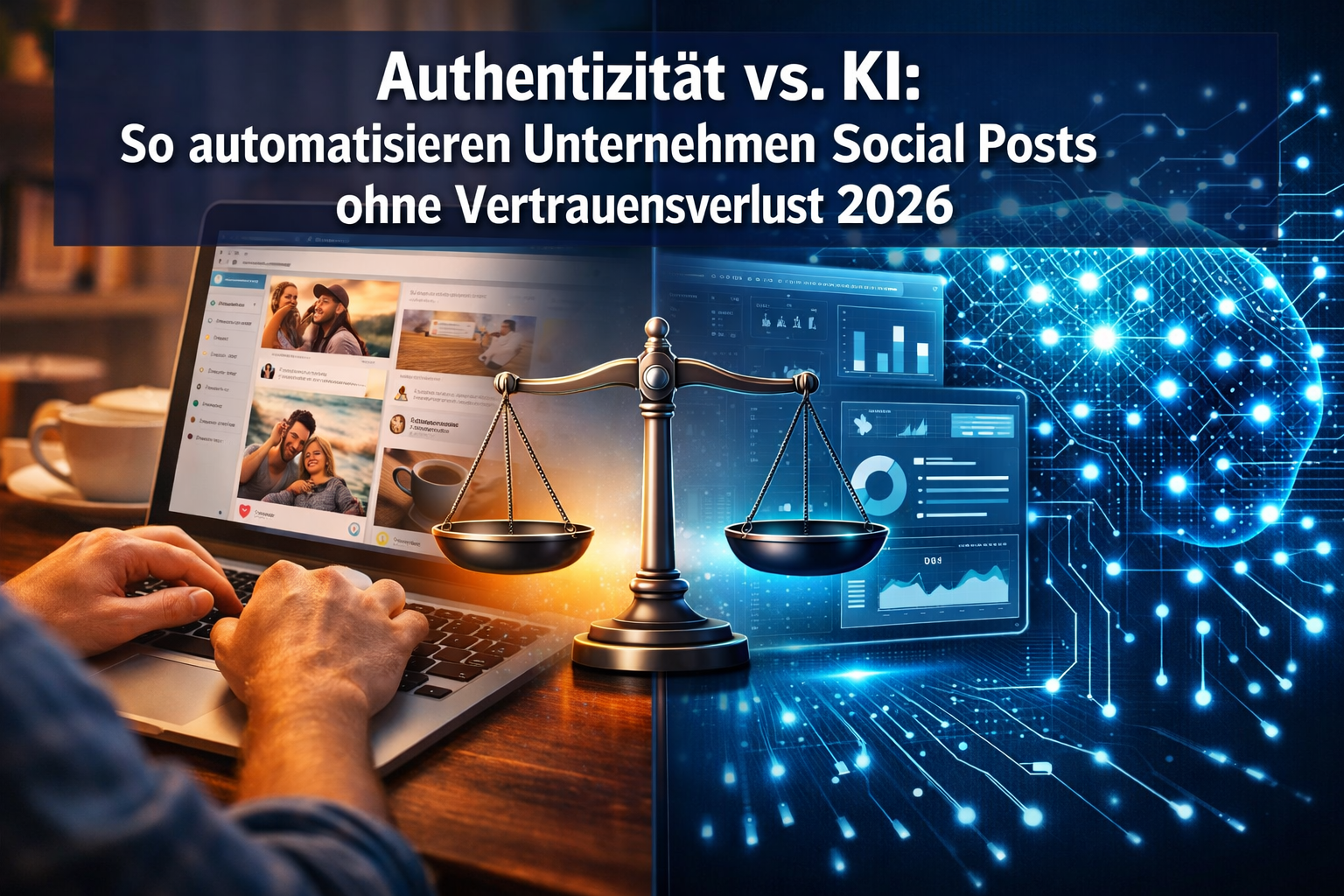
Imagine this: your social media feed is full of perfectly polished posts that all somehow look the same. Smooth surfaces, flawless images, perfect wording - and yet you just keep scrolling. Why? Because something is missing: the human touch.
In 2026, companies face an exciting challenge: How to harness the efficiency of AI-powered automation without losing the authenticity that truly attracts customers? The good news: Authenticity vs. AI: How companies can automate social posts without losing trust in 2026 is no longer a contradiction - it is a strategic balance that successful brands are already mastering.
While AI is now the backbone of campaign execution on major platforms like Google, Meta and Amazon[1], authentic, human-looking content has become the key competitive advantage[1]. The art lies in intelligently connecting both worlds.
Key takeaways
✅ Authenticity beats perfection: Unpolished, authentic content generates significantly more engagement than perfectly produced brand advertising[4]
✅ Hybrid model wins: The most successful companies of 2026 combine AI automation with human creativity and strategic thinking[1]
✅ Transparency is mandatory: Platforms introduce labeling requirements for AI content – open communication about automation strengthens trust[4]
✅ Creator content outperforms branded content: Content from real people delivers better engagement rates and conversion than traditional brand advertising[1]
✅ Human-in-the-loop is essential: Human quality control protects against AI errors and maintains brand authenticity[3]
Why authenticity is becoming a decisive competitive advantage in the age of AI

The social media landscape of 2026 is characterized by a paradoxical phenomenon: the more AI-generated content floods the feeds, the more valuable it becomes real, human content. Consumers have developed a keen sense of when they are presented with over-polished brand messages - and simply keep scrolling[1].
The loss of trust caused by AI overload
The numbers speak for themselves: Authentic, slightly “imperfect” content with a personal character generates significantly more interactions in the US market than perfectly produced videos[4]. Instagram itself prioritizes original content and reduces algorithmic promotion of heavily filtered or artificial-looking content[4].
Why is this happening? People crave real connections. In a world full of automated perfection, small imperfections, personal stories and spontaneous moments act as a lifeline of authenticity.
Creator content as the gold standard
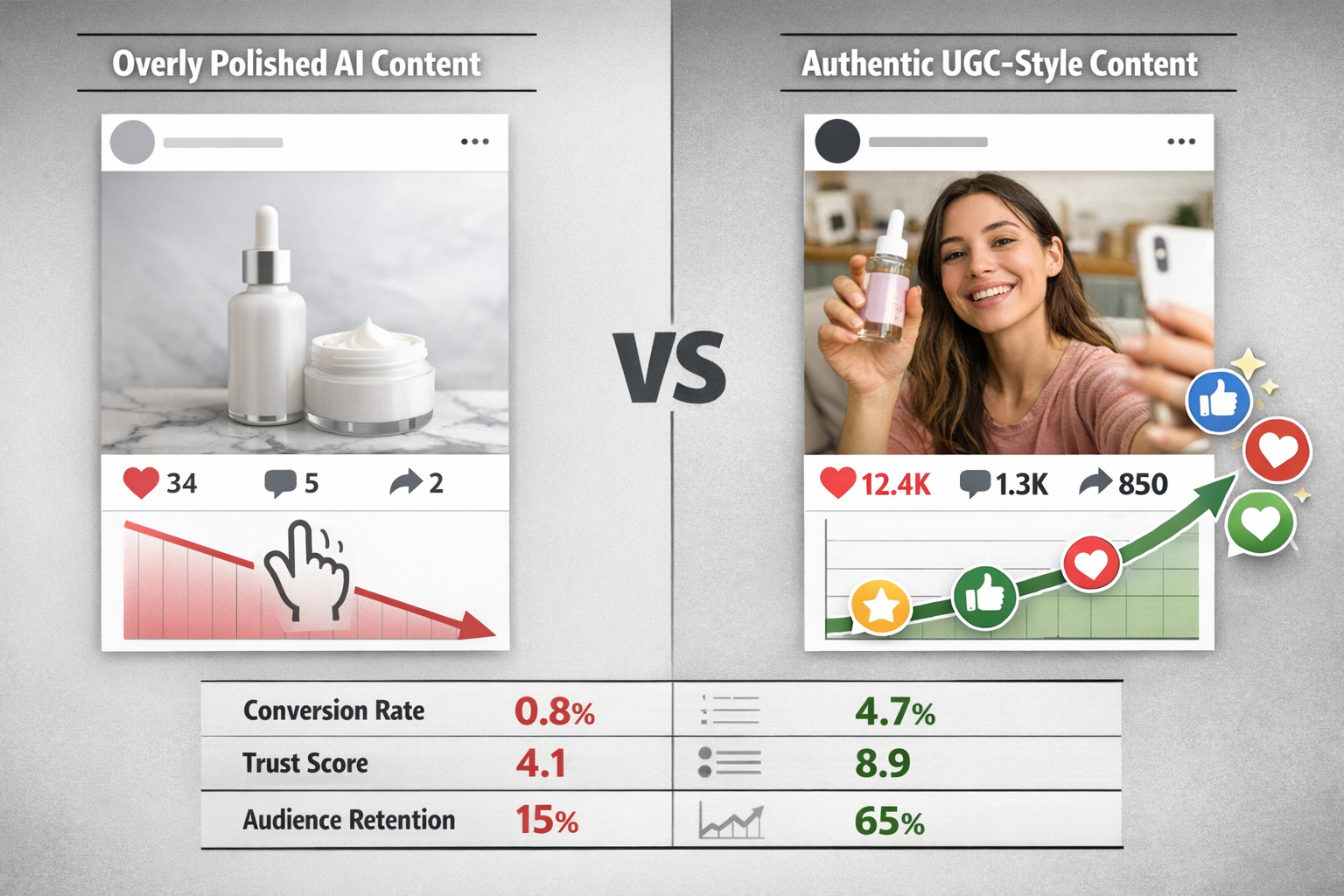
Content from creators – real people with their own voices and perspectives – is proven to deliver better engagement rates, conversions and creative longevity than traditional, glossy brand advertising[1]. Audiences trust real people more than perfect brand messages[1].
“In 2026, authenticity is not just a nice-to-have – it is the primary competitive differentiator in an AI-saturated market.”[1]
For companies, this means a fundamental change in strategy: Instead of investing in expensive studio productions, successful brands build diverse ones Creator Partnerships and promote user-generated content.
The new role of marketers
The role of marketing professionals has fundamentally changed[1]. Instead of managing bids, testing rankings, and performing manual optimizations, modern marketers focus on:
- 🎯 Curating the brand language and tonality
- 📋 Establishing ethical and creative guidelines for AI systems
- 🎭 Definition of performance goals and strategic priorities
- 🔍 Quality assurance and authenticity protection
The platform AI takes care of discovery, variations and continuous optimization[1] - but human expertise determines the direction.
Authenticity vs. AI: How companies can automate social posts without losing trust 2026 – The hybrid model

The most successful companies in 2026 have recognized: It's not a matter of "either-or", but rather "both-and". The Hybrid model combines the scaling and optimization capabilities of automation with human creativity, authentic storytelling and strategic thinking[1].
The three pillars of successful social media automation
1. AI for efficiency and scale
Modernity Social media automation tools take on time-consuming, repetitive tasks:
- ⏰ Automatic posting at optimal times across multiple platforms
- 📊 Data analysis and performance tracking in real time
- 🎨 Content variations for A/B testing
- 💰 Budget allocation based on performance data
- 🎯 Audience segmentation and personalized approach
This automation allows teams to manage their Social media to save time and to concentrate on strategic tasks.
2. Human creativity for authenticity
While AI takes over the mechanics, humans remain essential for:
- ✍️ Original storytelling concepts and emotional narratives
- 🎭 Brand identity and consistent tonality
- 🤝 Real customer interactions and community management
- 💡 Creative campaign ideas, which arise from real insights
- 🔍 Quality control and ethical review
3. Transparency as a bridge of trust
The third pillar connects both worlds: open communication about the use of automation. Successful personalization combines AI-driven efficiency with explicit communication about data usage and flexible user settings[2].
The performance gap is growing
The performance gap between companies that strategically deploy this hybrid model and those that operate in silos widens dramatically[1]. Companies that blindly use AI without human supervision lose credibility. Companies that completely forego automation cannot keep up with the speed and scale.
A practical example: One Social media AI agency uses AI tools to create content variations, but a human team reviews each publication for brand consistency, cultural sensitivity, and authentic tone.
Transparent Automation: Best Practices for Trustworthy AI Integration
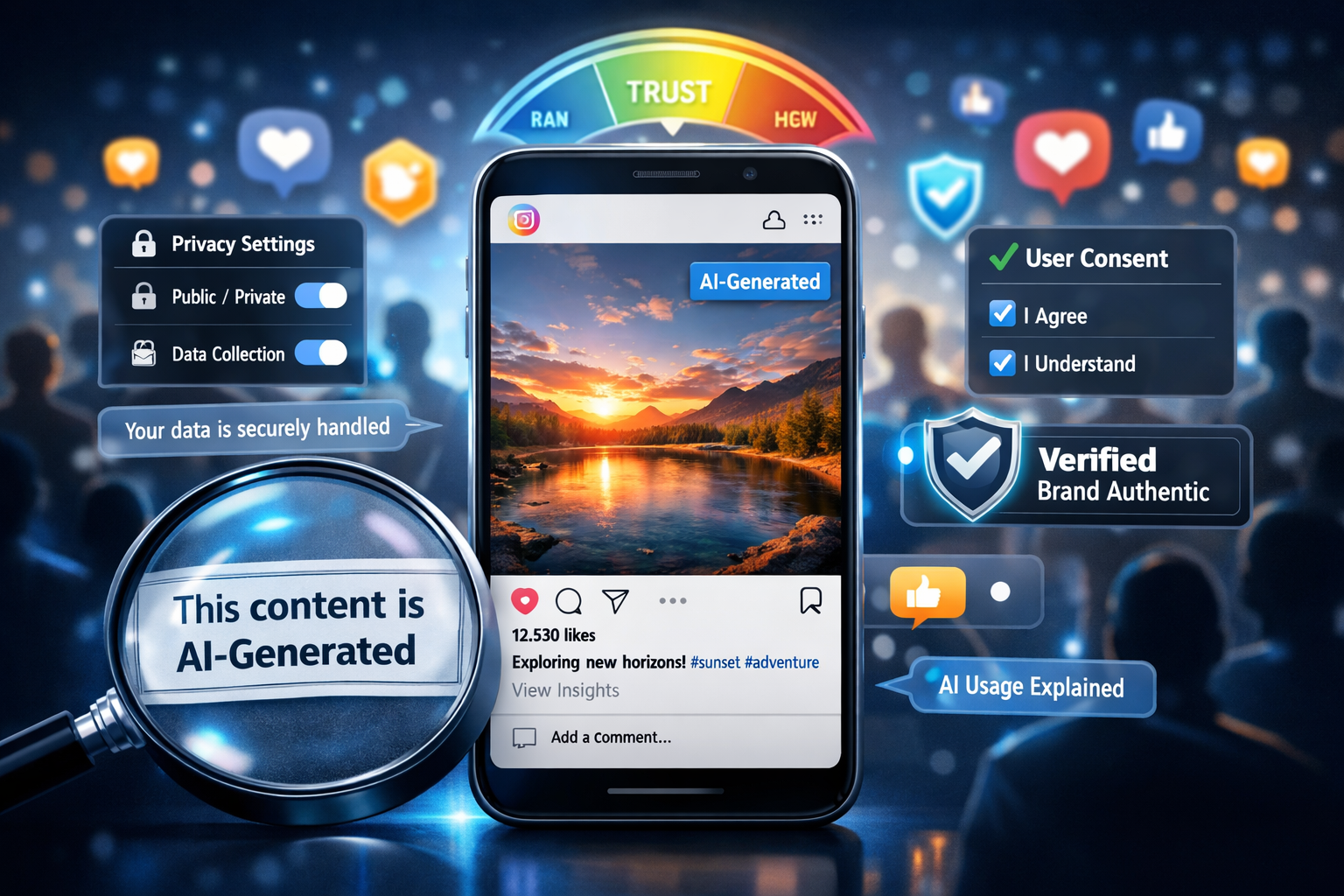
Transparency will no longer be optional in 2026 – it is a basic requirement for successful social media marketing. Platforms like Instagram are actively introducing features to label AI-generated content, thereby supporting the shift towards greater transparency[4].
Labeling requirements and ethical standards
Why transparency is so important:
- 🏷️ Platform Guidelines: Instagram and other networks reduce algorithmic promotion of unlabeled AI content[4]
- 🤝 Consumer expectations: 73% of users expect clear information when content is AI-generated[2]
- ⚖️ Legal requirements: Regulations on AI labeling are becoming increasingly stricter
- 💪 Competitive advantage: Brands that are open about automation gain trust
Practical implementation of transparent automation
1. Clear labeling of AI content
Implement visible labels or notices when content is AI-generated or powered:
- 📌 “Created with AI support”
- 🤖 “Automatically generated content, human-reviewed”
- ✅ “AI tool + human editing”
2. Data protection and personalization in harmony
Use AI social media tools with transparent data protection settings:
| Transparency element | Implementation | To use |
|---|---|---|
| Explain data usage | Clear privacy statements | Build trust |
| Opt-out options | Flexible user settings | give control |
| Algorithm Insights | “Why am I seeing this?” features | Traceability |
| Personalization level | Adjustable intensity | Individual preferences |
3. Human-in-the-loop as a quality guarantee
Human oversight is essential as AI systems are prone to errors and hallucinations[3]. Without human fact checking, companies risk their brand reputation[3].
Implement a three-step verification process:
- ✅ AI generated Content drafts and variations
- 👤 Human checked on factual accuracy, tonality and brand conformity
- 🔄 Feedback loop trains AI based on human corrections
This approach combines the speed of automation with the quality assurance of human expertise.
The role of automation agencies
A professional one Social media automation agency can help companies master this balancing act. You bring expertise in:
- 🛠️ Tool selection and integration
- 📋 Workflow optimization with human checkpoints
- 🎯 Strategy development for authentic automation
- 📊 Performance monitoring and continuous improvement
Content strategies: Where AI shines and where human attitude remains essential
The art of a successful social media strategy in 2026 lies in knowing when to use AI and when human creativity remains indispensable. Not all content types benefit equally from automation.
AI-optimized content areas
This is where automation can fully demonstrate its strengths:
📊 Data-driven content
- Performance reports and statistics
- Market trends and analysis
- Product information and technical specs
- FAQ answers and standard queries
🔄 Repetitive posting tasks
- Regular updates and reminders
- Evergreen content recycling
- Multi-channel distribution of identical messages
- Time zone optimized publications
With a Social media planner German These tasks can be efficiently automated while the team focuses on creative tasks.
🎨 Content variations and testing
- A/B testing of various headlines
- Image variations for different target groups
- Format adjustments for different platforms
- Personalized approach based on user data
Human-dominated content areas
Human expertise remains indispensable here:
💬 Authentic storytelling
- Personal brand stories and corporate culture
- Emotional customer success stories
- Behind-the-scenes insights
- Crisis communication and sensitive topics
“Content from real people with real perspectives beats polished brand messages in all relevant metrics.”[1]
🤝 Community interactions
- Individual responses to customer comments
- Conflict resolution and complaint management
- Building real relationships with followers
- Spontaneous reactions to current events
🎭 Creative campaign concepts
- Innovative campaign ideas and concepts
- Culturally sensitive content
- Humor and irony (AI often misunderstands nuances)
- Ethically complex issues
The optimal content matrix
| Content type | AI share | human share | Recommended workflow |
|---|---|---|---|
| Product info | 80% | 20% | AI generated, humans refined |
| Data reports | 90% | 10% | AI creates, humans check |
| Storytelling | 20% | 80% | Humans write, AI optimizes |
| Community answers | 30% | 70% | AI suggests human personalized |
| Campaign concepts | 10% | 90% | Human created, AI scaled |
| Standard FAQs | 85% | 15% | AI responds, humans monitor |
User-generated content as an authenticity booster
The most powerful weapon against AI overload is real user-generated content (UGC). Unpolished, authentic content with a personal character generates significantly more interactions in the US market than perfectly produced videos[4].
Strategies for promoting UGC:
- 📸 Customer challenges and hashtag campaigns
- 🎁 Incentive through competitions or features
- 🌟 Regular sharing of customer contributions
- 💬 Direct inquiries to satisfied customers
- 🤝 Micro-influencer collaborations for authentic reviews
Combine UGC with intelligent automation: Use automatic posting social media-Tools to publish curated UGC content at the optimal time.
Practical implementation: step-by-step to authentic automation
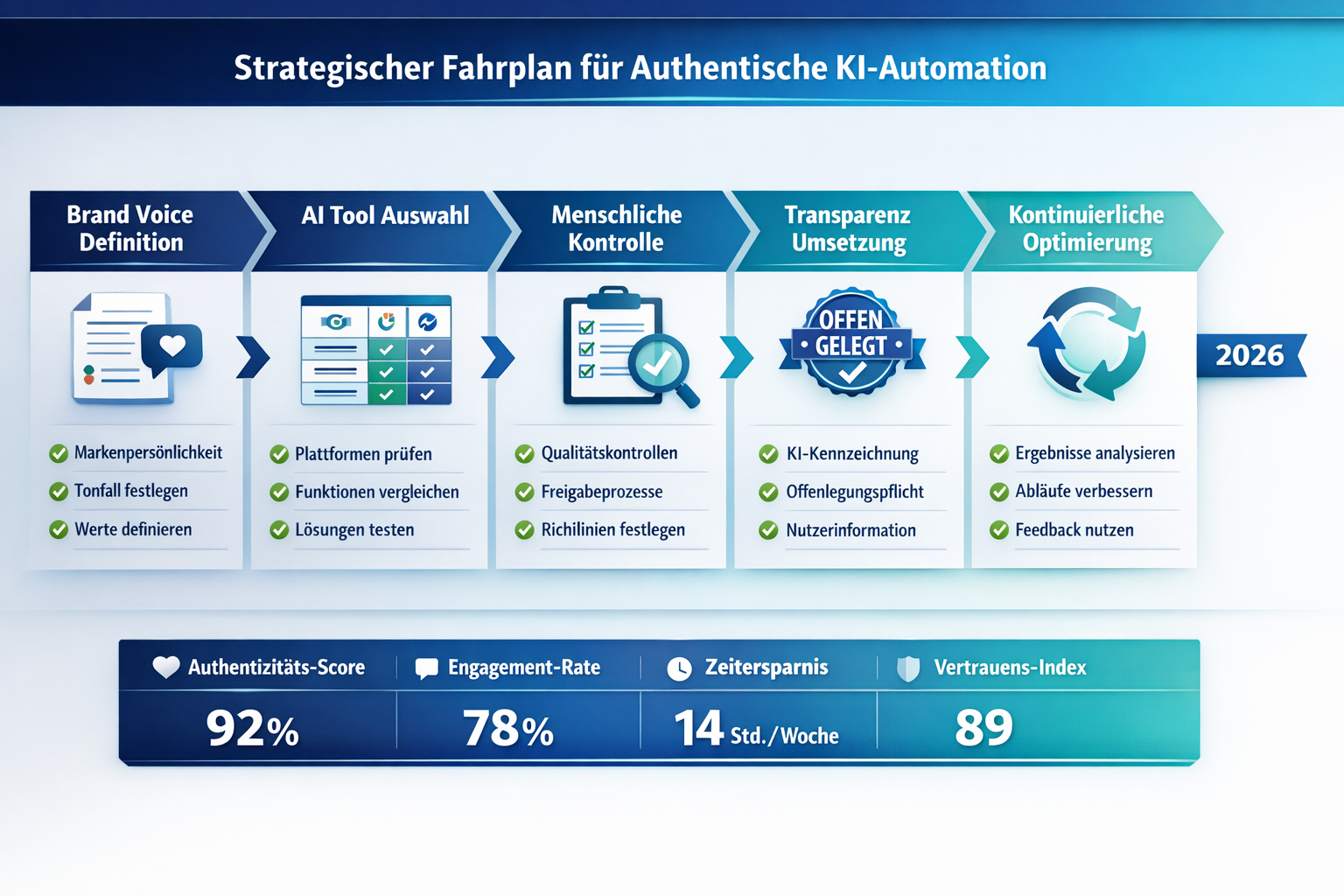
The theory is clear – but how do you bet? Authenticity vs. AI: How companies can automate social posts without losing trust in 2026 specifically about? Here is a tried and tested timetable.
Phase 1: Creating a foundation (week 1-2)
Step 1: Define brand voice
Before AI is even used, the authentic brand voice must be crystal clear:
- ✍️ Create one Brand Voice Document with concrete examples
- 🎯 Define Do's and Don'ts for tonality and language
- 📝 Collect Example poststhat perfectly represent your brand
- 🚫 Document No-nos and sensitive topics
Step 2: Audit the current content landscape
Analyze which content is already working well:
- 📊 Which posts have the highest engagement rate?
- 💬 Where do real conversations happen?
- 🎭 Which content seems authentic vs. staged?
- ⏱️ Which tasks take up the most time?
Phase 2: Tool selection and integration (week 3-4)
Step 3: Choose the right automation tools
Not all tools are created equal. Pay attention to:
- 🔧 Customizability to your brand voice
- 🔍 Transparency features for AI labeling
- 👥 Human review workflows integrated
- 📊 Analytics for authenticity measurement
- 🌐 Multi-platform support for Social media channels centrally
One Social media management software should combine both worlds: efficiency through automation and control through human oversight.
Step 4: Establish workflows with human checkpoints
Implement one Optimize social media workflow-Approach:
- Content planning (80% human, 20% AI suggestions)
- Creation (variable depending on content type)
- Review & Approval (100% human)
- Scheduling (100% AI)
- Monitoring (AI alerts, human response)
- engagement (100% human)
Phase 3: Pilot phase and optimization (weeks 5-8)
Step 5: Start with low-risk content
Start automating with non-critical content:
- 📅 Evergreen content and tips
- 📊 Data-based updates
- 🔄 Content recycling of proven posts
- ⏰ Time zone optimized reposts
Step 6: Track authenticity metrics
Establish KPIs that go beyond likes:
| Metric | What it measures | Target value |
|---|---|---|
| Comment quality | Depth of interaction | Longer, substantive comments |
| Share rate | Trust and relevance | >3% of range |
| DM requests | Genuine interest | Rising trend |
| Sentiment analysis | Emotional resonance | Positive >70% |
| Follower retention | Long-term commitment | Churn <5% monthly |
Step 7: Continuous learning and adaptation
AI systems learn – but only if they are trained correctly:
- 🔄 Weekly Reviews of AI-generated content
- 📝 Feedback documentation for AI training
- 🎯 Monthly strategy adjustments based on data
- 💡 Quarterly Deep Dives in authenticity performance
Phase 4: Scaling with Safety Net (Month 3+)
Step 8: Gradually expand automation
If the basics work:
- 📈 Increase the level of automation for proven content types
- 🌍 Expand to additional platforms Multi-channel posting tool
- 🤖 Test advanced AI features (e.g. personalized approach)
- 👥 Integrate more team members into the workflow
Step 9: Communicate transparency
Make your automation an advantage:
- 🗣️ Communicate openly about the use of AI tools
- 🎓 Share learnings and best practices with your community
- 🤝 Emphasize the human expertise behind automation
- 📊 Show how automation creates more time for real interactions
Future outlook: trends and developments for 2026 and beyond
The landscape of Authenticity vs. AI: How companies can automate social posts without losing trust in 2026 is developing rapidly. Those who set the right course today will benefit from a competitive advantage tomorrow.
Emerging trends in social media automation
🛍️ Social Commerce as a full-funnel channel
Platforms that deliver measurable commercial results are securing unprecedented budget shares. TikTok's e-commerce dynamics are challenging Meta's traditional market leadership[1].
What that means:
- Integration of shopping features into automated posts
- AI-powered product recommendations based on user behavior
- Seamless customer journey from discovery to checkout
- Authentic product reviews as conversion drivers
🎨 Creative production as an operational cost factor
Increasing creative fatigue is forcing brands to treat continuous creative production as a core operational expense[1]. Investment is shifting from in-house production to diverse creator partnerships[1].
Practical implications:
- Budget reallocation to creator networks
- AI Content Generator German-Tools for basic variations
- Human creatives for concepts and strategy
- Hybrid production models for maximum efficiency
🔐 Data protection and ethical AI use
Regulations are becoming stricter, user expectations are increasing:
- ⚖️ EU AI Act and similar regulations worldwide
- 🔒 Privacy-first approaches as a competitive advantage
- 🤝 Ethical AI Guidelines as an industry standard
- 📊 Transparency dashboards for users
Platform-specific developments
Instagram: Originality over perfection
Instagram is increasingly prioritizing original content and reducing heavily filtered aesthetics[4]. The platform introduces AI content labeling features[4].
TikTok: Authenticity as an algorithm factor
The TikTok algorithm already favors authentic, unpolished content over highly produced videos. This trend will continue to intensify in 2026[5].
LinkedIn: Thought leadership with AI support
Professional networks rely on the combination of AI-supported reach and human expertise for thought leadership[6].
The role of AI agencies and advice
As complexity increases, the need for specialized expertise grows. AI marketing automation-Experts help companies:
- 🎯 Strategy development for authentic automation
- 🛠️ Tool stack optimization and integration
- 📊 Performance monitoring with a focus on authenticity
- 🎓 Team training for hybrid workflows
- ⚖️ Compliance with current regulations
Measurable success metrics of the future
The KPIs are evolving beyond traditional engagement metrics:
New metrics for 2026:
- 🎭 Authenticity Score: Algorithm-based authenticity assessment
- 💬 Conversation Quality Index: Depth and substance of interactions
- 🤝 Trust Metrics: Long-term trust development
- 🔄 Human Touch Rate: Proportion of human vs. automated interactions
- 🌱 Community Health Score: Sustainability of community engagement
Preparing for the next evolution
Recommendations for action for future-proof strategies:
- Invest in flexibility: Choose tools and workflows that can be quickly customized
- Build creator networks: Authentic voices are becoming more valuable, not less important
- Establish ethical guidelines: Proactive self-regulation protects against later coercive measures
- Prioritize data literacy: Teams need to understand and interpret authenticity metrics
- Stay people-centered: Technology serves people, not the other way around
Conclusion: Mastering the balance between efficiency and authenticity
Authenticity vs. AI: How companies can automate social posts without losing trust in 2026 is no longer a theoretical question – it is the practical challenge that every company with a social media presence faces. The good news: The apparent contradiction disappears when you find the right balance.
The most important findings summarized
✨ Authenticity beats perfection: In an AI-saturated market, real, human content is the strongest competitive advantage[1]. Companies that understand this invest in creator partnerships and UGC rather than polished studio productions.
🤖 AI as a tool, not a replacement: Automation excels in repetitive tasks, data analysis and scaling - but human creativity, strategic thinking and emotional intelligence remain essential[1].
🔍 Transparency builds trust: Open communication about the use of AI tools strengthens credibility instead of undermining it[2][4]. Platforms are increasingly rewarding transparent labeling.
👥 Human-in-the-loop is mandatory: Quality assurance through human expertise protects against AI errors and preserves brand authenticity[3]. The three-step process – AI generated, human review, feedback optimized – is the gold standard.
📊 New metrics for new realities: Success is no longer measured just in likes and shares, but in conversation quality, trust metrics and community health.
Your next steps
Ready to master the balance between automation and authenticity in your company? Here is your action plan:
Can be implemented immediately (this week):
- 📝 Document your brand voice with concrete examples and guidelines
- 📊 Analyze your top performing posts – what makes it authentic?
- 🔍 Identify time-consuming tasksthat are suitable for automation
- 🎯 Define authenticity KPIs beyond standard engagement metrics
Short term (next month):
- 🛠️ Evaluate automation tools with a focus on human review features
- 👥 Establish workflows with clear human checkpoints
- 🧪 Start a pilot with low-risk content
- 📢 Communicate transparently about your automation strategy
Medium term (next 3 months):
- 🤝 Build creator partnerships for authentic content
- 🎓 Train your team in hybrid workflows and new metrics
- 🔄 Implement feedback loops for continuous AI optimization
- 📈 Scale gradually based on measurable successes
Support for your automation journey
Implementing an authentic automation strategy can be complex - you don't have to do it alone. Whether you are looking for a comprehensive Optimize social media workflow-Approach you are looking for the right one Social media automation tool-Solutions evaluated or professional advice from one Social media AI agency you need – specialized expertise can make the difference between frustrating trial and error and strategic success.
The outlook: humanity as a constant
As technologies, platforms and algorithms evolve, one truth remains constant: People connect with people. The most successful brands in 2026 and beyond will be those that use technology to create more human, authentic and valuable connections – not to replace them.
The future does not belong to AI alone and not to manual work alone. It belongs to the intelligent symbiosis of both – where automation brings efficiency and people bring soul. That is the essence of Authenticity vs. AI: How companies can automate social posts without losing trust in 2026.
Now it's up to you: Will you master the balance? 🚀
References
[1] Ai Automation Authenticity The Three Trends Redefining Social Commerce – https://skai.io/de/blog/ai-AUTOMATION-authenticity-the-three-trends-redefining-social-commerce/
[2] Authentic Social Media Content Vs Ki Flood – https://www.schmidtmedia.de/authentische-social-media-content-vs-ki-flut/
[3] AI Content Opportunities and Risks – https://upon.marketing/ki-content-opportunities-and-risks/
[4] Instagram Trends 2026 Social Media Ki – https://bundesweit.digital/instagram-trends-2026-social-media-ki/
[5] Social Media Trends 2026 Ki Processes Attitude – https://onlinemarketing.de/cases/social-media-trends-2026-ki-processes-halte
[6] Social Media Trends Social Media Strategy – https://www.blog2social.com/de/blog/social-media-trends-social-media-strategie/
KI-Offenlegung: HINWEIS: Bilder wurden mit KI erstellt oder bearbeitet und sind keine realen Abbildungen. Teile der Texte wurden mit Hilfe von KI erstellt und redaktionell von einem Mensch bearbeitet.