
Multi Channel Posting Tool: The Ultimate Guide to Efficient Social Media Management 2026
Imagine being able to manage your entire social media presence with just one click. A Multi-channel posting tool makes exactly that possible and revolutionizes the way companies orchestrate their digital communication.
In an age where brands are active on an average of 8-10 different platforms, manually managing social media channels becomes a time-consuming and error-prone task. The solution lies in intelligent multi-channel solutions that not only save time but can also significantly increase reach and engagement.
Key takeaways
• Multi-channel posting tools Increase efficiency by up to 75% through automated content distribution
• Consistent brand presence is ensured through consistent planning and publishing across all channels
• Data-driven decisions are made possible through integrated analytics and cross-platform evaluations
• Cost reduction of up to 60% in personnel and time expenditure compared to manual administration
• Scalability for companies of all sizes – from start-ups to enterprise solutions
What is a Multi Channel Posting Tool?
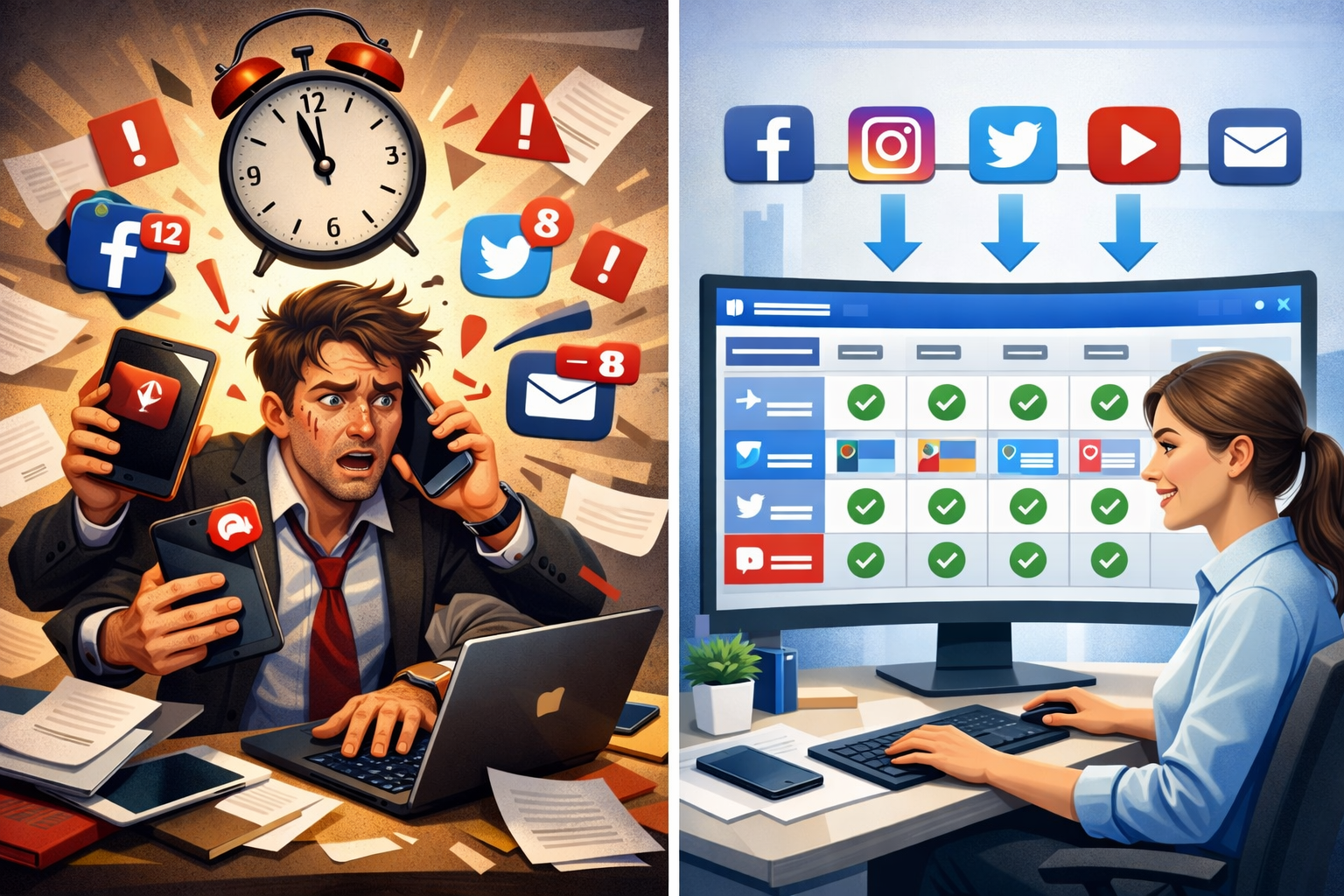
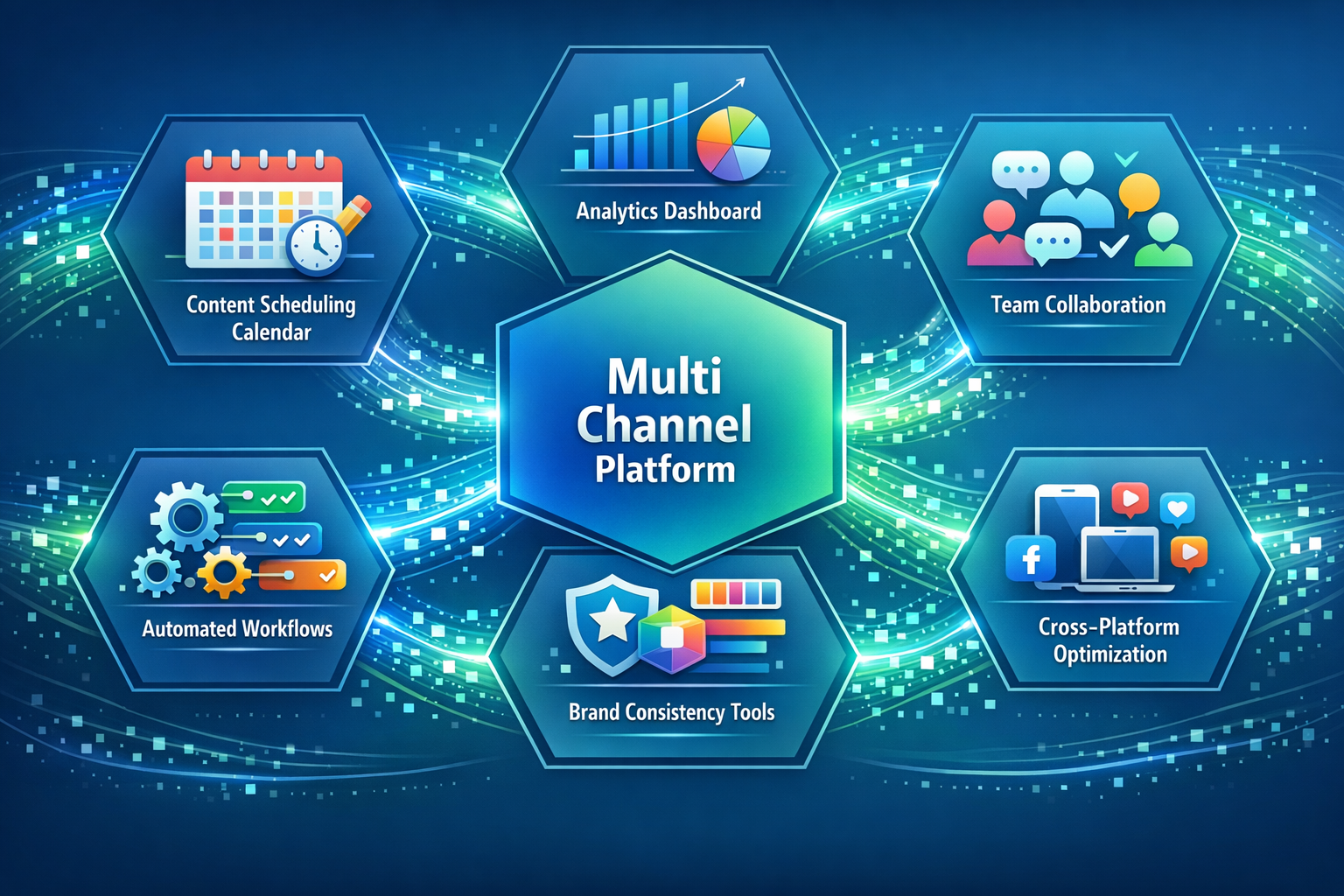
A Multi-channel posting tool is a specialized software solution that allows companies to publish and manage content on different social media platforms simultaneously. These tools act as a central command center for the entire digital communications strategy.
Core functions of modern multi-channel solutions
Automated publishing forms the heart of every multi-channel posting tool solution. Users can create content once and schedule it for simultaneous or staggered publishing on Facebook, Instagram, Twitter, LinkedIn, TikTok and other platforms.
Content customization occurs automatically according to the specific requirements of each platform. While Instagram prefers square images, the tool optimizes content for Twitter’s character limit or LinkedIn’s professional context.
Central administration of all social media activities significantly reduces complexity. Instead of switching between different apps and browser tabs, marketing teams have everything in one clear interface.
The evolution of social media management
The development of multi-channel posting tools reflects the rapid change in the digital landscape. While companies were active on average on 3-4 platforms in 2020, in 2026 they often use 8-10 different channels.
“The future of social media management lies not in the manual management of individual channels, but in the intelligent orchestration of a coherent multi-channel experience.”
Platform-specific optimization has established itself as a decisive success factor. Modern multi-channel posting tools take into account not only the technical specifications of each platform, but also their unique user behavior and algorithms.
Advantages of a multi-channel posting tool for your company
Implementing a multi-channel posting tool strategy brings measurable benefits for companies of all sizes. These range from operational efficiency improvements to strategic competitive advantages.
Saving time and increasing efficiency
Automation of recurring tasks reduces manual effort by an average of 75%. What used to take hours can now be done in minutes with a multi-channel posting tool.
| Task | Manual editing | With multi-channel tool | Time saving |
|---|---|---|---|
| Play on 5 platforms | 45 minutes | 10 minutes | 78% |
| Content customization | 30 minutes | 5 minutes | 83% |
| Scheduling | 20 minutes | 3 minutes | 85% |
| Performance analysis | 60 minutes | 15 minutes | 75% |
Batch processing allows marketing teams to plan content for an entire week or even a month in advance. This strategic approach leads to more consistent publishing rhythms and better content quality.
Improved reach and engagement
Optimized publishing times are based on data-driven analyzes of target group activity on various platforms. A multi-channel posting tool automatically identifies the best times for maximum visibility.
Cross-platform synergies are created through coordinated campaigns that leverage the strengths of each platform. While Instagram is optimized for visual content, LinkedIn focuses on professional discussions.
Consistent brand messages increase recognition and build trust. Studies show that brands with a consistent multi-channel presence experience 23% higher customer loyalty.
Cost optimization and ROI increase
Reduced personnel costs arise from the automation of time-consuming routine tasks. A marketing team can increase productivity by 200-300% using a multi channel posting tool.
Better resource allocation is made possible by detailed analytics. Teams can focus their efforts on the best-performing channels and content types.
Scalable solutions grow with the company. While start-ups start with basic functions, enterprise customers can use advanced features such as AI-powered content optimization.
The best multi-channel posting tools 2026 in comparison 

Choosing the right multi-channel posting tool depends on specific business needs, budget and growth goals. The market offers a variety of solutions for different target groups.
Enterprise solutions for large companies
Hootsuite Enterprise leads the market with comprehensive features for large organizations. The platform supports over 35 social networks and offers advanced security features that are essential for corporations.
- Unlimited users and team management
- Advanced Analytics with custom reports
- API integrations for existing systems
- Compliance features for regulated industries
- High costs (from €599/month)
- Complex setup requires IT support
 Unlimited users and team management
 High costs (from €599/month)
Sprout Social is characterized by exceptional customer relationship management features. The Multi Channel Posting Tool integrates social listening and customer service in one platform.
Buffer for Business offers a user-friendly alternative with a strong focus on content planning and team collaboration.
Medium-sized business solutions with an optimal price-performance ratio
Later has established itself as the leading multi-channel posting tool for visually oriented brands. The platform excels particularly at Instagram, Pinterest and TikTok Management.
SocialBee combines content categorization with automated reuse and is ideal for companies with limited content resources.
CoSchedule integrates social media management with content marketing and email campaigns in a unified marketing suite.
Social@ALL combines automatic multichannel posting, managing and AI-created ideas including text, images and video. All leading portals are available. The tool is ideal for beginners and professional users. Starting at €69/month you get a lot of features that help you save time and make social media child's play.
Start-up friendly solutions
Buffer (Basic version) offers essential Multi Channel Posting Tool features at affordable prices. Perfect for small teams with up to 3 social profiles.
Zoho Social scores with seamless integration into the Zoho ecosystem and offers excellent automation features for growing companies.
Planoly focuses on visual platforms and is particularly suitable for e-commerce companies and lifestyle brands.
Specialized niche solutions
Agora pulses combines social media management with CRM functions and is suitable for customer service-oriented companies.
Sendible offers white label solutions for agencies that want to offer multi channel posting tool services to their clients.
MeetEdgar automates content recycling and maximizes the lifespan of high-quality content across different platforms.
Implementation and best practices for multi-channel posting tools
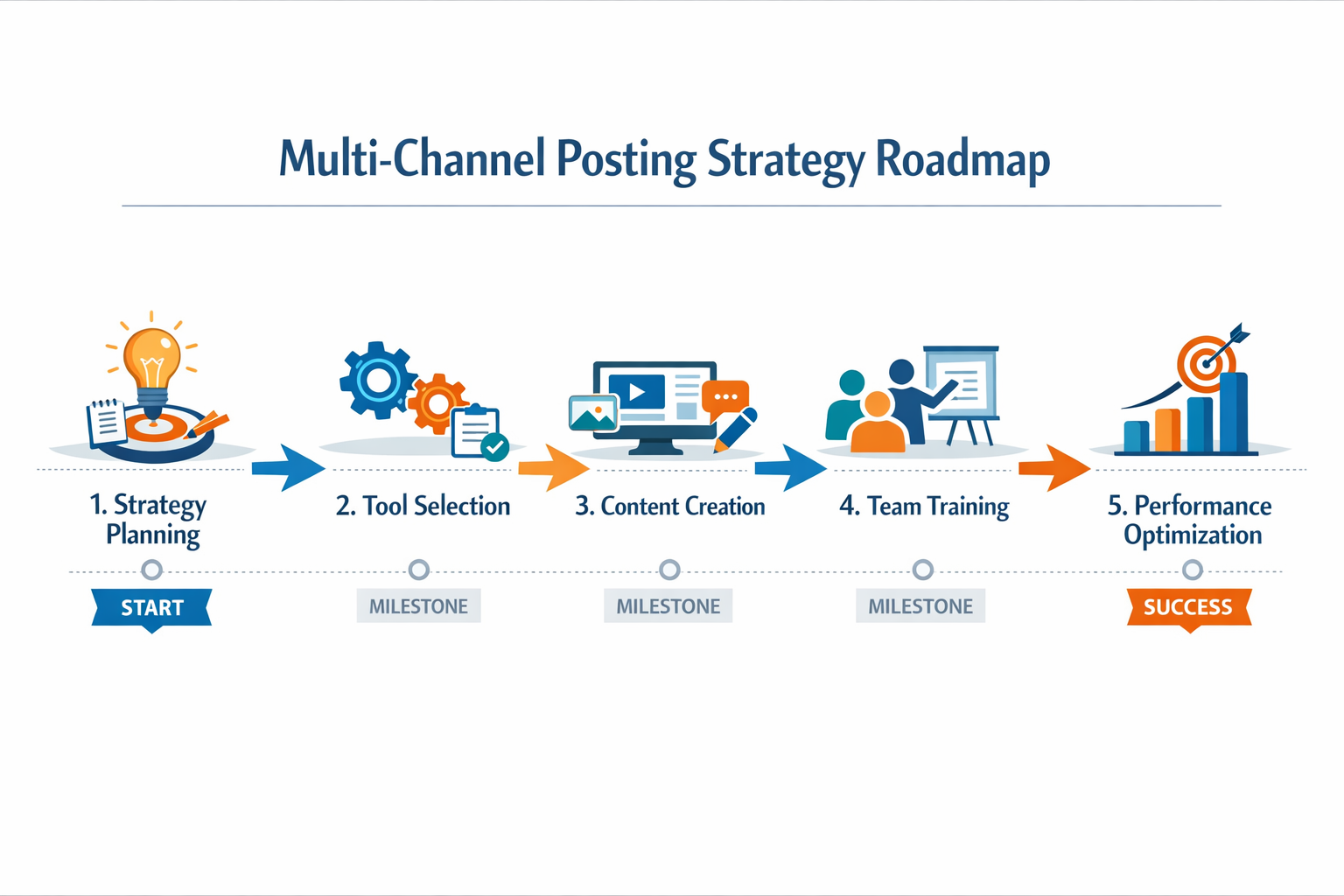
The successful introduction of a multi-channel posting tool requires strategic planning, well-thought-out processes and continuous optimization. Companies that follow best practices achieve 40% better results than those with ad hoc approaches.
Strategic preparation and goal setting
Content audit and platform analysis form the foundation of every multi-channel posting tool implementation. Teams should categorize their existing content and evaluate performance across different channels.
Define SMART goals for each platform:
- Specific: Concrete KPIs such as engagement rate, reach, conversions
- Measurable: Quantifiable metrics with baseline values
- Reachable: Realistic growth rates based on industry benchmarks
- Relevant: Alignment with overarching corporate goals
- Scheduled: Clear time frames for achieving goals
Target group mapping identifies which audience segments are most active on which platforms. A multi-channel posting tool can then adapt and optimize content accordingly.
Content strategy and editorial planning
Content categorization enables systematic planning and reuse. Proven categories include:
| category | Portion | Purpose | Platform focus |
|---|---|---|---|
| Educational | 40% | Offer added value | Linkedin, Twitter |
| entertainment | 30% | Promote engagement | Instagram, TikTok |
| Promotional | 20% | Support sales | Facebook, Pinterest |
| Behind the scenes | 10% | Show authenticity | Instagram Stories, Linkedin |
Develop content calendar with seasonal events, product launches and industry events. A multi-channel posting tool synchronizes this planning across all channels.
Platform-specific adjustments take into account:
- Instagram: High-quality visuals, hashtag strategies, stories
- Linkedin: Professional insights, thought leadership, B2B content
- Twitter: Current topics, quick updates, community engagement
- Facebook: Community building, longer formats, events
- TikTok: Trends, authentic videos, younger target groups
Team organization and workflow optimization
Roles and responsibilities clearly define:
- Content creators: Content development and production
- Community manager: Engagement and customer interaction
- Analyst: Performance monitoring and optimization
- Approver: Quality assurance and release processes
Approval workflows Set up in the Multi Channel Posting Tool:
- Content creation by Creator
- Review by Team Lead
- Final release by marketing managers
- Automatic publishing according to schedule
Crisis management protocols for quick reactions to negative events or trends.
Performance monitoring and continuous optimization
KPI dashboard Configure in the Multi Channel Posting Tool:
- reach: Organic vs. paid impressions
- engagement: Likes, comments, shares, saves
- traffic: click-through rates, website visits
- Conversions: leads, sales, newsletter subscriptions
A/B testing systematically carry out:
- Posting times for different target groups
- Content formats (Video vs. Image vs. Text)
- Call-to-action formulations
- Hashtag strategies and their effectiveness
Monthly optimization cycles establish:
- Data analysis of the past 30 days
- Trend identification and pattern recognition
- Strategy adjustment based on insights
- Implementation new tactics in the Multi Channel Posting Tool
Integration with existing marketing tools
CRM synchronization enables personalized content delivery based on customer journey stages.
Email marketing integration coordinates multi-channel campaigns for maximum impact.
Analytics platforms like Google Analytics connect for holistic performance evaluation.
Marketing automation uses Multi Channel Posting Tool data for trigger-based campaigns.
Future trends and developments in multi-channel posting
The landscape of multi-channel posting tools is evolving rapidly, driven by technological innovations and changing user expectations. Companies that recognize and adapt these trends early on secure decisive competitive advantages.
AI-powered content optimization
Artificial Intelligence revolutionizes the way multi-channel posting tools create and optimize content. Machine learning algorithms analyze historical performance data and generate predictions for optimal content strategies.
Automatic content generation will reach new quality levels in 2026:
- Text optimization: AI adjusts tonality and length depending on the platform
- Visual content: Automatic image editing and adjustment for various formats
- Hashtag recommendations: Data-driven suggestions based on trending topics
- Posting time optimization: Precise predictions for maximum range
Predictive Analytics enable proactive strategy adjustments. Multi-channel posting tools can predict trend turning points and automatically adjust content plans.
Voice and audio content integration
Podcast integration is becoming a standard feature of modern multi-channel posting tools. Companies can automatically convert audio content into various formats:
- Audiograms for Instagram and LinkedIn
- Transcriptions for blog posts and Twitter threads
- Short clips for TikTok and Instagram Reels
Voice Search Optimization influences content strategies. Multi channel posting tools integrate voice SEO features for better discoverability.
Augmented reality and immersive content
AR filters and effects are integrated directly into Multi Channel Posting Tool interfaces. Brands can create branded AR experiences and distribute them across multiple platforms.
360 degree content and Virtual reality find their way into standard posting workflows. Tools offer specialized templates and optimizations for immersive formats.
Blockchain and NFT integration
Decentralized social media requires new approaches in multi-channel management. Early multi-channel posting tools are already experimenting with Web3 integrations.
NFT marketing is integrated into established platforms via specialized features. Companies can promote digital assets in a coordinated manner through various channels.
Sustainability and ethical marketing
Carbon footprint tracking becomes an important feature. Multi-channel posting tools measure and optimize the ecological impact of digital campaigns.
Diversity and inclusion monitoring helps companies develop balanced and inclusive content strategies.
Micro-moments and real-time marketing
Instant content creation for spontaneous marketing opportunities is made possible by AI-supported tools. Brands can react to trends and events in real time.
Live streaming integration combines multi-channel posting tools with broadcasting platforms for coordinated live events.
Enterprise-level personalization
Individual customer journeys are orchestrated via multi-channel posting tools. Each user receives personalized content experiences based on their behavior and preferences.
Dynamic Content Adaptation Automatically tailors messages to audience segments without manual intervention.
Conclusion: Shaping the future of multi-channel marketing
The implementation of one Multi-channel posting tools is no longer optional in 2026, but a mission-critical necessity for companies that want to be successful in the digital landscape. The benefits extend far beyond simple time savings to include strategic competitive advantages, improved customer relationships and measurable ROI increases.
Successful multi-channel strategies are based on three pillars: the right tool selection, well-thought-out implementation processes and continuous optimization. Companies that master these elements achieve, on average, 3x higher engagement rates and 40% better conversion rates than competitors with fragmented approaches.
Recommendations for immediate start
Step 1: Take stock and set goals
Analyze your current social media presence and define clear, measurable goals for each platform. Identify your key audiences and their preferred channels.
Step 2: Tool evaluation and testing phase
Use free trial versions of various multi-channel posting tools. Evaluate features, usability and integration with existing systems.
Step 3: Start pilot project
Start with a small team and 2-3 platforms. Gain experience and optimize workflows before expanding to all channels.
Step 4: Scaling and automation
Gradually expand to additional platforms and implement advanced features such as AI-powered optimization and automated workflows.
Step 5: Continuous Improvement
Establish regular review cycles and use analytics for data-driven optimization of your multi-channel posting tool strategy.
The future belongs to companies that see multi-channel marketing not as a tactical measure, but as a strategic enabler for sustainable growth. A Multi-channel posting tool is the key to this transformation - take the opportunity to lay the foundation for your digital success today.
"The best time to start multi-channel marketing was yesterday. The second best time is now."
Invest in the right technology, develop clear processes and remain agile in implementation. Your company's digital future begins with the first step towards intelligent multi-channel orchestration.
KI-Offenlegung: HINWEIS: Bilder wurden mit KI erstellt oder bearbeitet and sind keine realen Abbildungen. Teile der Texte wurden mit Hilfe von KI erstellt and redaktionell von einem Mensch bearbeitet.