
The Ultimate Social Media Automation Tool: Efficiency and Success in 2026
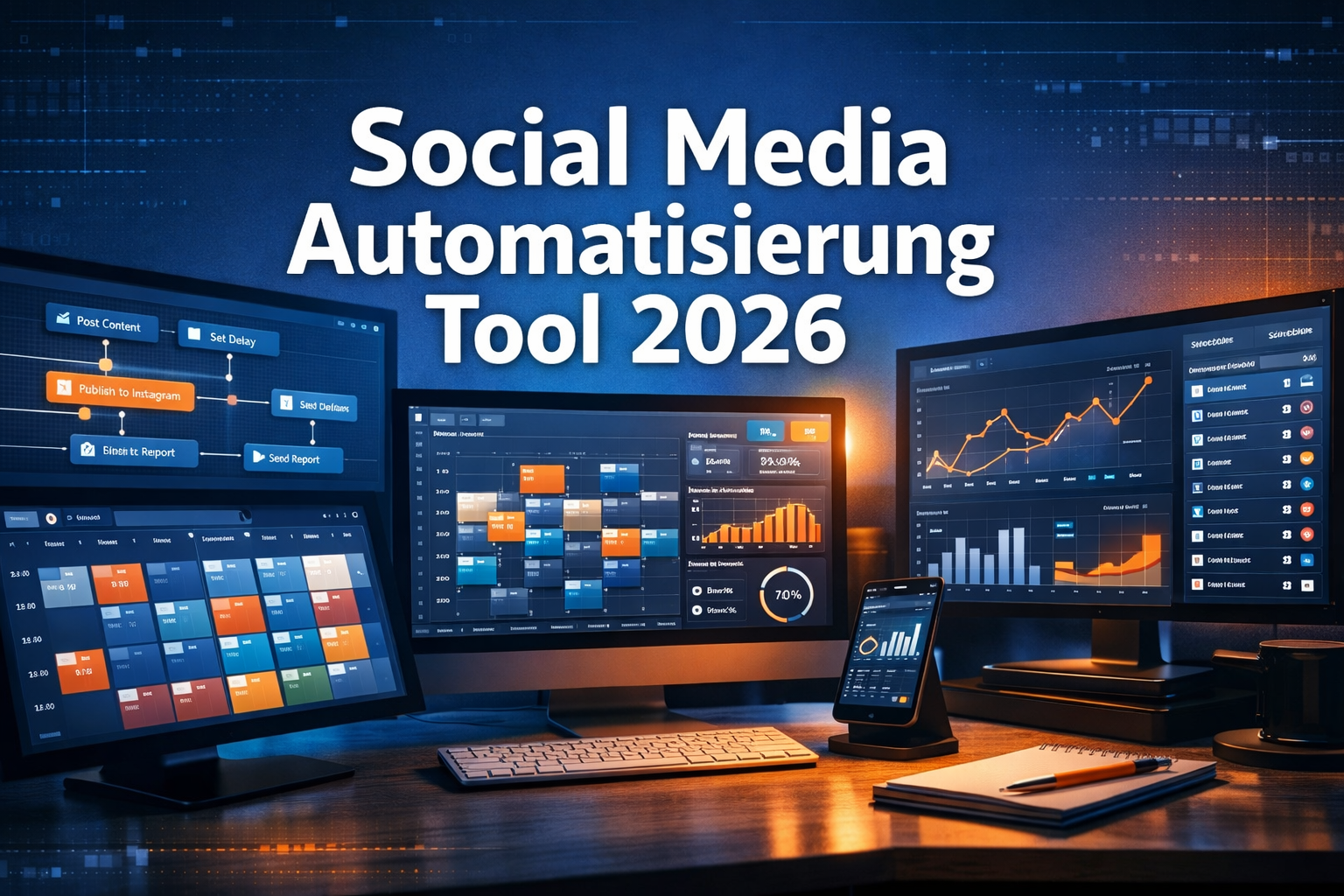
Imagine being able to keep your social media presence active 24/7 without sitting in front of the computer for hours every day. A Social media automation tool makes exactly that possible and revolutionizes the way companies design their online communication. In an age where consistency and timing determine success or failure on social media, automation becomes a key competitive advantage.
Key takeaways
• Time saving: Social media automation tools reduce manual effort by up to 80% and enable strategic focus
• Consistent presence: Automated posting schedules ensure regular activity even outside of business hours
• Data-based decisions: Integrated analytics provide valuable insights for optimizing your content strategy
• Scalability: Multiple platforms and accounts can be managed and controlled centrally
• ROI increase: More efficient processes lead to better results with lower personnel costs
What is a social media automation tool?

A Social media automation tool is a software solution that automates and optimizes recurring tasks in social media marketing. These tools act as a central command center for all of a company's social media activities.
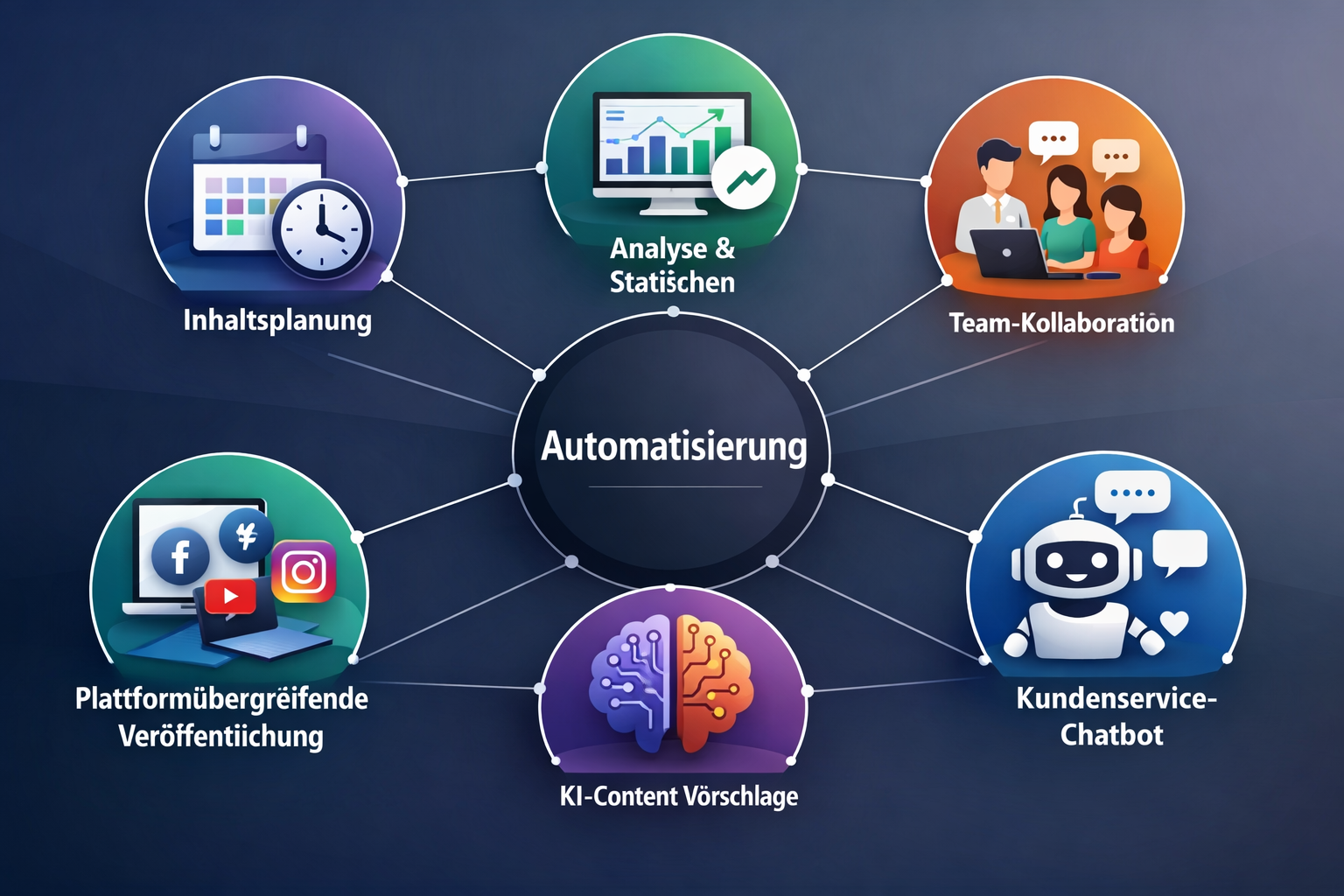
Core automation functions
Content planning and publishing 
- Planning posts in advance for weeks or months
- Automatic publishing at optimal times
- Platform-specific adaptation of content
Community management
- Automatic replies to common queries
- Forward complex questions to human employees
- Monitoring of mentions and hashtags
Analytics and reporting
- Automatic data collection and evaluation
- Regular performance reports
- ROI tracking and conversion measurement
Technical basics
Use modern automation tools artificial intelligence and Machine learningto:
- Identify optimal posting times
- Predict content performance
- Segment target groups
- Recognize trends early
“Automation is not a replacement for human creativity, but rather an amplifier.” – Social Media Marketing Institute
The most important functions of a social media automation tool
Content scheduling and publishing
Smart scheduling
An effective social media automation tool analyzes audience activity patterns and suggests optimal posting times. This function takes into account:
- Time zone differences for global target groups
- Platform-specific algorithms
- Historical engagement data
- Industry-specific best practices
Bulk upload and content library 
- Bulk upload of content with CSV import
- Central media library for all graphics and videos
- Template system for recurring post formats
- Approval workflows for team collaboration
Multi-platform management
Platform integration
Leading tools support all relevant platforms:
| platform | Features | Special features |
|---|---|---|
| Posts, stories, events | Detailed audience targeting | |
| Feeds, Stories, Reels | Visual Content Optimization | |
| Company pages, personal profiles | B2B-specific features | |
| Twitter/X | Tweets, threads | Real-time engagement tools |
| TikTok | Videos, trends | Trend monitoring integration |
| YouTube | Videos, shorts, community | SEO optimization for videos |
Cross-platform campaigns
- Consistent messaging across all channels
- Platform-specific adjustments
- Coordinated campaign launches
- Central performance overview
Analytics and performance tracking
Comprehensive metrics
A professional social media automation tool records and analyzes:
Engagement metrics
- Likes, comments, shares, saves
- Engagement rate per post and platform
- Best and worst performing content types
- Follower growth and quality
Conversion tracking
- Click-through rates to website
- Lead generation via social media
- Sales attribution and ROI calculation
- Customer journey mapping
Competitive Analysis
- Benchmark against competitors
- Share of voice analysis
- Trend identification in the industry
- Content gap analysis
The Best Social Media Automation Tool Options 2026
Enterprise solutions
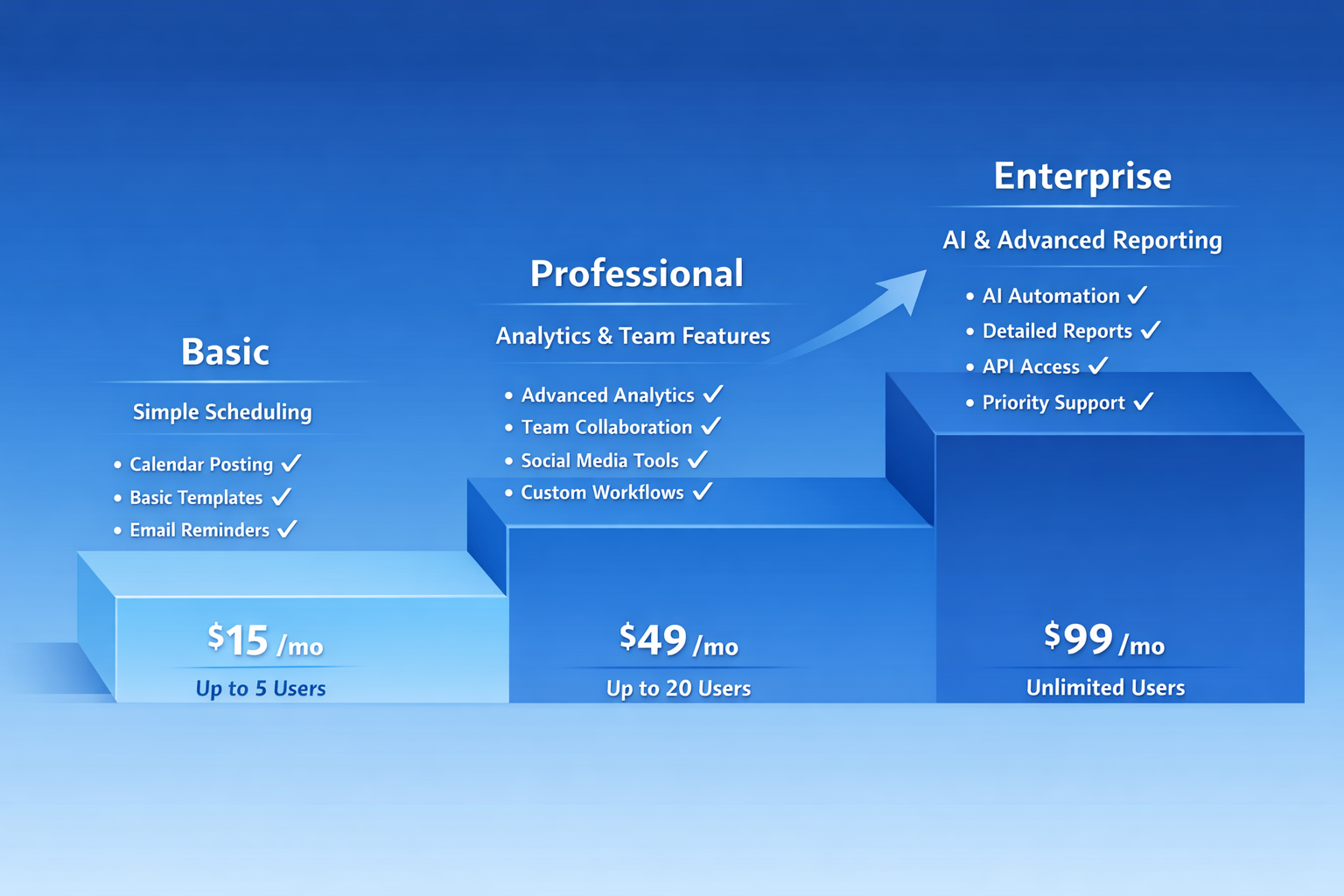
Hootsuite Enterprise
- Strengthen: Comprehensive platform support, robust analytics
- Target group: Large companies with complex requirements
- Special features: Advanced Social Listening, Custom Dashboards
- Price range: €599-1,499/month
Sprout Social
- Strengthen: Ease of use, excellent customer service
- Target group: Medium to large companies
- Special features: Smart Inbox, CRM integration
- Price range: €249-399/month
Medium-sized businesses solutions
Buffer business
- Strengthen: Easy to use, strong analytics
- Target group: SMEs and agencies
- Special features: Pablo graphics editor, hashtag manager
- Price range: €99-199/month
Later
- Strengthen: Visual Content Planning, Instagram Focus
- Target group: E-commerce and lifestyle brands
- Special features: Visual Content Calendar, Linkin.bio
- Price range: €40-80/month
Entry-level solutions
Creator Studio (Meta)
- Strengthen: Free, direct meta integration
- Target group: Small businesses, sole proprietors
- Special features: Instagram shopping integration
- Price range: For free
Zoho Social
- Strengthen: Integration into Zoho ecosystem, cheap
- Target group: Zoho users, budget conscious businesses
- Special features: CRM integration, lead tracking
- Price range: €10-79/month
Specialized tools
MeetEdgar
- focus: Content recycling and evergreen content
- Special feature: Automatic reuse of successful posts
- Ideal for: Content-rich companies
CoSchedule
- focus: Marketing calendar and content planning
- Special feature: Integration with WordPress and email marketing
- Ideal for: Content marketing Teams
Choosing the right social media automation tool
Carry out needs analysis
Company size and complexity
- Startup/individual entrepreneur: Simple tools with basic functions
- SME: Scalable solutions with team features
- Enterprise: Comprehensive platforms with advanced analytics
Platform priorities
Identify your most important channels:
- B2B companies: LinkedIn, Twitter, YouTube
- B2C retail: Instagram, Facebook, TikTok
- Service companies: Facebook, Google My Business
Budget and ROI expectations
Calculate the total costs:
- Software license
- Implementation and training
- Ongoing support
- Expected time savings in hours
Evaluation criteria
Range of functions
- Content planning and publishing
- Analytics and reporting
- Team collaboration
- API integrations
- Mobile apps
Ease of use
- Intuitive operation
- Learning curve for new employees
- Availability of training materials
- Quality of customer support
Scalability
- Growth with the company
- Flexible pricing models
- Additional modules and features
- Integration into existing tech stack
Implementation strategy
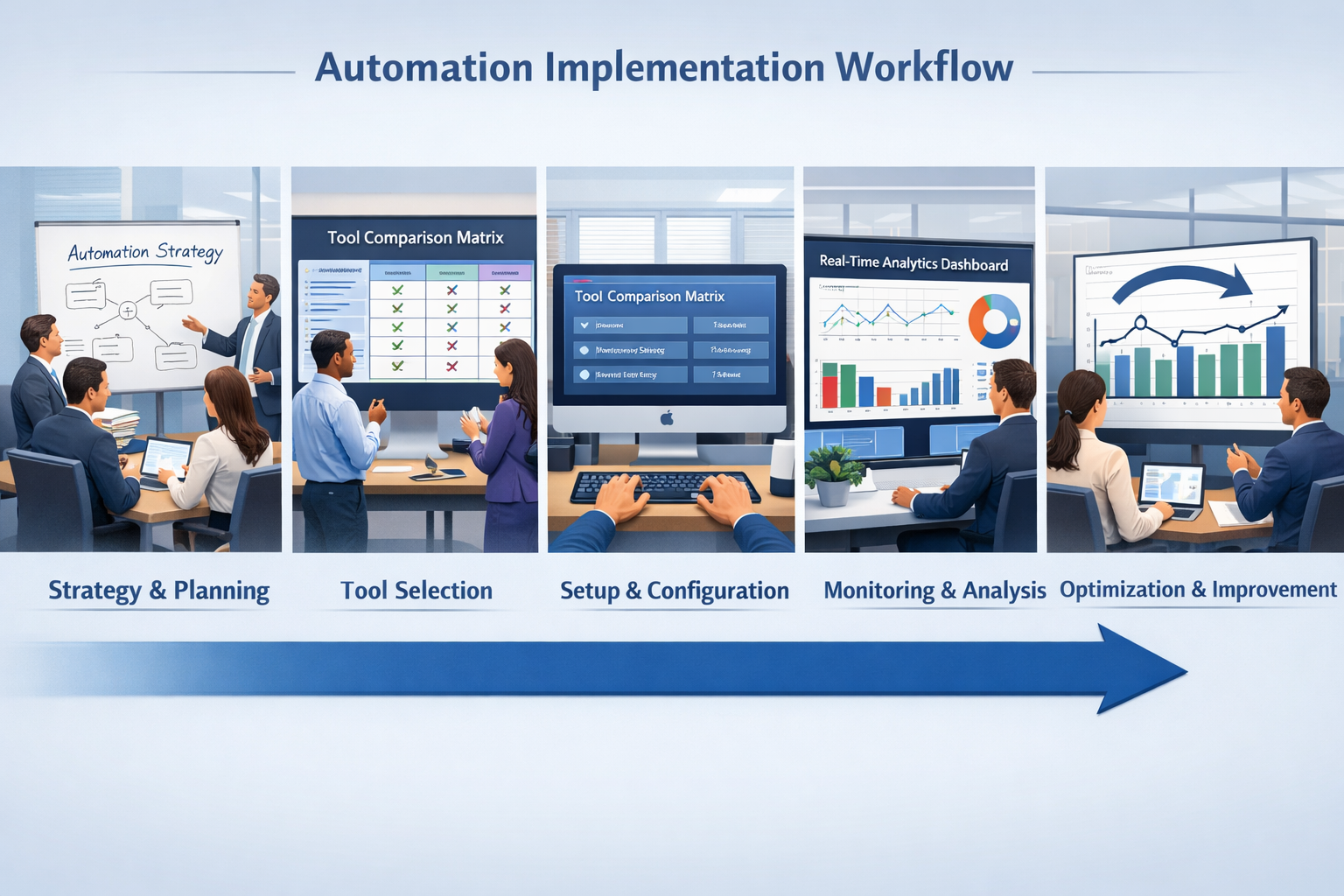
Phase 1: Preparation (weeks 1-2)
- Audit of current social media activities
- Definition of goals and KPIs
- Team training and role assignment
Phase 2: Setup (weeks 3-4)
- Tool configuration and account linking
- Content calendar migration
- Workflow definition
Phase 3: Testing (weeks 5-6)
- Pilot project with selected channels
- A/B testing different posting times
- Feedback collection from the team
Phase 4: Full introduction (weeks 7-8)
- Rollout to all channels
- Monitoring and optimization
- First performance evaluation
Avoid common implementation mistakes
Over-automation
- Not all interactions should be automated
- Human reactions to sensitive topics
- Regular review of automated responses
Neglecting content quality
- Automation does not replace good content strategy
- Regular review and adjustment
- Balance between automation and human touch
Inadequate training
- Investing in team training
- Regular updates on new features
- Documentation of processes and workflows
Future trends in social media automation tools
Artificial intelligence and machine learning
AI-powered content creation
- Automatic generation of post texts
- Image editing and optimization through AI
- Personalized content recommendations
- Predictive analytics for content performance
Chatbots and Conversational AI
Modern social media automation tools increasingly integrate:
- Natural Language Processing (NLP)
- Context-aware answers
- Multilingual support
- Seamless handover to human agents
Integration and ecosystem
Omnichannel approaches
- Linking to email marketing
- CRM integration for a 360° customer view
- E-commerce platform connection
- Marketing automation workflows
API-first development
- Flexible integrations with third-party systems
- Custom dashboards and reports
- Headless commerce integration
- IoT and smart device connectivity
Data protection and compliance
GDPR compliant automation
- Automatic consent management
- Data minimization in automation processes
- Right-to-be-forgotten implementation
- Transparent data processing
Ethical AI and Responsible Automation
- Bias detection in algorithms
- Transparent decision-making processes
- Human Oversight Mechanisms
- Sustainable technology development
Emerging Platforms and Technologies
Voice and audio social media
- Clubhouse and Twitter Spaces integration
- Podcast distribution automation
- Voice-to-text content creation
- Audio Analytics and Insights
AR/VR and Metaverse
- 3D content automation
- Virtual event management
- Immersive brand experiences
- Cross reality campaign management
Best practices for social media automation
Optimize content strategy
Evergreen vs. trending content
Develop a balanced mix:
- 80% evergreen content: Timeless content that can be posted repeatedly
- 20% trending content: Current topics and real-time marketing
Define content categories
Structure your content mix:
- Educational (40%): Tutorials, how-tos, insights
- Entertaining (30%): memes, behind-the-scenes, stories
- Promotional (20%): product presentations, offers
- User-Generated (10%): Customer contributions, reviews
Optimize timing and frequency
Platform-specific posting times
| platform | Best times (CEST) | Optimal frequency |
|---|---|---|
| Tue-Thurs 1:00 p.m.-3:00 p.m | 1-2 posts/day | |
| Mon-Fri 11:00 a.m. - 1:00 p.m | 1 post/day, 3-5 stories | |
| Tue-Thurs 08:00-10:00 | 3-5 posts/week | |
| Mon-Fri 12:00-3:00 p.m | 3-5 tweets/day | |
| TikTok | Tue-Thurs 6:00 p.m.-9:00 p.m | 1-3 videos/day |
Use audience insights
- Analyze your specific target group data
- Test different posting times
- Take seasonal fluctuations into account
- Match frequency to engagement rates
Automate community management
Intelligent filtering
Set up automatic rules for:
- Positive mentions: Automatic liking and thanking
- Customer service requests: Forward to support team
- Spam and negative comments: Flagging for manual review
- Influencer mentions: Priority treatment
Response templates
Create canned answers for:
- Frequently asked questions
- Thank you messages
- Forwarding to customer service
- Product information
Performance monitoring
Set up KPI dashboard
Continuously monitor:
- Reach and impressions: Visibility of your content
- Engagement rate: Quality of interactions
- Click through rate: Traffic generation
- Conversion rate: Business impact
- Cost per engagement: Efficiency of automation
Regular optimization
- Weekly performance reviews
- Monthly strategy adjustments
- Quarterly tool evaluation
- Annual complete inspection
Legal aspects and compliance
Data protection in social media automation
GDPR compliance
When using a social media automation tool, the following aspects must be taken into account:
Document data processing
- Processing directory for social media data
- Purpose limitation of data use
- Define storage duration
- Implement extinguishing concepts
Manage user consents
- Tracking consent for analytics
- Newsletter subscriptions via social media
- Remarketing list management
- Please note the cookie policy
Copyright and Content Usage
Content Licensing
- Stock Photo Licenses for automated posts
- Music rights for video content
- User-Generated Content Permissions
- Influencer content usage rights
Automated citations
Implement systems for:
- Automatic copyright notices
- Photographer Credits
- Content source tracking
- License expiration monitoring
Advertising policies and transparency
Labeling requirement
Automate the correct labeling of:
- Sponsored Posts (#Advertising, #Ad)
- Affiliate links
- Product placements
- Collaborations
Platform-specific guidelines
Each platform has its own rules:
- Facebook: Community Standards
- Instagram: Commerce Policies
- Linkedin: Professional Community Policies
- TikTok: Community Guidelines
ROI measurement and success control
Calculate cost savings
Quantify time savings 
Calculate the working time saved:
- Manual posting time vs. automation
- Reduced monitoring effort
- More efficient reporting processes
- Faster response times
Example calculation for SMEs:
Manual processing: 20 hours/week × €25/hour = €500/week Tool costs: €200/month = €50/week Automation: 5 hrs/week × €25/hr = €125/week Net Savings: €500 - €50 - €125 = €325/week Annual Savings: €16,900 Measure performance improvement
Engagement improvement
Compare metrics before and after automation:
- Average engagement rate
- Follower growth rate
- Reach and impressions
- Click-through rates
Business impact tracking
- Lead generation via social media
- Sales attribution
- Brand awareness increase
- Customer Acquisition Cost (CAC)
Continuous optimization
A/B testing framework
Test systematically:
- Posting times: Compare different time slots
- Content formats: Video vs. Image vs. Text
- Call-to-actions: Different formulations
- Hashtag strategies: Performance of different tags
Establish feedback loops
- Monthly team reviews
- Customer service feedback integration
- Include sales team insights
- Community manager gain experience
Conclusion
A Social media automation tool will no longer be a luxury in 2026, but a necessity for companies of all sizes. Proper selection and implementation can increase efficiency by up to 80% while improving the quality of social media presence.
The most important success factors are:
 Strategic planning: Define clear goals and KPIs Tool selection: Suitable solution for company size and needs Team training: Investment in employee know-how Continuous optimization: Regular adjustment and improvement balance: Combine automation with a human touch
Next Steps
- Carry out needs analysis: Evaluate your current social media processes
- Start tool comparison: Test 2-3 solutions with free trials
- Plan pilot project: Start with one channel and scale gradually
- Prepare team: Invest in training and change management
- Measure success: Define metrics and monitor ROI
The future of social media marketing lies in intelligent automation. Companies that act now will gain a decisive competitive advantage and can use their resources for strategic tasks while automation takes over operational activities.
KI-Offenlegung: HINWEIS: Bilder wurden mit KI erstellt oder bearbeitet and sind keine realen Abbildungen. Teile der Texte wurden mit Hilfe von KI erstellt and redaktionell von einem Mensch bearbeitet.