
Optimize Social Media Workflow: The Ultimate Guide to Maximum Efficiency in 2026

Imagine your social media team spending hours every day on repetitive tasks while important strategic decisions fall by the wayside. This reality is costing companies worldwide millions of euros and countless missed opportunities. The solution lies in the Optimize social media workflow - a decisive factor for digital success in 2026.
Key takeaways
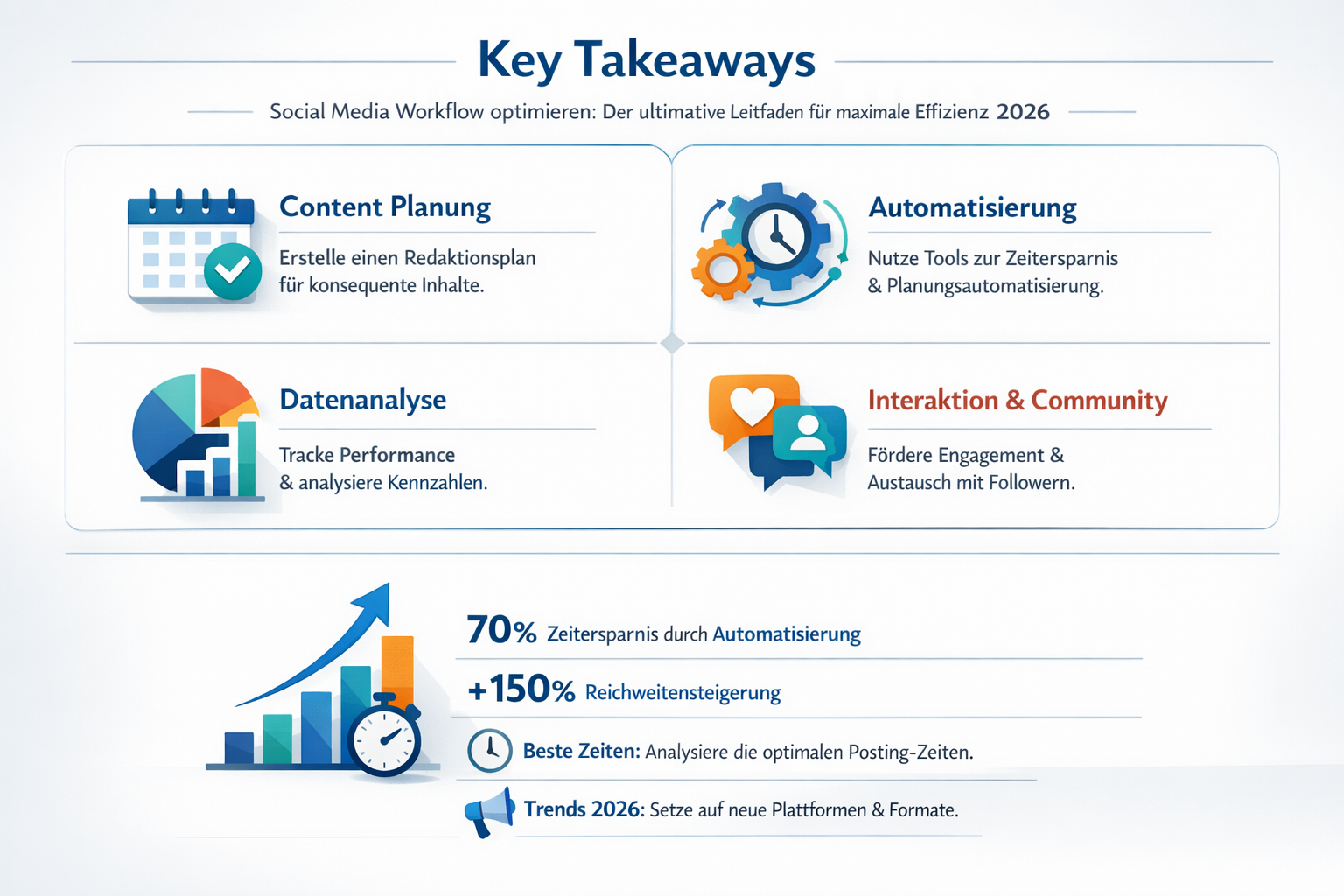
• Time savings of up to 60% through systematic workflow optimization and automation
• Improved content quality through structured planning and approval processes
• Higher ROI values through efficient use of resources and data-based decisions
• Reduced error rates through standardized processes and clear responsibilities
• Scalable processes for sustainable growth and team expansion
Why social media workflows are the basis for digital success
In today's digital landscape, successful companies produce dozens of social media posts across different platforms every day. Without optimized workflows, chaos, loss of quality and wasted resources quickly arise.
The hidden costs of inefficient social media processes
Companies lose on average 23% of their social media budget due to inefficient work processes. These losses arise from:
- Duplicate work when creating content
- Delayed releases due to unclear release processes
- Inconsistent brand representation due to a lack of standards
- Missed engagement opportunities due to slow reaction times
“Optimized social media workflows aren’t just a nice-to-have – they’re the difference between digital success and stagnation.” – Social Media Marketing Institute 2026
The ROI of optimized social media workflows
Studies show that companies with... optimized social media workflows achieve the following improvements:
| Key figure | improvement |
|---|---|
| Content production time | -45% |
| Engagement rate | +32% |
| Team productivity | +58% |
| Error rate | -67% |
| Campaign ROI | +41% |
Optimize social media workflow: The analysis phase as the foundation
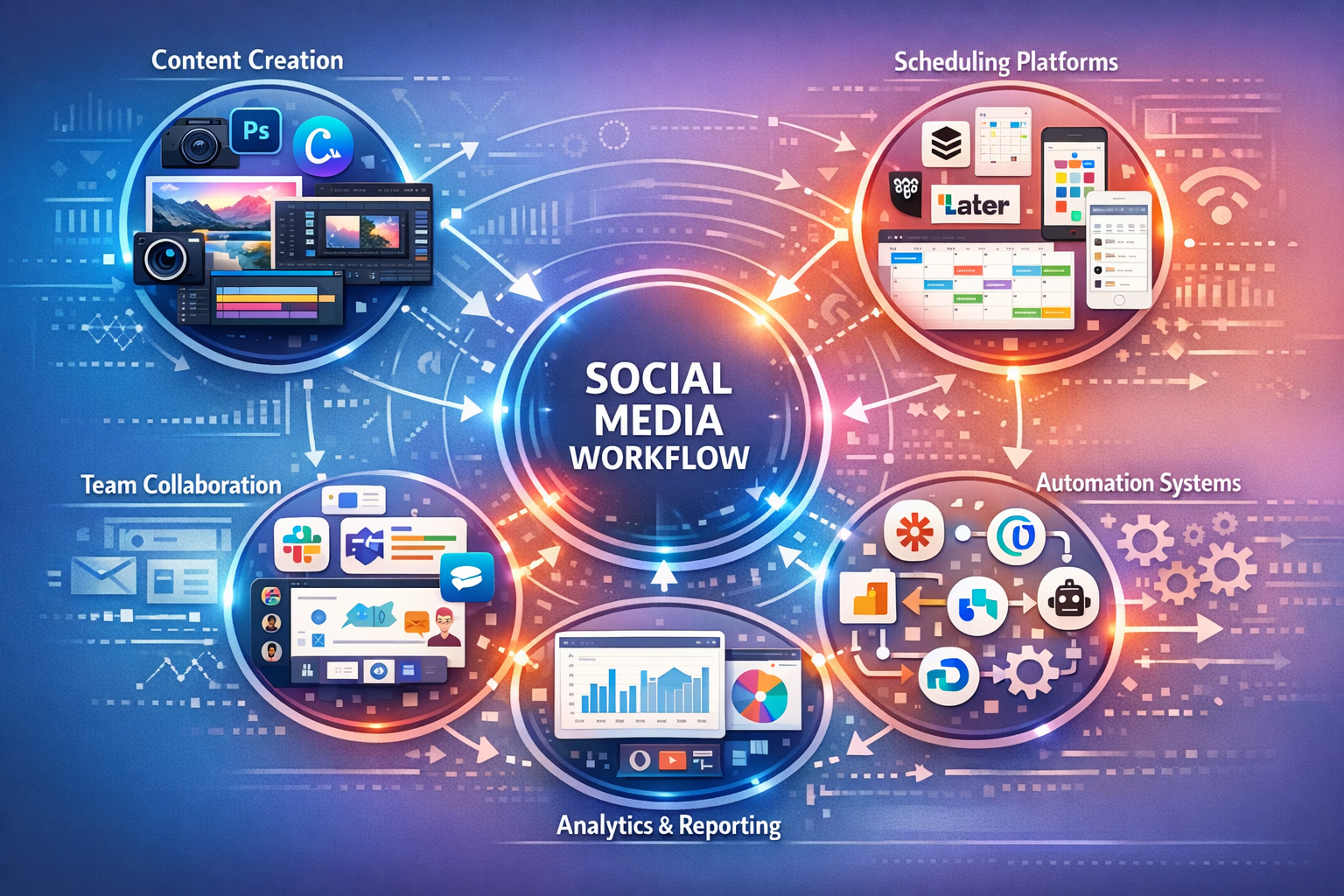
Before optimizations can be implemented, there is one thorough analysis of existing processes essential. This analysis forms the basis for all further improvement measures.
Workflow mapping: Understanding the current state
Workflow mapping visualizes every step in the current social media process. The following elements are documented:
Identify process steps
- Content ideation and briefing
- Creation of texts, images and videos
- Internal coordination and approval
- Scheduling and publishing
- Community management and monitoring
- Analysis and reporting
Measure time expenditure
Document for each process step:
- Average processing time
- Waiting times between steps
- Number of iterations until the final release
Clarify responsibilities
- Who is responsible for which step?
- Where arise Communication breaks?
- Which decision-making paths are unclear?
Uncover bottlenecks and inefficiencies
The most common Workflow issues in social media teams:
1. Release loops
- Unclear decision-making authority
- Too many stakeholders in the approval process
- Lack of feedback standards
2. Content silos
- Isolated working methods of individual team members
- No central content library
- Redundant asset creation
3. Manual processes
- Posting manually on different platforms
- Manual data collection for reports
- Lack of automation of recurring tasks
Workflow analysis tools
Use these Analysis methods for a systematic evaluation:
- Process interviews with everyone involved
- Time tracking over 2-4 weeks
- Workflow diagrams with tools like Miro or Lucidchart
- Stakeholder mapping for decision-making processes
The most important tools and technologies for optimized social media workflows
Choosing the right tools is crucial to Optimize social media workflow to be able to. Modern technologies enable automation, better collaboration and data-based decisions.
Content management and collaboration tools
All-in-one social media management platforms
Hootsuite Enterprise
- Central dashboard for all social media channels
- Integrated release workflows with approval processes
- Team collaboration with roles and permissions
Sprout Social
- Comprehensive analytics and reporting functions
- Smart Inbox for unified community management
- Content calendar with drag-and-drop functionality
Buffer business
- Easy content planning and scheduling
- Team collaboration features
- Detailed performance analytics
Specialized content creation tools
Canva for teams
- Brand kit for consistent brand representation
- Template library for quick content creation
- Collaboration features for design feedback
- integration: Direct connection to scheduling tools
Adobe Creative Cloud for Teams
- Professional design software (Photoshop, Illustrator, Premiere)
- Cloud-based asset management
- Version control and release workflows
Automation and AI-powered optimization
Content automation
Zapier
- Connects different tools without programming
- Automates recurring tasks
- Over 5,000 app integrations available
IFTTT (If This Then That)
- Simple automation for standard processes
- Free basic version available
- Ideal for small teams and simple workflows
AI-powered content optimization
ChatGPT for social media
- Content ideation and copywriting
- Hashtag research and optimization
- Translations for international campaigns
Lately.ai
- AI-based content generation from existing materials
- Automatic adaptation for different platforms
- Content performance predictions
Analytics and reporting automation
Data collection and analysis
Google Analytics 4
- Tracking social media traffic and conversions
- Custom dashboards for social media ROI
- Integration with Google Data Studio for automated reports
Socialbakers (now Emplifi)
- Comprehensive social media analytics
- Competitor benchmarking
- Automated reporting functions
Tool integration for seamless workflows
| Tool category | Primary tool | Integration with |
|---|---|---|
| Content planning | Hootsuite | Canva, Google Drive, Slack |
| design | Canva | Buffer, Hootsuite, Dropbox |
| Analytics | Google Analytics | Data Studio, Slack, Email |
| automation | Zapier | All common social media tools |
Selection criteria for workflow tools
The following should be considered when selecting a tool: factors be taken into account:
Scalability
- Can the tool keep up with team growth?
- Are flexible pricing models available?
integration
- Can the tool be connected to existing systems?
- Are APIs available for custom integrations?
Ease of use
- How quickly can new team members learn the tool?
- Is the user interface intuitive?
Support and training
- Does the provider offer comprehensive documentation?
- Is training and onboarding available?
Step-by-step instructions: Optimize social media workflow in practice
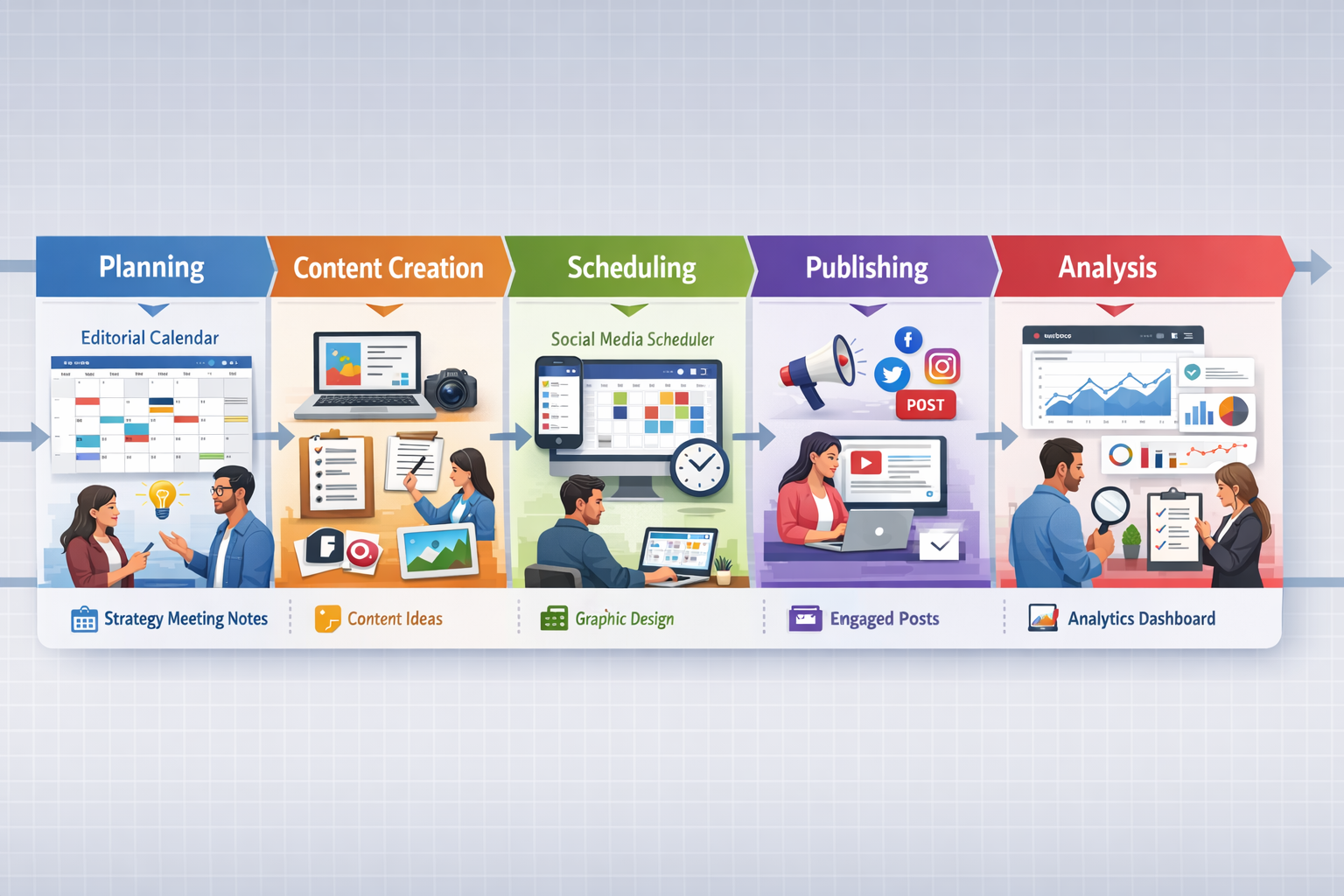
The practical implementation of workflow optimization requires one systematic approach. This guide will walk you through every step of the transformation.
Phase 1: Preparation and Planning (Week 1-2)
Team alignment and goal setting
Organize stakeholder meeting
- Include all relevant team members
- Document current challenges
- SMART goals for workflow optimization
Example goals:
- Reduce content production time by 40% by the end of Q2 2026
- Increased posting consistency to 95% of all planned posts
- Improvement in team satisfaction by 30% (employee survey)
Resource planning
Budget allocation:
- Tool costs: 30-40% of the optimization budget
- Training: 20-25% for team training
- External advice: 15-20% if necessary
- Buffer: 15-25% for unforeseen costs
Phase 2: Tool Implementation (Week 3-4)
Step-by-step tool introduction 

Week 3: Set up core tools
Social Media Management Platform configure
- Connect all social media accounts
- Invite team members and assign roles
- Create basic templates for different content types
Content creation tools integrate
- Store brand guidelines in design tools
- Build template library
- Configure release workflows
Week 4: Implement automation
Standard automations furnish:
- Automatic cross-posting between platforms
- Notifications for mentions and comments
- Backup systems for content backup
Advanced workflows configure:
- Approval processes with different release levels
- Automatic hashtag suggestions
- Performance alerts on critical metrics
Phase 3: Process Standardization (Week 5-6)
Content production pipeline

1. Ideation and briefing
- Brainstorming sessions schedule weekly
- Content briefs with standardized templates
- Trend research automated via tools like BuzzSumo
2. Content creation
Standardized workflow: ├── Briefing review (15 min.) ├── Concept development (30 min.) ├── Asset creation (60-120 min.) ├── First quality control (15 min.) └── Release submission (10 min.) 3. Optimize the release process 
- Maximum release time: 24 hours
- Clear feedback guidelines for stakeholders
- Escalation process with delayed releases
Quality assurance checklist

Check before each publication:
- Spelling and grammar correctly
- Brand guidelines complied with
- Hashtags researched and relevant
- Posting time optimized for target group
- Call to action clearly formulated
- Tracking parameters stored for analytics
Phase 4: Team Training and Adoption (Week 7-8)
Structured onboarding program

Day 1-2: Tool basics
- Hands-on training with the new tools
- Practical exercises with real content examples
- Cheat sheets create for quick reference
Day 3-4: Workflow practice
- Simulation of complete content production cycles
- Role-playing games for various workflow scenarios
- Feedback sessions for process improvement
Day 5: Advanced Features
- Automation features and their configuration
- Analytics interpretation and reporting
- Troubleshooting frequent problems
Establish continuous improvement
Weekly Retrospectives:
- What works well in the new workflow?
- What obstacles have arisen?
- Which Quick wins can be implemented immediately?
Monthly Workflow Reviews:
- Quantitative analysis of workflow performance
- Adjustments based on team feedback
- New tool features evaluate and implement
Phase 5: Monitoring and optimization (ongoing)
KPI tracking for workflow success
Efficiency metrics:
- Average time per content piece
- Number of release iterations
- Team utilization and productivity
Quality metrics:
- Error rate in publications
- Consistency of brand representation
- Customer satisfaction with social media content
Business impact metrics:
- Social media ROI development
- Engagement rate trends
- Lead generation via social media channels
“The key to success lies not in perfect planning, but in continuously adapting and improving workflows based on real data and team feedback.”
Measuring success and continuously improving optimized workflows
The sustainable optimization of social media workflows requires systematic monitoring and data-based adjustments. Without continuous measurement of success, potential for improvement remains undiscovered.
KPI framework for workflow performance
Efficiency metrics
Content productivity
- Posts per hour: Average number of posts completed per hour worked
- Time to market: Time from idea to publication
- Revision cycles: Average number of revisions per content piece
| Key figure | Baseline | Goal after 3 months | Current value |
|---|---|---|---|
| Posts/hour | 0.8 | 1.5 | 1.3 |
| Time to market | 72h | 24h | 36h |
| Revision cycles | 3.2 | 1.8 | 2.1 |
Resource optimization
- Tool adoption rate: Percentage of team members actively using new tools
- Automation level: Proportion of automated vs. manual processes
- Cross-platform efficiency: Time for multi-platform publishing
Quality metrics
Content consistency
- Brand compliance score: Compliance with brand guidelines (1-10 scale)
- Error rate: Percentage of posts with errors before/after optimization
- Engagement consistency: Standard deviation of engagement rates
Stakeholder satisfaction
- Team satisfaction: Regular workflow assessment surveys
- Management approval: Satisfaction of management with processes
- Customer feedback: Quality assessment of the social media presence
Set up monitoring dashboard
Real-time workflow monitoring
Google Data Studio Dashboard create with:
Productivity widgets:
- Daily content output trends
- Team workload distribution
- Bottleneck Alerts in case of delays
Quality overview:
- Engagement rate trends per platform
- Error tracking with categorization
- Brand compliance scores
Automated reporting systems
Weekly workflow reports:
Automated report content: ├── Productivity summary ├── Top performance content ├── Identified workflow issues ├── Team workload analysis └── Improvement recommendations Monthly trend analysis:
- Long-term performance trends
- Seasonal workflow adjustments
- ROI development the optimization measures
Continuous optimization cycles
Agile workflow improvement
2-week sprints for workflow optimization:
Sprint planning:
- Data analysis of the past 2 weeks
- Identification of the biggest inefficiencies
- Prioritization according to impact vs. effort
Sprint execution:
- A/B testing for process variants
- Tool configuration and customizations
- Team feedback collect and document
Sprint review:
- Quantitative analysis of improvements
- Lessons learned document
- Decision about retention or rollback
Establish feedback loops
Team feedback channels:
- Weekly retrospectives (30 mins)
- Anonymous feedback forms
- Monthly 1:1 discussions with team leads
Stakeholder input:
- Quarterly management reviews
- Customer feedback integration
- External audit recommendations
Advanced analytics for workflow optimization
Implement predictive analytics
Workload predictions:
- Seasonal content demand forecasts
- Team capacity planning
- Tool scaling recommendations
Performance predictions:
- Content success probabilities
- Optimal posting time algorithms
- Engagement rate predictions
Machine learning for workflow insights
Pattern recognition:
- Identification of recurring workflow problems
- Success pattern in content production processes
- Automatic optimization suggestions
Anomaly detection:
- early warning system for workflow disruptions
- Unusual performance deviations
- Proactive problem solving
Monetize qualitative improvements:
- Increased engagement rates → More leads
- Improved fire consistency → Higher brand value
- Team satisfaction → Reduced turnover
"Successful workflow optimization is a marathon, not a sprint. The best results come from continuous, data-driven improvements over longer periods of time."
Result
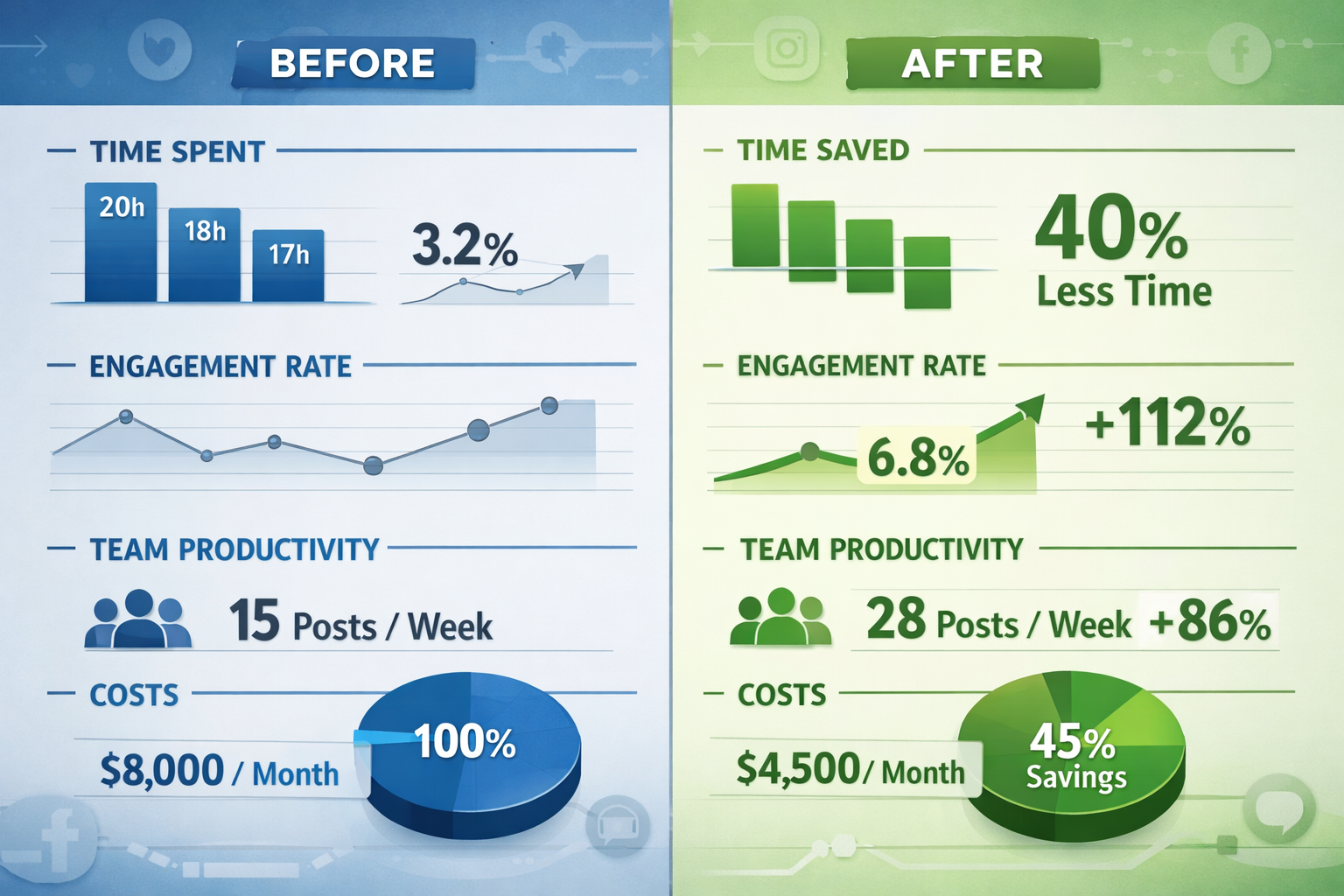
The Optimization of social media workflows is not just an operational necessity, but a strategic competitive advantage in the digital landscape of 2026. Companies that systematically improve their processes achieve average results 45% higher efficiency and 32% better engagement rates while at the same time reducing costs.
The most important success factors at a glance
Systematic approach 
The key lies in the methodical approach: from the thorough analysis of existing processes to the strategic tool selection to continuous optimization based on data and team feedback.
Technology as an enabler 
Modern tools and automation solutions are indispensable helpers, but they only develop their full potential in combination with well-thought-out processes and well-trained teams.
People at the center 
The best technology is of no use without the acceptance and active participation of the team. Investments in training and change management pay off the most in the long term.
Your next steps to an optimized social media workflow
Can be implemented immediately (this week):
- Run one Workflow analysis with your team
- Document the three largest Time waster in your current processes
- Do your research Tool options based on your specific requirements
Short term (next month):
- Implement a central social media management tool
- Standardize yours Content briefing processes
- Establish weekly workflow reviews
Long term (next 3 months):
- Build comprehensive Automation workflows on
- Implement one data-based monitoring system
- Develop one Culture of continuous improvement
Investing in optimized social media workflows pays off after just a few months - both in measurable increases in efficiency and in the improved quality of your digital presence. Start transforming today and position your company for sustainable digital success.
The best time to optimize your social media workflow was yesterday. The second best time is now.
KI-Offenlegung: HINWEIS: Bilder wurden mit KI erstellt oder bearbeitet and sind keine realen Abbildungen. Teile der Texte wurden mit Hilfe von KI erstellt and redaktionell von einem Mensch bearbeitet.