
Social Media Management Software: The Ultimate Guide for 2026
Imagine being able to control all your social media activity from a single platform, while gaining valuable insights about your audience and maximizing your ROI. Social media management software makes exactly that possible and revolutionizes the way companies manage their online presence.
In today’s digital landscape, a strong social media presence is no longer just a “nice to have” – it’s business critical. With over 4.8 billion active social media users worldwide and the ever-growing number of platforms, manually managing social media channels quickly becomes an overwhelming task. This is where social media management software comes into play, helping companies optimize their digital strategy and achieve measurable results.
Key takeaways
• Social media management software centralizes all social media activities and saves an average of 6-8 hours per week
• Automation and scheduling enable consistent posting strategies across multiple platforms
• Analytics and reporting provide data-driven insights for better decision making and ROI optimization
• Team collaboration Features significantly improve workflow efficiency and content quality
• Integration with other tools creates a seamless marketing ecosystem for maximum productivity
What is Social Media Management Software?
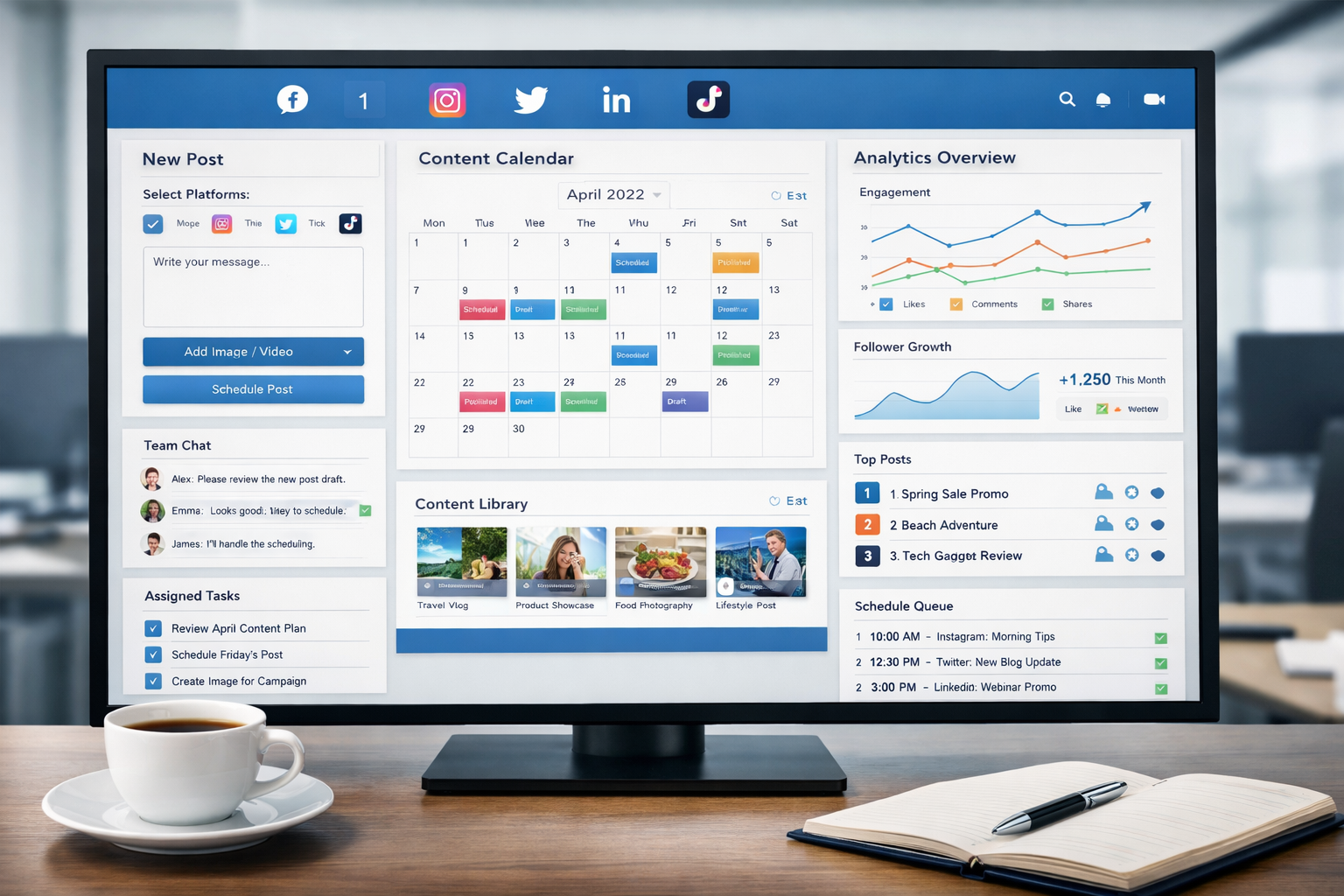
Social media management software is a comprehensive solution that enables companies, agencies and marketing teams to manage all their social media activities from a central platform. Combine these tools Content planning, Publishing, Monitoring, Analytics and Team collaboration in a unified user interface.
Core functions of modern social media tools
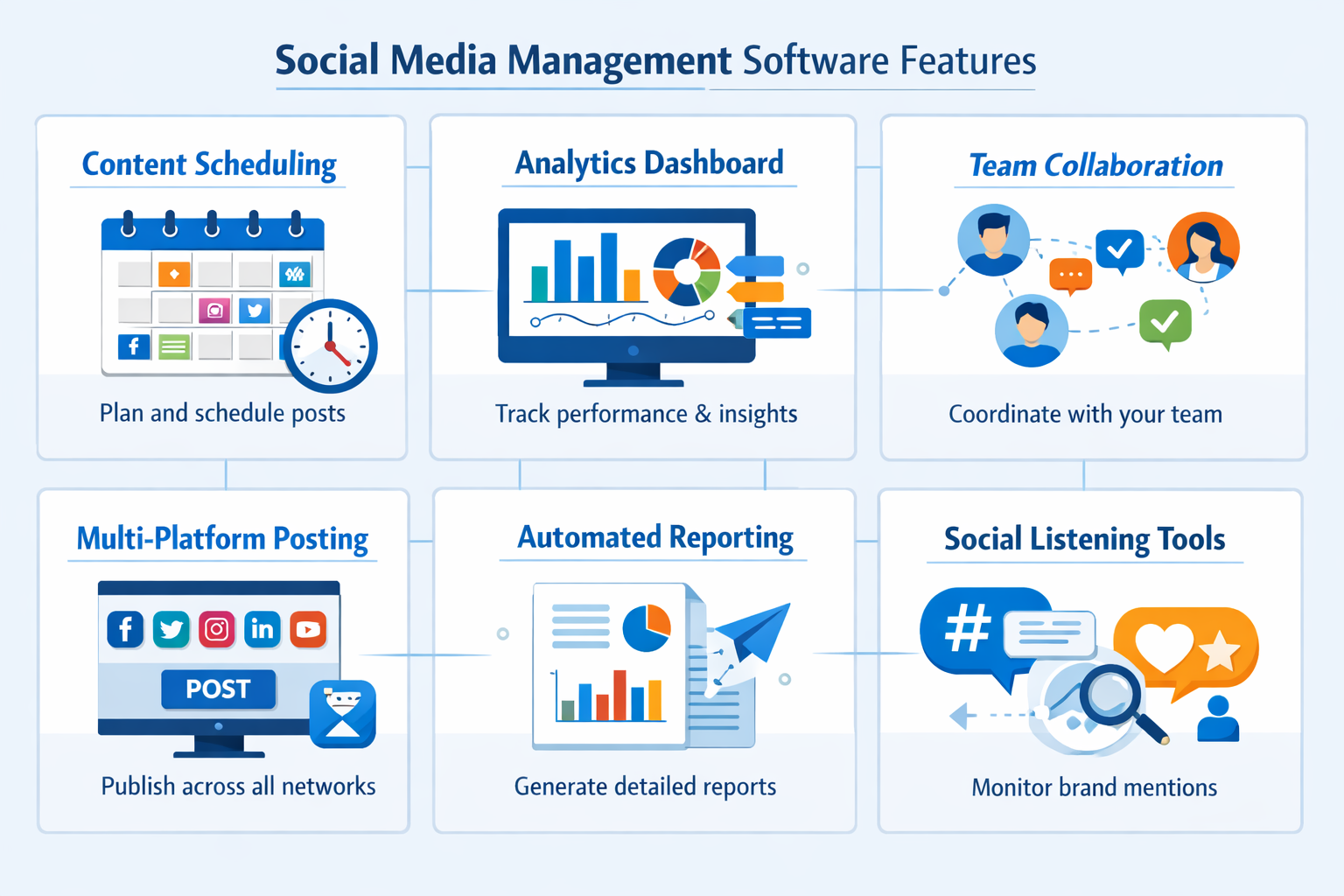
 Content Scheduling & Publishing
- Automated publishing at optimal times
- Bulk upload and batch scheduling
- Platform-specific adjustments
- Visual Content calendar
 Analytics & Reporting
- Engagement metrics and reach analysis
- ROI tracking and conversion measurement
- Competitor benchmarking
- Customizable dashboards
 Team management
- Role-based access rights
- Approval workflows
- Comment and feedback systems
- Task assignment
 Social Listening
- Brand mention monitoring
- Sentiment Analysis
- Trend identification
- Crisis Management Alerts
“The right social media management software can increase a marketing team’s productivity by up to 300% while improving content quality.” – Social Media Marketing Institute
Social@ALL Automations Tool – Post Management with AI
The Evolution of Social Media Management
The development of social media management tools reflects the rapid change in the digital landscape. While early solutions mainly focused on this Scheduling posts modern platforms now offer:
- AI-powered content optimization
- Predictive Analytics for better performance predictions
- Automated Community Management Features
- Cross-platform integration with e-commerce and CRM systems
The most important features of social media management software
Content creation & curation tools
Modernity Social media management software goes far beyond simple scheduling. The best platforms offer integrated Content creation tools, which enable teams to create engaging content directly in the software.
 Visual content tools:
- Drag-and-drop graphic editors
- Template libraries for different platforms
- Stock Photo Integration
- Video editing capabilities
- Brand Asset Management
 Content curation features:
- RSS feed integration
- Content discovery engines
- Trend Analysis Tools
- User-generated content management
- Hashtag research and suggestions
Advanced Analytics & Performance Tracking
Data-driven decision making is at the center of successful social media strategies. Professional social media management software offers detailed analytics that go far beyond standard platform metrics.
| Metric category | Important KPIs | To use |
|---|---|---|
| engagement | Likes, comments, shares, saves | Evaluate content performance |
| Reach & Impressions | Organic vs. paid reach | Understanding audience growth |
| Conversion | Click-through rates, lead generation | ROI measurement and optimization |
| Sentiment | Positive/negative mentions | Brand health monitoring |
Multi-platform integration
The seamless integration different social media platforms is a decisive advantage of modern management software. Leading solutions support:
 Main platforms:
- Facebook (Posts, Stories, Reels)
- Instagram (Feed, Stories, IGTV, Reels)
- Twitter/X (tweets, threads)
- Linkedin (Posts, Articles, Company Pages)
- TikTok (videos, stories)
- YouTube (videos, shorts, community posts)
 Emerging Platforms:
- Pinterest (pins, boards)
- Snapchat (Snaps, Stories)
- Reddit (posts, communities)
- Discord (community management)
Choosing the right social media management software
Needs analysis: What does your company need?
Choosing the right one Social media management software depends largely on the specific needs of your company. A thorough one Needs analysis should consider the following factors:
 Company size & team structure:
- Small companies (1-10 employees): Focus on ease of use and cost-effectiveness
- Medium-sized companies (11-100 employees): Advanced collaboration features and workflow management
- Enterprise (100+ employees): Comprehensive integration, advanced security, custom solutions
Social media maturity level:
- Beginners: Basic scheduling and analytics
- Intermediates: Content creation tools, social listening, team management
- Advanced: AI features, predictive analytics, custom integrations
Budget considerations and ROI calculation
 Understanding pricing models:
Most social media management software providers use tiered pricing models, which depend on various factors:
- Number of profiles managed
- Team members and users
- Monthly Post Limits
- Analytics and reporting depth
- Integration and API access
ROI calculation example:
Time savings: 8 hours/week × 52 weeks = 416 hours/year Marketing Manager hourly wage: €35 Annual time savings: 416 × €35 = €14,560 Software costs: €200/month × 12 = €2,400/year ROI: (€14,560 - €2,400) / €2,400 × 100 = 506% Feature comparison: must-haves vs. nice-to-haves
 Must-have features:
- Multi-platform scheduling
- Basic Analytics & Reporting
- Team collaboration tools
- Content calendar
- Mobile app access
 Nice-to-have features:
- AI-powered content optimization
- Advanced Social Listening
- White label reporting
- Custom Integrations
- Advanced AUTOMATION Rules
“The best social media management software is the one that seamlessly integrates with your existing workflows and scales with your business.” – Digital Marketing Expert
Integration with existing tools
Key integrations:
Modernity Social media management software should fit easily into your existing one Marketing tech stack integrate:
CRM integration:
- Salesforce
- HubSpot
- Pipedrive
- Zoho CRM
Email marketing:
- Mailchimp
- Constant contact
- SendGrid
- Campaign Monitor
Analytics & Business Intelligence:
- Google Analytics
- Adobe Analytics
- Tableau
- Power BI
Content management:
- WordPress
- Drupal
- Shopify
- Magento
Implementation and best practices
Optimize onboarding process
The successful one Implementation of social media management software starts with a structured onboarding process. Companies that take a systematic approach achieve 85% faster your desired productivity goals.
Step-by-step implementation:
Phase 1: Preparation (Week 1-2)
- Audit of existing social media accounts
- Define team roles and responsibilities
- Determine content categories and posting frequencies
- Document brand guidelines and approval processes
Phase 2: Setup & Configuration (Week 3-4)
- Connect and verify platform accounts
- Set up user roles and access rights
- Configure content categories and tags
- Customize reporting dashboards
Phase 3: Training & Testing (Week 5-6)
- Conduct team training
- Create and run test campaigns
- Test workflows and approval processes
- Collect feedback and make adjustments
Team training and change management
Ensuring successful team adoption:
The human factor is often the most critical aspect when introducing new social media management software. Studies show that 70% of software implementations fail due to lack of user adoption.
Effective training strategies:
- Hands-on workshops with real use cases
- Video tutorials for different skill levels
- Champion programs with power users as multipliers
- Regular check-ins and feedback sessions
Change Management Best Practices:
- Clear communication of benefits and goals
- Gradual introduction of new features
- Ongoing support and resources
- Celebrate and share successes
Workflow optimization and automation
 Productivity through intelligent workflows:
The true strength of Social media management software lies in the ability to automate repetitive tasks and optimize workflows.
Content creation workflow:
- Ideation & Research → Content calendar and trend analysis
- Creation & Design → Integrated design tools and asset management
- Review & Approval → Automated approval workflows
- Scheduling & Publishing → Optimized posting times
- Monitoring & engagement → Real-time notifications and response management
Automation options:
- Auto scheduling based on audience insights
- Smart hashtag suggestions for maximum range
- Automated Responses for common customer inquiries
- Performance alerts during unusual activities
Performance monitoring and optimization
Continuous improvement through data analysis:
Successful social media management software usage requires continuous monitoring and data-driven optimization.
Key Performance Indicators (KPIs) Dashboard:
| Period | Engagement rate | Follower growth | Click-through rate | Conversion rate |
|---|---|---|---|---|
| Weekly | 3.2% (+0.3%) | +127 followers | 2.1% (+0.2%) | 1.8% (+0.1%) |
| Monthly | 3.0% (+0.5%) | +542 followers | 1.9% (+0.4%) | 1.7% (+0.3%) |
| Quarterly | 2.8% (+0.8%) | +1,634 followers | 1.7% (+0.6%) | 1.5% (+0.5%) |
Optimization strategies:
- A/B testing for content formats and posting times
- Audience segmentation for targeted content
- Content Performance Analysis for better content strategies
- Competitor benchmarking for market positioning
“Companies that regularly analyze and optimize their social media performance achieve 35% better engagement rates than those that only measure sporadically.” – Social Media Analytics Report 2026
Future trends and conclusion

Emerging Technologies in Social Media Management
The Future of social media management software is significantly influenced by technological innovations. Artificial intelligence, Machine learning and Augmented reality are already revolutionizing the way companies interact with their target groups.
 AI-powered features of the future:
- Predictive content performance: AI analyzes historical data and predicts the performance of new content
- Automated content generation: Intelligent tools create personalized content based on audience preferences
- Real-time Sentiment Analysis: Instantly detect changes in community sentiment
- Dynamic Pricing Optimization: Automatically adjust ad spend based on performance metrics
Platform evolution and new channels:
The social media landscape is evolving rapidly. Social media management software must adapt to new platforms and formats:
- Audio-based platforms like Clubhouse and Spaces
- AR/VR social experiences for immersive brand interactions
- Social Commerce Integration for seamless shopping experiences
- Micro Video Platforms for short, engaging content formats
Sustainability and ethical considerations
Responsible social media use:
Modernity Social media management software increasingly integrates features for sustainable and ethical Social media practices:
- Carbon footprint tracking for digital campaigns
- Accessibility features for inclusive content creation
- Privacy-First Analytics in line with GDPR and other data protection regulations
- Mental Health Considerations in community management
ROI and business impact
 Measurable business results:
Investing in professional Social media management software demonstrably pays off. Companies report on:
- 45% reduction the time for content creation and management
- 60% improvement team collaboration and workflow efficiency
- 35% increase engagement rates through optimized posting strategies
- 25% increase lead generation through better analytics and targeting
Long-term strategic advantages:
- Consistent brand presence across all channels
- Data-driven decision making
- Scalable social media operations
- Improved customer experience and satisfaction
Conclusion
Social media management software is no longer just a practical tool - it is a strategic business enabler, which helps companies succeed in the digital era. The right platform can fundamentally transform the way teams work together, how brands engage with their audiences, and how companies maximize their marketing ROI.
Your next steps
Actions that can be implemented immediately:
Conduct a needs analysis: Evaluate your current social media processes and identify opportunities for improvement
Create a shortlist: Based on your needs and budget considerations, select 3-5 potential solutions
Use free trials: Most providers offer 14-30 day free trial periods - use this for practical evaluation
Plan the implementation: Develop a detailed rollout plan with clear milestones and success measurements
Invest in Training: Make sure your team is optimally prepared for the new software
The future of social media management is data driven, automated and strategically aligned. Companies that are in the right place today Social media management software invest, position themselves for sustainable success in an increasingly connected world.
Remember: The best software is the one that not only meets your current needs, but also grows with your business and adapts to future challenges. Invest wisely and reap the rewards of an optimized, efficient and successful social media strategy.
KI-Offenlegung: HINWEIS: Bilder wurden mit KI erstellt oder bearbeitet and sind keine realen Abbildungen. Teile der Texte wurden mit Hilfe von KI erstellt and redaktionell von einem Mensch bearbeitet.