
Recruiting employees via social media: The ultimate guide for successful recruiting in 2026
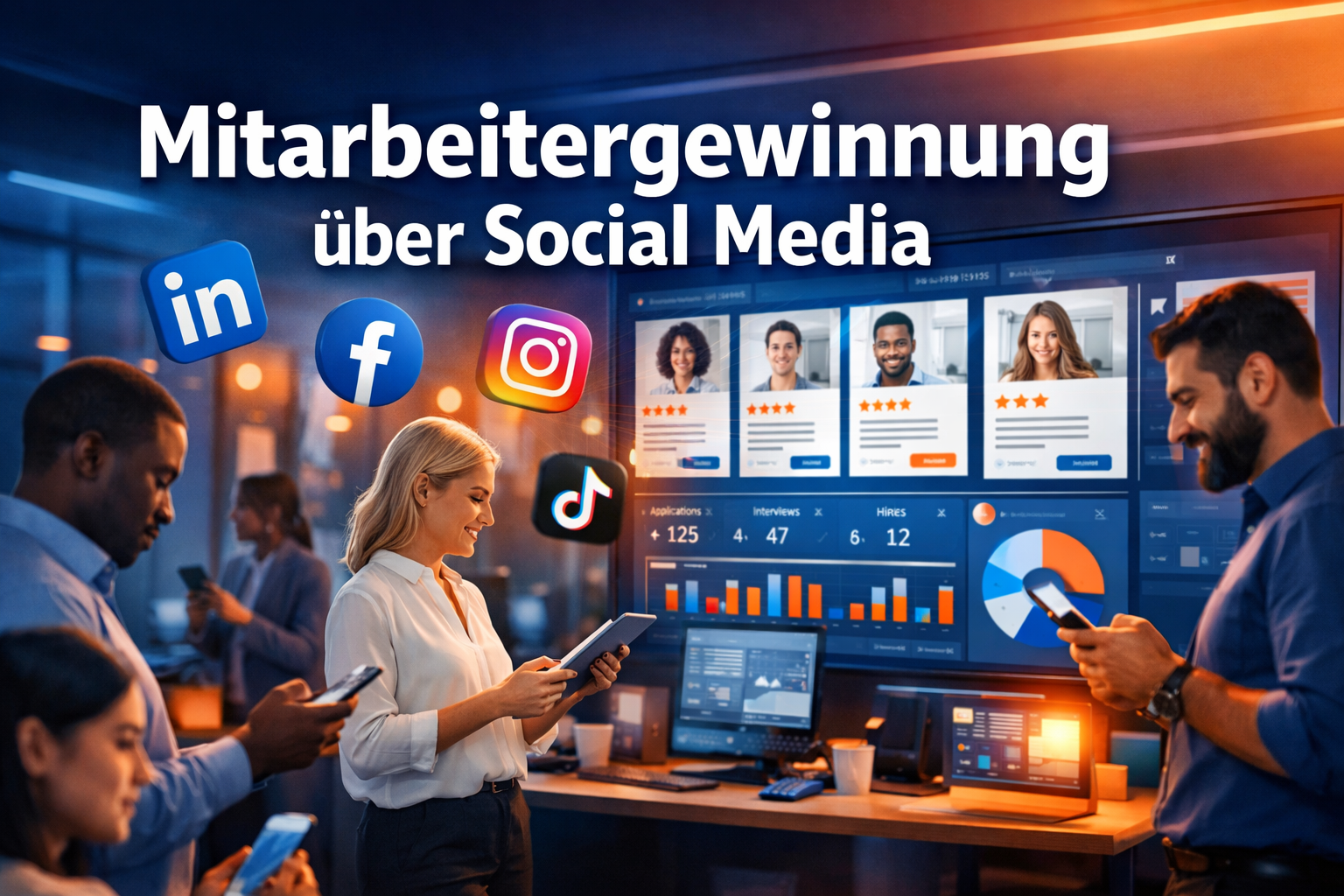
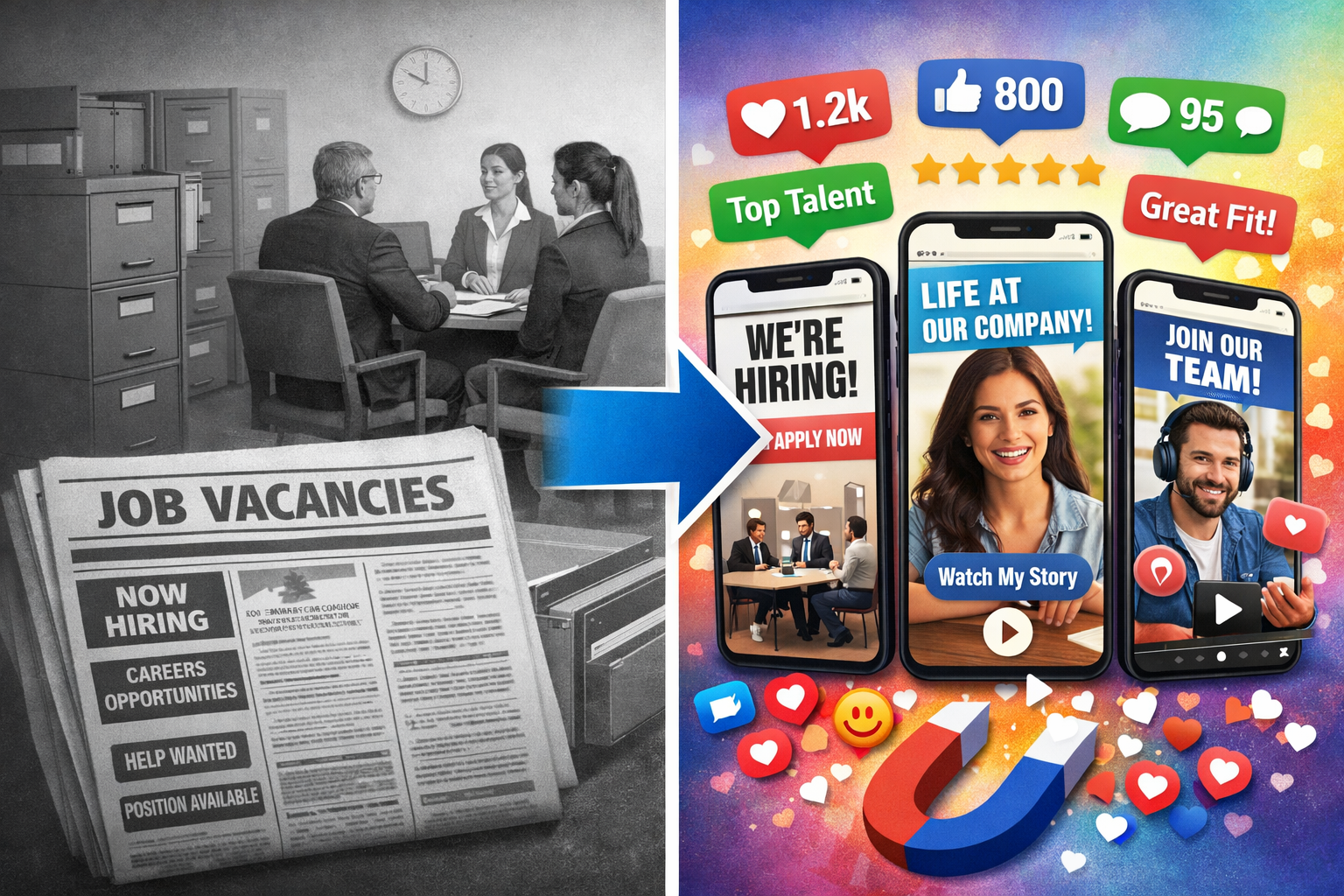
The days when job advertisements were only placed in print media are long gone. Recruiting employees via social media has become one of the most effective methods for finding qualified specialists and strengthening employer branding. In a world where 4.8 billion people use social networks every day, companies are opening up completely new opportunities to connect with potential applicants and provide authentic insights into company culture.
Key takeaways 

- Social media recruiting reaches passive candidates: 70% of employees are not actively looking for a job but are reachable via social media
- Authenticity beats perfection: Real employee stories and behind-the-scenes content generate 3x more engagement than polished ads
- Platform-specific strategies are crucial: LinkedIn for professionals, Instagram for corporate culture, TikTok for young target groups
- Measurable success through analytics: Social media recruiting can reduce the cost per hire by up to 50%
- Build long-term relationships: Talent pools are created through continuous interaction, not one-off postings
Why recruiting employees via social media has become indispensable
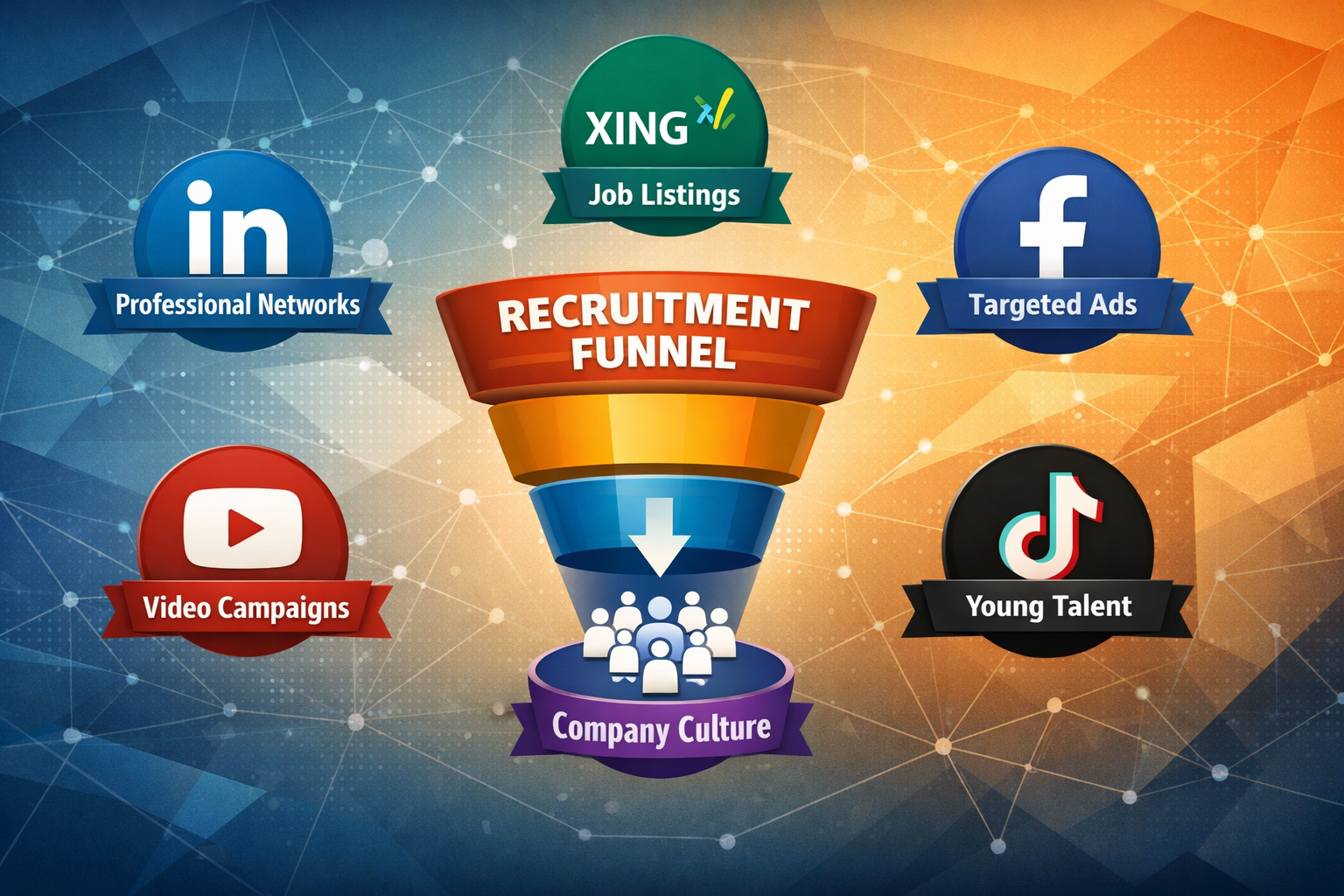
Traditional personnel recruiting is reaching its limits these days. While classic job portals mainly appeal to actively searching candidates, the Recruiting employees via social media access to a much larger talent pool.
The advantages at a glance:
- Extended range: Access to passive candidates who are not actively looking for jobs
- Cost efficiency: Up to 50% lower cost per hire compared to traditional methods
- Precise target group targeting: Detailed targeting based on skills, interests and demographics
- Authentic employer branding: Real insights into the company culture and working atmosphere
- Faster communication: Direct dialogue with interested parties without detours
The change in application behavior
The way people look for jobs has fundamentally changed. A recent study shows that 79% of job seekers Use social media in your application process. Generation Z and Millennials in particular primarily find out about potential employers via social networks.
“Social media isn’t just a recruiting channel – it’s the window through which candidates first view your company.” – HR expert Dr. Michael Schmidt
The most important platforms for social media recruiting
Not all social networks are equally suitable for this Recruiting employees via social media. Each platform has its specific strengths and target groups that companies should use strategically.
LinkedIn: The powerhouse for B2B recruiting
Linkedin remains the undisputed number 1 for professional recruiting:
- Usership: Over 900 million members worldwide, including 19 million in Germany
- Target group: Specialists and managers from all sectors
- Special features:
- LinkedIn Recruiter for advanced search functionality
- Sponsored content for targeted job advertisements
- Company pages for employer branding
- LinkedIn Learning for further training offers
LinkedIn best practices:
- Regular updates about company successes and employee highlights
- Participation in specialist groups and discussions
- Use of LinkedIn Analytics to optimize reach
Instagram: Communicate corporate culture visually
Instagram is ideal for showing the human side of the company:
- Strengthen: Visual representation of workplaces, team events and company culture
- Target group: 25-40 years, creative professions, marketing, design
- Content formats:
- Stories for spontaneous insights
- Reels for dynamic content
- IGTV for longer employee interviews
- Live sessions for Q&A sessions
TikTok: The new frontier for young talent
TikTok is rapidly becoming more important for addressing Generation Z:
- reach: Over 1 billion active users worldwide
- Target group: 16-25 years, young professionals, trainees
- Recipe for success: Authentic, entertaining content instead of polished advertising
TikTok Recruiting Trends 2026:
- “Day in the Life” videos from employees
- Behind-the-scenes insights into work processes
- Challenges and hashtag campaigns
- Short explanatory videos about job profiles
XING: The German LinkedIn competitor
XING remains particularly relevant in German-speaking countries:
- focus: German, Austrian and Swiss skilled workers
- Special features: Events feature for networking events
- Advantage: Less international competition for attention
Strategies for successful employee recruitment via social media
A well-thought-out strategy is the key to success Recruiting employees via social media. Companies have to take various aspects into account, from defining the target group to creating content.
1. Target group definition and persona development
Step 1: Analysis of the desired candidates
- Demographic characteristics (age, gender, education)
- Professional qualifications and experience
- interests and values
- Preferred social media platforms
- Communication style and preferences
Step 2: Creating detailed buyer personas
| Persona element | Example: “Tech talent Tim” | Example: “Marketing Manager Maria” |
|---|---|---|
| Old | 28-35 years | 30-40 years |
| Platforms | Linkedin, GitHub, Twitter | Linkedin, Instagram, Facebook |
| interests | New technologies, open source | Trends, creativity, networking |
| challenges | Work-life balance, further training | Career development, team leadership |
| motivation | Exciting projects, flexible working hours | Responsibility, creative freedom |
2. Content strategy for authentic employer branding
The 4 pillars of successful recruiting content:
Show corporate culture
- Employee testimonials and success stories
- Team events and corporate events
- Workplace tours and office atmosphere
- Values and mission of the company
Further training and development
- Training offers and certifications
- Career paths and advancement opportunities
- Mentoring programs
- Conference participation and specialist events
Work-life balance
- Flexible working hours and home office options
- Health and wellness programs
- Family-friendly measures
- Sabbaticals and breaks
Professional expertise
- Insights into exciting projects
- Technology stack and tools
- Innovations and future plans
- Industry expertise and thought leadership
3. Platform-specific content customization
LinkedIn content:
- Professional articles about industry trends
- Employee spotlights with a professional focus
- Company updates and milestones
- Technical discussions and thought leadership
Instagram content:
- Visual stories from everyday work
- Behind-the-scenes insights
- Team photos and event impressions
- Infographics about benefits and career opportunities
TikTok content:
- Short, entertaining videos
- Adapt trends and challenges
- Authentic employee testimonials
- Humorous insights into everyday working life
Best practices and proven methods
The Recruiting employees via social media requires a strategic approach and adherence to best practices. Successful companies follow certain principles that have proven to be particularly effective in practice.
Employee Advocacy: Employees as brand ambassadors
What is Employee Advocacy?
Employee advocacy refers to the practice of using your own employees as authentic ambassadors for the employer brand. This strategy is particularly effective because... 92% of people Trust people’s recommendations more than company advertising.
Implementing an Employee Advocacy Strategy:
- Ensure voluntariness: Employees should never be pressured to participate
- Develop guidelines: Create clear guidelines for social media posts
- Content support: Provide ready-made content and templates
- Offer training: Workshops on professional social media behavior
- Show recognition: Appreciate employees for their contributions
Examples of success for employee-generated content:
- A day in the life of…” – employee stories
- Further training experiences and certifications
- Project successes and team achievements
- Company events from a personal perspective
- Professional insights and learnings
Community building and engagement
Building a talent community:
A talent community is a network of potential candidates who have shown interest in the company but may not be ready for a job change.
Community Building Steps:
- Create content hub: Central point of contact for career-relevant content
- Regular interaction: Reply to comments, moderate discussions
- Exclusive content: Special insights for community members
- Organize events: Virtual networking events and webinars
- Get feedback: Regular surveys for improvement
Optimize timing and frequency
Optimal posting times by platform:
| platform | Best days | Best times | Posting frequency |
|---|---|---|---|
| Tuesday, Thursday | 9:00-10:00, 17:00-18:00 | 3-5x per week | |
| Wednesday-Friday | 11:00 a.m. - 1:00 p.m., 7:00 p.m. - 9:00 p.m | Daily | |
| TikTok | Tuesday, Thursday | 3:00 p.m. - 6:00 p.m., 7:00 p.m. - 9:00 p.m | 3-7x per week |
| Monday-Wednesday | 8:00-9:00, 17:00-19:00 | 2-3x per week |
Key Timing Insights:
- Consistency beats perfection: Regular posts are more important than perfect timing
- Use A/B testing: Test different times and measure engagement
- Consider the target group: Pay attention to working hours and habits of the target group
- Mobile first: 70% of social media usage is mobile
Legal aspects and compliance
At the Recruiting employees via social media Companies have to consider various legal aspects:
Data protection (GDPR):
- Obtain consent to data processing
- Provide a transparent privacy policy
- Guarantee the right to deletion and information
- Practice data minimization
 Obtain consent to data processing
Anti-discrimination law (AGG):
- No discriminatory job advertisements
- No pre-selection based on profile pictures
- Define objective selection criteria
- Documentation of the selection process
 No discriminatory job advertisements
Labor law:
- Involve the works council in social media guidelines
- Clear guidelines for employee posts
- Dividing line between private and professional use
Success measurement and KPIs in social media recruiting
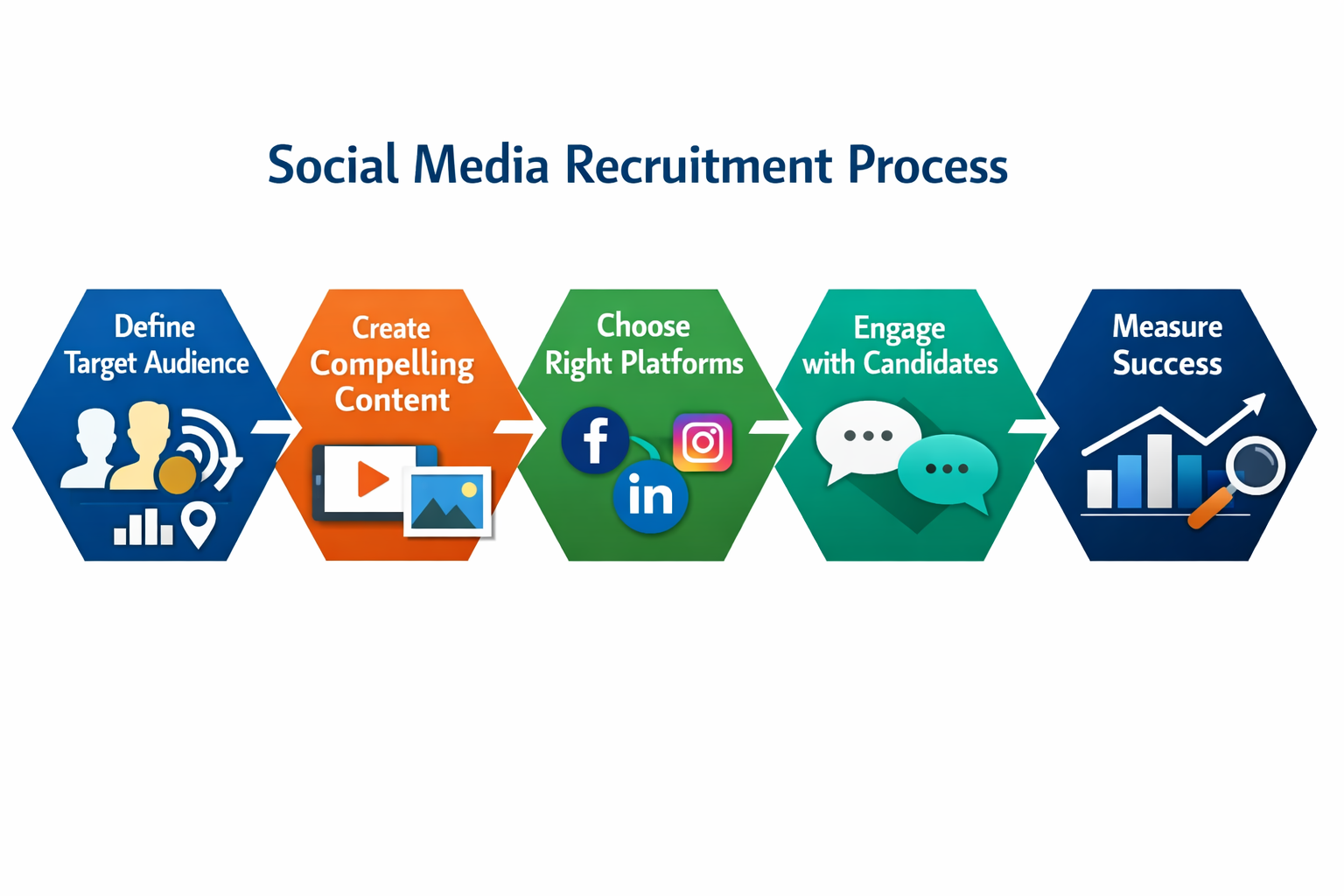
The Recruiting employees via social media requires systematic measurement of success in order to optimize strategies and evaluate the return on investment (ROI). Without clear metrics, the success of social media recruiting activities remains unclear.
Important KPIs for social media recruiting
Reach and engagement metrics:
| KPI | Description | Target value | Measurement method |
|---|---|---|---|
| reach | Number of people who viewed content | +20% monthly | Native analytics |
| Engagement rate | Likes, comments, shares per post | 3-5% | (Interactions/Reach) × 100 |
| Click-through rate | Clicks on job advertisements | 2-4% | Clicks/Impressions × 100 |
| Follower growth | New followers per month | 10-15% | Monthly comparison |
Recruiting-specific metrics:
- Application quality: Share of qualified applications from social media
- Time to fill: Average time spent filling social media candidates
- Cost per hire: Cost per successfully hired candidate
- Conversion rate: From the first contact to the hiring
- Talent pool growth: Building a candidate database
Tools for measuring success
Native analytics tools:
- Linkedin Analytics: Detailed insights into company pages and job advertisements
- Instagram Insights: Reach, engagement and target group analysis
- TikTok Analytics: Video performance and follower development
- Facebook Business Manager: Comprehensive advertising and content analytics
External monitoring tools:
- Hootsuite Analytics: Cross-platform analysis
- Sprout Social: Social media ROI tracking
- Buffer analysis: Content performance measurement
- Google Analytics: Website traffic from social media
ROI calculation for social media recruiting
Social Media Recruiting ROI Formula:
ROI = (Cost Saved + Added Value - Investment) / Investment × 100 Sample calculation:
- Traditional recruiting costs: €15,000 per position
- Social media recruiting costs: €8,000 per position
- Costs saved: €7,000
- Additional value (better candidate quality): €3,000
- ROI = (€7,000 + €3,000 – €8,000) / €8,000 × 100 = 25%
Reporting and optimization
Monthly Reporting Dashboard:
Performance overview:
- Total reach of all platforms
- Engagement development over time
- Top-performing content types
- Platform-specific achievements
Recruiting successes:
- Number of applications generated
- Quality index of candidates
- Successful settings
- Cost-per-hire development
Optimization recommendations:
- Identify underperforming content
- Adjust best posting times
- Refine audience targeting
- Budget reallocation between platforms
Future trends and developments in 2026
The Recruiting employees via social media is developing rapidly. Companies that want to recruit successfully in 2026 should keep an eye on current trends and adapt their strategies accordingly.
AI and automation in social recruiting
Current developments:
- Chatbots for initial consultation: Automated answering of common questions
- Predictive Analytics: Predicting the best candidates based on social media data
- Smart targeting: AI-supported target group identification
- Automated content creation: AI-generated, personalized job advertisements
Advantages of automation:
- Faster response times to application requests
- Scalable candidate experience
- Data-driven optimization
- 24/7 availability for international candidates
Video-first recruiting
Video content trends 2026:
- Live recruiting events: Virtual job fairs and Q&A sessions
- Short form videos: 15-60 second insights into job roles
- Podcast recruiting: Audio content for deeper insights
- VR office tours: Immersive workplace experiences
Successful video formats:
- “A day in the life of…” – employee documentation
- CEO messages for important positions
- Team challenges and behind-the-scenes
- Technical tutorials and skill showcases
Sustainability and purpose-driven recruiting
Value-oriented approach to candidates:
- Sustainability storytelling: Environmental initiatives and CSR projects
- Social impact: Social contribution of the company
- Work-life integration: Flexible working models and well-being
- Diversity & Inclusion: Authentic diversity in the workforce
Micro-influencers and niche communities
Community-based recruiting:
- Specialist communities: Specialized groups for specific skills
- Alumni networks: University and college connections
- Industry associations: Professional organizations and certification bodies
- Micro influencers: Subject matter experts with smaller but engaged followings
Common mistakes and how to avoid them
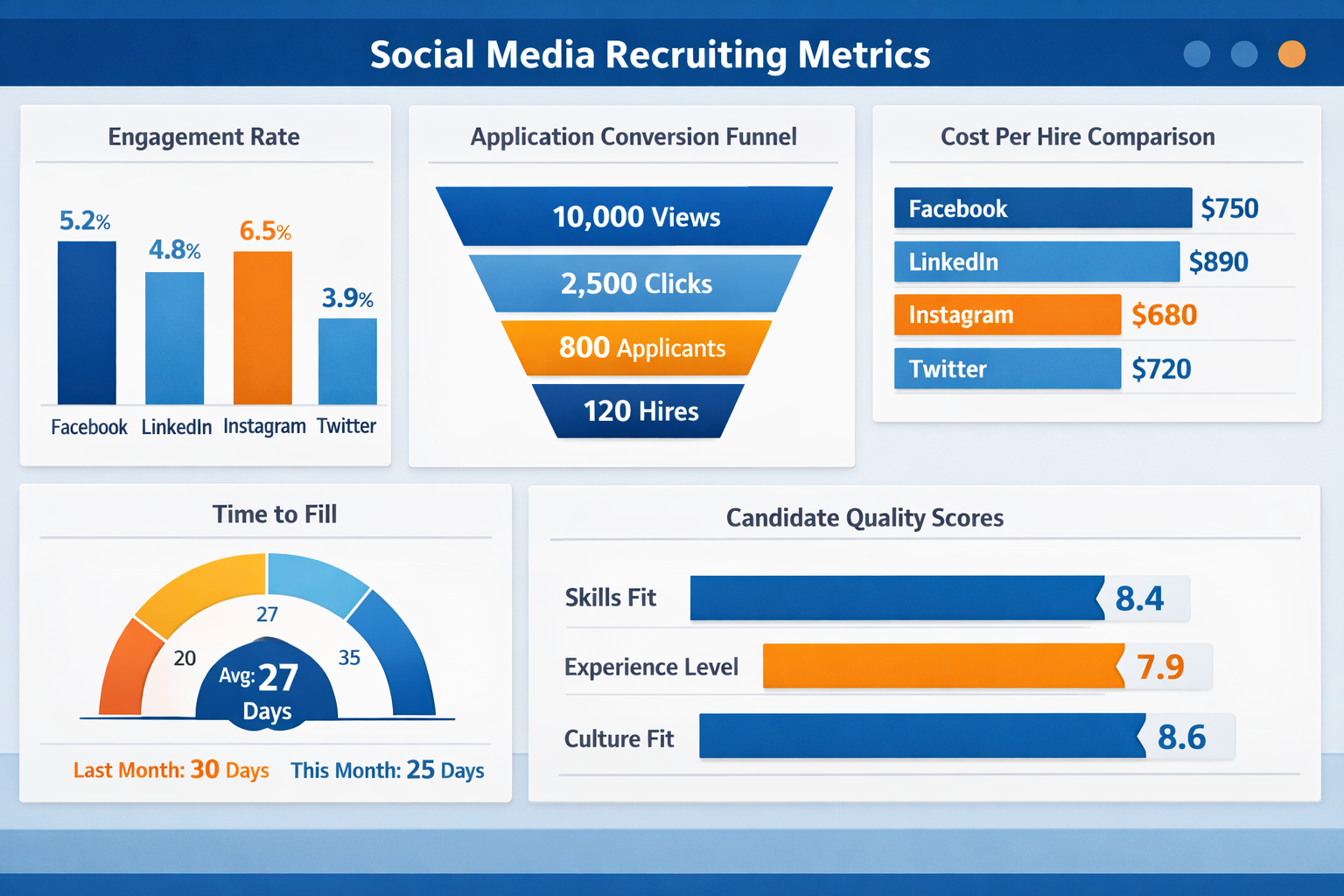
At the Recruiting employees via social media Even experienced HR professionals make typical mistakes that can significantly impact the success of the recruiting strategy.
The 7 biggest social media recruiting mistakes
1. Lack of target group definition
- Mistake: Generic content for all platforms
- Solution: Detailed persona development for each target group
- Tip: A/B testing of different approaches
2. Neglecting mobile optimization
- Mistake: Desktop-optimized job advertisements and application processes
- Solution: Mobile-first approach to all content
- statistics: 78% of job seekers use mobile devices
3. Too little human interaction
- Mistake: Automated replies and standard messages only
- Solution: Personal approach and real conversations
- Best practices: 24-hour reply policy for direct messages
4. Lack of measurement of success
- Mistake: No KPI definition and tracking
- Solution: Clear metrics and regular reporting
- Tools: Native analytics + external monitoring software
5. Inconsistent branding
- Mistake: Different messages on different platforms
- Solution: Uniform brand guidelines for all channels
- Checklist: Tone of Voice, Visuals, Value Communication
6. Wrong timing strategies
- Mistake: Posting without taking target group activity into account
- Solution: Platform-specific timing optimization
- method: Continuous A/B testing of posting times
7. Lack of authenticity
- Mistake: Too polished, unrealistic portrayal
- Solution: Real employee stories and behind-the-scenes content
- Rule: 80% authentic content, 20% polished advertising
Crisis management in social media
Preparing for negative situations:
Preventive measures:
- Crisis Communication Plan: Predefined response strategies
- Response team: Clear responsibilities in critical situations
- Response times: Maximum response times for different situations
- FAQ collection: Preparation for common critical questions
Reaction to criticism:
- Respond quickly (within 2-4 hours)
- Answer publicly with justified criticism
- Direct to private channels for more complex problems
- Communicate transparently about improvement measures
- Follow-up after problem solving
Conclusion: Successful employee recruitment via social media
The Recruiting employees via social media has evolved from an experimental approach to an indispensable pillar of modern recruiting strategies. Companies that want to compete for the best talent in 2026 cannot avoid a well-thought-out social media presence.
The most important success factors at a glance:
Strategic planning
- Clear target group definition and persona development
- Platform-specific content strategies
- Long-term talent pool development instead of short-term job filling
Authentic communication
- Real employee stories instead of polished advertising messages
- Transparent insights into corporate culture and everyday work
- Direct dialogue with potential candidates
Data-driven optimization
- Continuous success measurement and KPI tracking
- A/B testing of content formats and timing
- ROI-based budget allocation between platforms
Future orientation
- Integration of new technologies such as AI and VR
- Adaptation to changing target group preferences
- Sustainability and purpose as recruiting factors
Concrete next steps for your company:
-
Audit of current social media presence
- Evaluation of existing profiles and content
- Identification of optimization potential
- Competition analysis in your industry
-
Team building and training
- Building a social media recruiting team
- Training HR employees in social media best practices
- Development of employee advocacy programs
-
Start pilot project
- Selecting a target group and platform for the test run
- Definition of clear goals and KPIs
- 3-month test phase with weekly monitoring
-
Scaling and optimization
- Expansion of successful approaches to other platforms
- Integration into existing recruiting processes
- Continuous development based on data and feedback
The Recruiting employees via social media offers companies the opportunity to not only recruit more efficiently, but also to build stronger relationships with talent and position themselves as an attractive employer. The key lies in authentic, strategic and data-driven implementation - then social media recruiting becomes a sustainable competitive advantage in the fight for the best minds
KI-Offenlegung: HINWEIS: Bilder wurden mit KI erstellt oder bearbeitet und sind keine realen Abbildungen. Teile der Texte wurden mit Hilfe von KI erstellt und redaktionell von einem Mensch bearbeitet.