
Have SEO created: The complete guide for successful search engine optimization in 2026
Last updated: January 20, 2026
Imagine your website is ready - but no one can find it. This is exactly where professional search engine optimization comes into play. Whoever decides today Have SEO created to want to, faces a completely different landscape than it did just a few years ago. AI-powered search engines, zero-click results and the dominance of ChatGPT, Perplexity and Google AI have completely changed the game.
The good news: professional Have SEO created is more important than ever in 2026 – but it works differently. While keyword stuffing and backlink purchases used to bring success, today it's about expertise, trust and optimization for AI systems that have to understand and cite your content.
Key takeaways
- Have SEO created 2026 means optimization for AI systems and classic search engines at the same time - pure keyword tactics are outdated
- Professional SEO service providers combine technical optimization, content strategy and brand building across multiple platforms
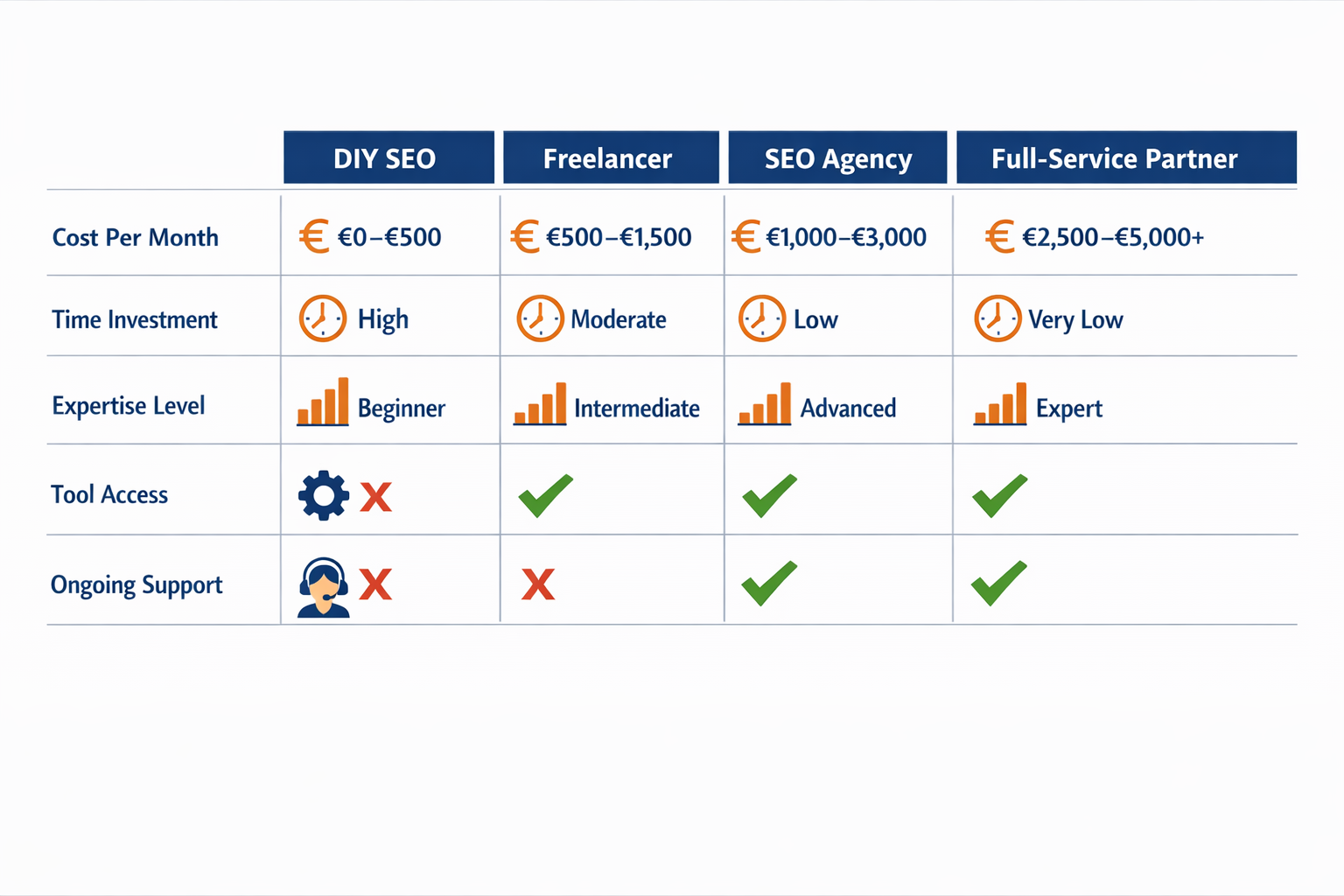
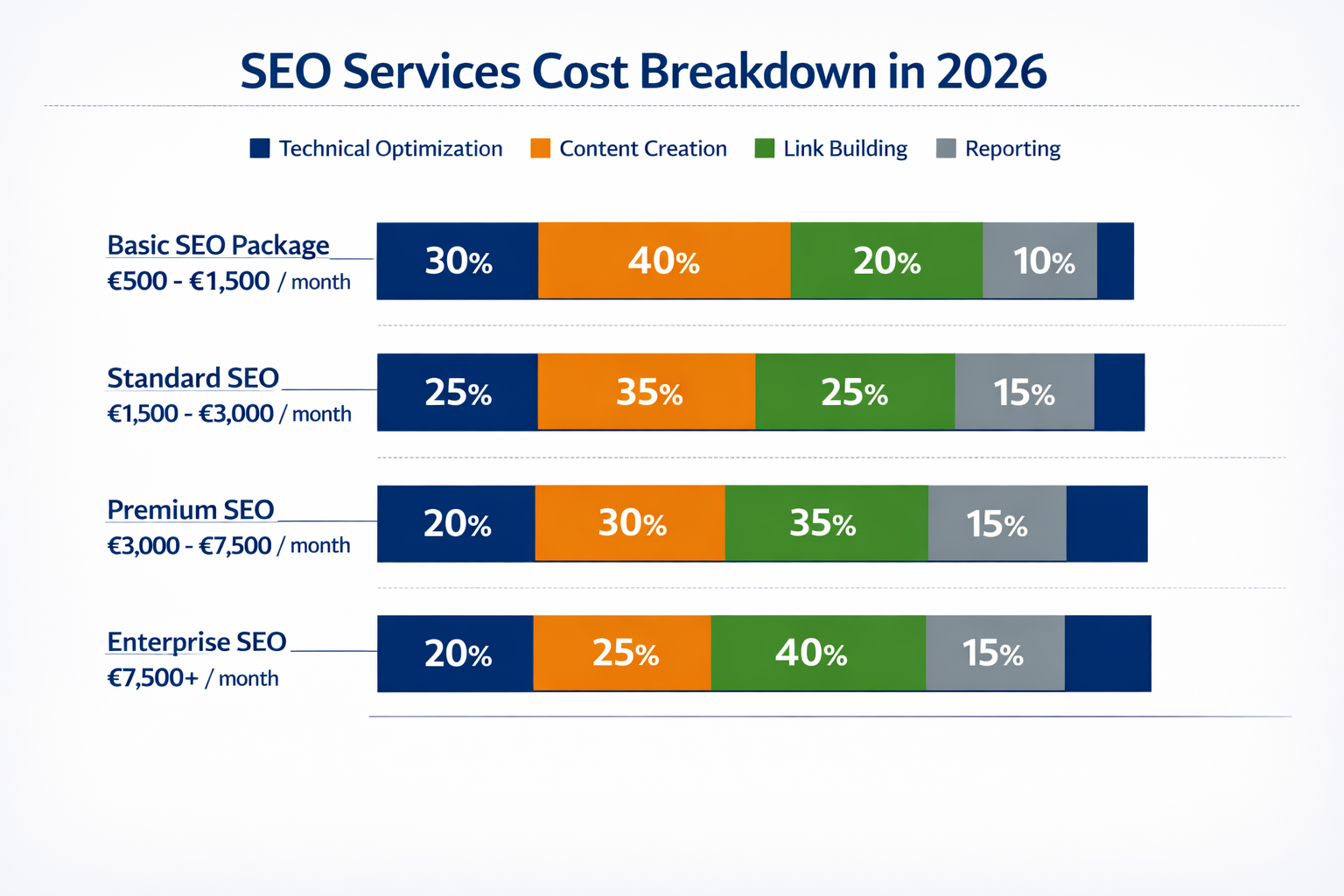
- The cost of SEO services varies between €500 and €7,500+ per month, depending on the scope, industry and competition
- E-E-A-T signals (expertise, experience, authority, trustworthiness) are more important than pure backlink numbers
- Successful SEO 2026 requires interdisciplinary collaboration between content, technology, UX and PR teams
What does “getting SEO done” mean in 2026?
Have SEO created Today means having experts develop and implement a comprehensive optimization strategy that takes both traditional search engines and AI-supported answer engines into account. It's no longer just about Google rankings, but about visibility wherever people search for information.
The landscape has changed dramatically. While SEO used to be primarily focused on Google rankings, in 2026 websites will need to be optimized for an entire ecosystem: Google AI Overviews, ChatGPT, Perplexity, Bing Copilot and even social platforms like TikTok or Reddit[3]. The concept is called now “Search Everywhere Optimization” – because users search everywhere, not just on Google.
Specifically, professional SEO 2026 includes:
- Generative Engine Optimization (GEO): Structure content so that AI systems can understand it, summarize it and cite it as a source[2][3]
- Technical basics: Valid robots.txt, XML sitemaps, loading speed under 2 seconds, structured data (Schema.org), JavaScript-independent content[3]
- Build E-E-A-T signals: Expertise, experience, authority and trustworthiness through brand presence in trusted media and consistent profiles across platforms[1][2]
- Content strategy for people AND machines: Content that is both processed by AI language models and perceived as trustworthy by humans[1][10]
- Thematic depth instead of keyword focus: Semantic clusters, intent mapping and logically structured information architecture[2]
Important difference from before: Pure keyword optimization and backlink purchases no longer work. AI-powered detection systems quickly identify inferior tactics[1][10]. Instead, real expertise and demonstrable authority count.
When does it make sense to have SEO done?
- You have no internal resources with current SEO know-how
- Your website is not generating enough qualified traffic
- You want to become visible in highly competitive markets
- You need measurable results in 6-12 months
- You want to concentrate on your core business
For more information on creating a professional website that is already SEO optimized, see our guide Have your website professionally created.
Why is DIY SEO often no longer enough in 2026?
The complexity of SEO has increased exponentially in 2026. While a few years ago basic knowledge of keyword research and on-page optimization was enough, effective SEO today requires an interdisciplinary skillset that hardly any single person can cover.
The biggest challenges with DIY SEO:
1. Technical complexity
- Core Web Vitals Optimization (LCP, FID, CLS)
- JavaScript rendering and SEO
- Structured data (JSON-LD schema markup)
- International SEO and hreflang tags
- Mobile-First Indexing and Progressive Web Apps
2. AI integration and GEO
Since 2023, 86% of SEO professionals have been using AI tools daily[4]. Companies with 200+ employees report 83% of measurable performance improvements through AI adoption[4]. Without a deep understanding of how AI systems process content, you will remain invisible in ChatGPT, Perplexity and Google AI Overviews.
3. Resource intensity
Professional SEO requires continuous work:
- Technical monitoring and troubleshooting
- Content creation (at least 4-8 high-quality articles monthly)
- Backlink building and outreach
- Competition and keyword analysis
- Performance tracking and reporting
4. Constantly changing algorithms
Google carries out hundreds of updates every year. The shift to AI-powered search with AI Overviews fundamentally changes impression metrics[4]. What works today may be obsolete tomorrow.
5. Lack of tools and data
Professional SEO tools cost between €100 and €500+ per month:
- Ahrefs or SEMrush for backlink analysis
- Screaming Frog for technical audits
- Surfer SEO or Clearscope for content optimization
- Google Search Console and Analytics (free but complex)
When DIY SEO can work:
- Local niche markets with low competition
- You have time to work 10+ hours a week
- Your budget is extremely limited (under €500/month)
- You run a blog without commercial goals
Decision rule: If your business relies on organic traffic or you operate in a competitive market, professional services are worthwhile Have SEO created almost always. The opportunity cost of failed DIY SEO usually exceeds the agency costs.
You can find out more about technical optimization in our article about Professional search engine optimization.
What SEO services can you get created in 2026?
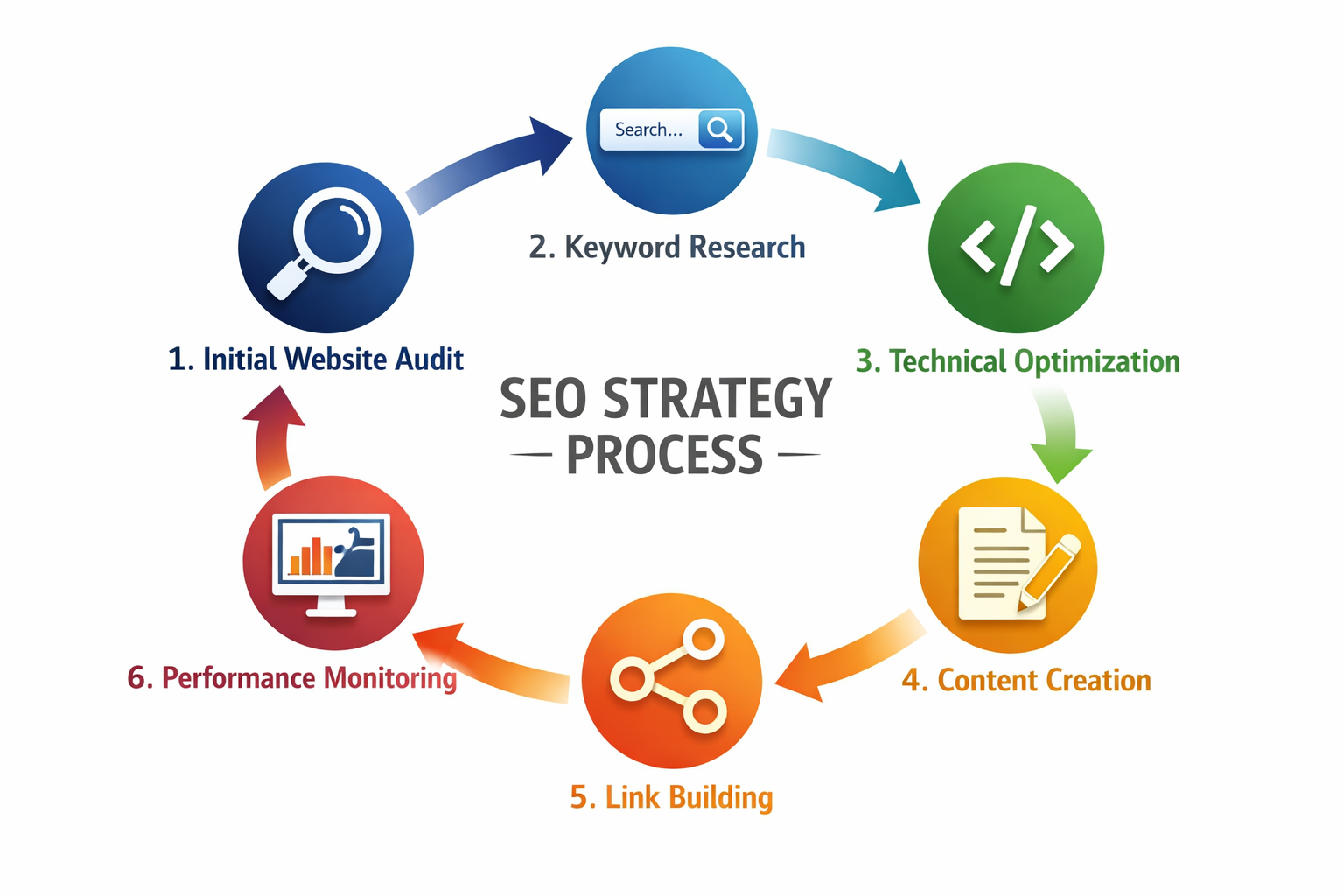
Professional SEO providers offer a wide range of specialized services in 2026. The days when “SEO” only meant keyword optimization are long gone. Modern SEO services are modular and can be tailored to specific business goals.
Technical SEO
What it includes:
- Website audits: Identification of technical problems (crawling errors, duplicate content, broken links)
- Core Web Vitals Optimization: Improving loading speed, interactivity and visual stability
- Mobile-first optimization: Responsive design, touch optimization, AMP implementation
- Structured data: Schema.org markup for rich snippets and better AI understandability[3]
- Indexing management: robots.txt, XML sitemaps, canonical tags, noindex strategies
Who is suitable for: E-commerce shops, large content portals, technically complex websites
Content SEO and GEO
What it includes:
- Keyword research and intent mapping: Identification of relevant search terms and user intent
- Content strategy: topic clusters, content calendar, format planning
- SEO optimized content creation: Articles, product descriptions, landing pages
- Generative Engine Optimization: Optimization for citability in ChatGPT, Perplexity, Google AI[2][3]
- Content updates: Updating outdated content for better rankings
Who is suitable for: B2B companies, blogs, information-heavy websites, service providers
If you have one Have a WordPress website created If you want, content SEO can be integrated right from the start.
Local SEO
What it includes:
- Google Business Profile Optimization: Full profiles, review management, posts
- Local keyword optimization: “Service + City” rankings
- NAP consistency: Name, address, telephone number consistently across all platforms
- Local backlinks: business directories, local media, partnerships
- Location-specific landing pages: For companies with multiple locations
Who is suitable for: Local service providers, restaurants, retail, tradesmen, doctors
You can find specialized information at our Local SEO agency.
Off-page SEO and link building
What it includes:
- Backlink analysis: Evaluation of the existing link profile
- White hat link building: Guest Posts, Digital PR, Broken Link Building
- Brand Mentions: Building brand mentions in trusted media[1][2]
- Influencer outreach: Collaborations for natural links
- Toxic Link Removal: Disavow files for harmful backlinks
Who is suitable for: Established websites looking to build authority, highly competitive industries
Ecommerce SEO
What it includes:
- Product page optimization: Unique Descriptions, Schema Markup, Rich Snippets
- Category page strategy: Internal linking, faceted navigation
- Shopping feed optimization: Google Shopping, Merchant Center
- Conversion rate optimization: A/B testing, user experience improvements
Who is suitable for: Online shops, marketplace sellers
If you have one Have an online shop created SEO should be part of the strategy from the start.
SEO monitoring and reporting
What it includes:
- Ranking tracking: Monitoring positions for target keywords
- Traffic analysis: Google Analytics, Search Console evaluation
- Conversion tracking: ROI measurement of SEO measures
- Competition monitoring: Comparison with competitors
- Monthly reports: Transparent presentation of progress
Who is suitable for: Anyone who uses SEO services
Common Error: Many companies only book individual services (e.g. only content) without a technical basis. But SEO only works as a complete package - technical problems make even the best content invisible.
How much does it cost to have professional SEO done?
The cost of professional Have SEO created will vary significantly in 2026 – depending on the scope, industry, competition and chosen service provider. A realistic assessment helps to avoid budget shocks and make the right investment decision.
Pricing models at a glance
| Pricing model | Cost | Suitable for | Advantages/Disadvantages |
|---|---|---|---|
| Hourly rate | €80-€200/hour | One-off projects, audits | ✓ Flexible, ✗ Difficult to calculate |
| Monthly retainer | €500-€7,500+/month | Continuous support | ✓ Plannable, ✓ Long-term, ✗ Commitment |
| Project based | €2,000-€25,000+ | Website relaunch, migrations | ✓ Fixed price, ✗ Limited term |
| Performance based | Success dependent | Risky models | ✓ Low risk, ✗ Often dubious |
Typical cost ranges by package size
Basic SEO (€500-€1,500/month)
- Small local businesses
- 5-10 target keywords
- Basic technical setup
- 2-4 optimized content monthly
- Monthly reporting
- Time frame to results: 6-9 months
Standard SEO (€1,500-€3,000/month)
- Medium-sized companies
- 15-30 target keywords
- Comprehensive technical SEO
- 4-8 optimized content monthly
- Active link building
- Detailed reporting
- Time frame to results: 4-6 months
Premium SEO (€3,000-€7,500/month)
- Larger companies, e-commerce
- 30-100+ target keywords
- Complete technical optimization
- 8-15+ content monthly
- Strategic link building and PR
- Competitive analysis
- Time frame to results: 3-6 months
Enterprise SEO (€7,500+/month)
- Large corporations, international websites
- Unlimited keywords
- Dedicated team
- Comprehensive content production
- International/Multilingual
- Advanced analytics and custom solutions
- Time frame to results: 2-4 months
One-time setup costs
In addition to monthly retainers, there are often one-off costs:
- Initial SEO audit: €800-€3,000
- Technical setup: €1,500-€5,000
- Content migration: €2,000-€10,000
- Schema markup implementation: €500-€2,500
Be aware of hidden costs
Tools and software:
- Professional SEO tools (Ahrefs, SEMrush): €100-€500/month
- Ranking tracker: €50-€200/month
- Content optimization tools: €50-€150/month
Content production:
- Professional copywriting: €0.10-€0.50 per word
- Graphics and infographics: €100-€500 per piece
- Video content: €500-€5,000+ per video
ROI perspective: Is the investment worth it?
Sample invoice for local service providers:
- Monthly SEO costs: €1,200
- Additional customer inquiries through SEO: 8 per month
- Conversion rate: 25% (2 new customers)
- Average customer value: €1,500
- Monthly sales through SEO: €3,000
- ROI: 150% (after 6-9 months start-up time)
Warning about cheap offers:
SEO packages under €300/month are mostly dubious in 2026. At this price, reputable agencies cannot invest enough time to deliver real results. Automated tools or black hat methods are often used here, which cause long-term damage[1][10].
Decision rule: Invest at least 5-10% of your expected organic traffic revenue in SEO. For a local business with sales potential of €5,000/month from SEO, that would be €250-€500 per month – realistically more like €800-€1,200 for measurable results.
For more information on website costs, see our guide to Create and maintain website.
How do you choose the right SEO service provider?
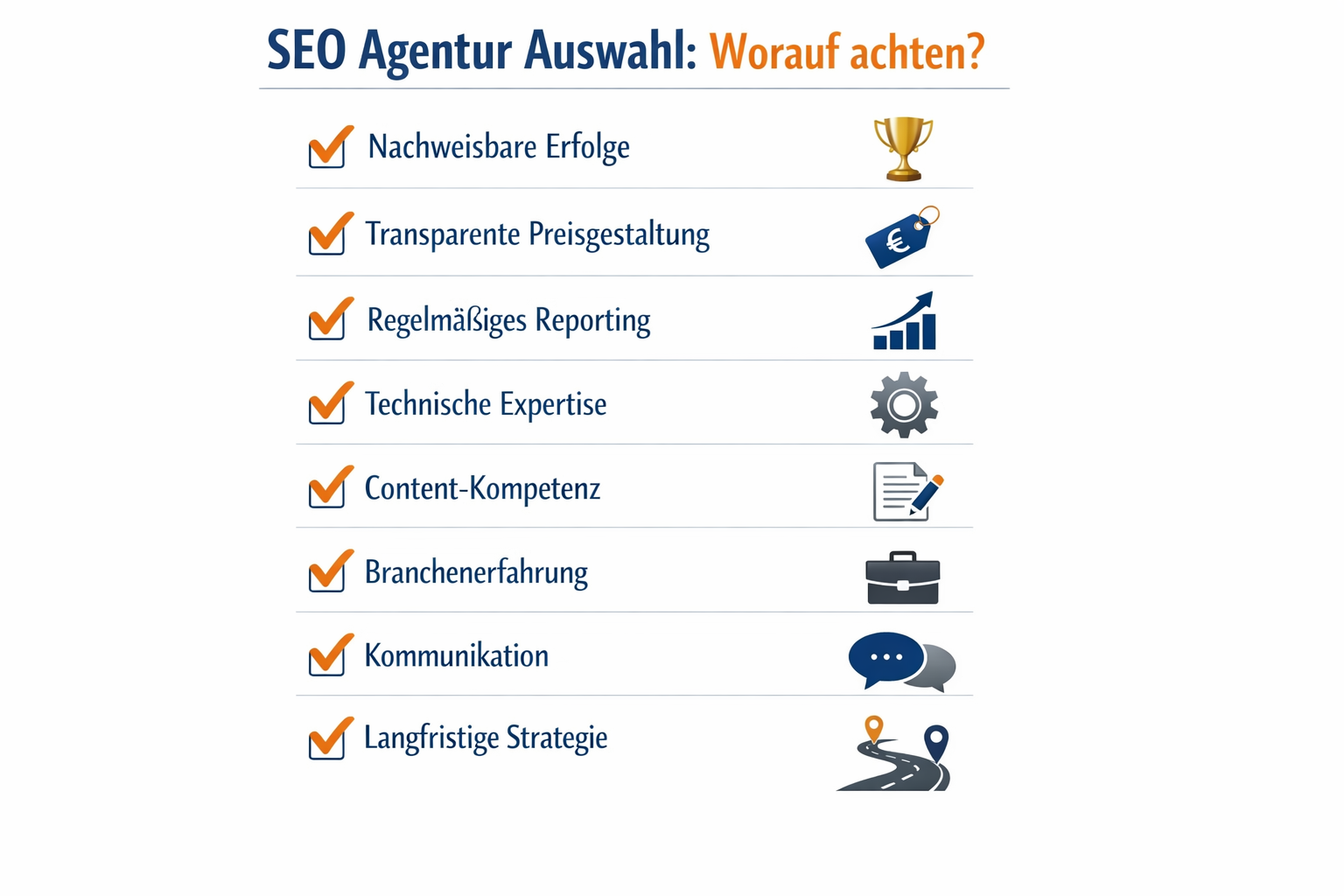
Choosing the right partner for Have SEO created decides the success or failure of your online strategy. In 2026 there will be thousands of providers - from reputable experts to dubious promise sellers. These criteria will help you separate the wheat from the chaff.
Decision criteria in detail
1. Proven successes and references
Reputable SEO service providers can provide concrete case studies:
- Ask for: “Show me 3 projects with measurable ranking improvements in the last 12 months”
- Check: Rankings in your industry (not in completely different areas)
- Red Flag: No concrete numbers, just vague statements like “significant improvements”
2. Transparent working methods and communication
- Detailed strategy: The service provider should provide a clear plan of what will happen in the first 3, 6 and 12 months
- Regular reporting: At least monthly reports with specific metrics (rankings, traffic, conversions)
- Accessibility: Fixed contact person, not constantly changing contacts
- Red Flag: Secretiveness about methods (“We have special techniques that we can’t reveal”)
3. White hat methods and compliance
Ask explicitly about the methods used:
- ✓ Good: Content optimization, technical SEO, natural link building, brand building
- ✗ Bad: Purchased links, private blog networks (PBNs), keyword stuffing, cloaking
Important 2026: Also ask about GEO strategies and AI optimization. Providers who only talk about “keywords” and “backlinks” are not up to date[2][3].
4. Industry experience and specialization
- Generalist vs. specialist: For complex industries (medicine, law, finance), specialized agencies are often better
- Local vs. international expertise: Local SEO requires different skills than international campaigns
- E-commerce experience: If you run a shop, the agency should know product page optimization
For specialized industries see our guides Web design for lawyers or professional websites for doctors.
5. Set realistic expectations
Warning signals from dubious providers:
- “Guaranteed top 3 placement in 4 weeks”
- “We know the Google algorithm exactly”
- “100% success guarantee”
- Extremely low prices (under €300/month)
Realistic statements from reputable providers:
- “First measurable improvements after 3-6 months”
- “We work according to best practices and Google guidelines”
- “SEO is a long-term process with continuous optimization”
6. Check technical competence
Ask technical questions:
- “How do you optimize Core Web Vitals?”
- “What types of schema markup do you use?”
- “How do you approach JavaScript SEO?”
- “How do you optimize for Google AI Overviews and ChatGPT?”[3]
If the answers remain vague or the service provider does not know these terms, there is a lack of technical depth.
7. Contract terms and flexibility
- Notice periods: A maximum of 3 months is fair
- Minimum term: 6-12 months is common and sensible (SEO takes time)
- Ownership: You should retain ownership of all content created
- Red Flag: Multi-year contracts with no exit option
Checklist for the initial consultation
Prepare these questions:
- How many projects in my industry have you successfully managed?
- What specific measures would you implement in the first 3 months?
- How do you measure the success of SEO measures?
- What tools do you use and are the costs included in the package?
- How often do I receive reports and in what form?
- Who is my permanent contact person?
- How do you optimize for AI-powered search systems?[2][3]
- What happens if the collaboration ends – do I keep all content?
Decision rule: Choose a service provider who:
- Has at least 3 proven successes in similar projects
- Transparent methods used
- Realistic time frames communicated (6+ months)
- Communicated regularly and clearly
- Within your budget range (but not suspiciously cheap)
For comprehensive advice you can also contact one CHECK 360° website claim.
What results can you expect from SEO?
Realistic expectations are crucial to a successful SEO partnership. Many companies fail not because of bad SEO, but because of unrealistic hopes and too little breath. Here you will find out what is actually possible - and what is not.
Time frame for measurable results
Months 1-3: Foundation phase
- Technical optimizations are implemented
- The first content pieces go live
- Indexing is improving
- Visible results: Minimal – possibly slight traffic increases (5-15%)
- Important: This phase is investment, not income
Months 4-6: First successes
- Rankings for long-tail keywords improve
- Organic traffic increases noticeably (20-50%)
- First top 10 rankings for niche keywords
- Visible results: Moderate improvements, first leads
Months 7-12: Momentum phase
- Rankings for main keywords improve
- Traffic increases of 50-150% possible
- Domain authority grows
- Visible results: Significant improvements, measurable ROI
12+ months: Establishment
- Stable top rankings for important keywords
- Continuous growth
- Brand building has an impact
- Visible results: Traffic increases of 100-300%+ compared to start
Important: These time frames are for medium competition. In highly competitive industries (finance, insurance, health) it takes longer. Things are faster in niche markets.
Measurable KPIs and metrics
Primary success indicators:
-
Organic traffic
- Measurement: Google Analytics
- Goal: +30-50% in 6 months, +100%+ in 12 months
- But: Not just quantity – quality counts too
-
Keyword rankings
- Measurement: Ranking tools (Ahrefs, SEMrush)
- Goal: Top 10 for 30-50% of target keywords in 6 months
- But: Rankings alone do not bring customers
-
Conversion rate from organic traffic
- Measurement: Google Analytics + CRM
- Goal: At least constant, ideally increasing
- Most important metric: Leads and sales, not just visitors
-
Domain Authority/Trust
- Measurement: Moz Domain Authority, Ahrefs Domain Rating
- Goal: Continuous improvement (slow but steady)
-
AI visibility
- Measurement: Mentions in ChatGPT, Perplexity, Google AI Overviews
- Goal: To be cited as a source[2][3]
- New 2026: Increasingly more important than classic rankings
Secondary indicators:
- Impressions in Google Search Console (valuable even without clicks)[4]
- Backlink growth (quality over quantity)
- Engagement metrics (time on site, bounce rate)
- Brand Searches (searches for your brand name)
Realistic example scenarios
Scenario 1: Local service provider (craftsman, lawyer, doctor)
- Initial situation: No rankings, 50 visitors/month
- After 6 months: 200-400 visitors/month, 5-10 inquiries
- After 12 months: 500-1,000 visitors/month, 15-30 inquiries
- Investment: €800-€1,500/month
Scenario 2: B2B service provider (consulting, software, agency)
- Initial situation: 500 visitors/month, few qualified leads
- After 6 months: 1,000-1,500 visitors/month, 20-40 qualified leads
- After 12 months: 2,500-4,000 visitors/month, 60-100 qualified leads
- Investment: €2,000-€4,000/month
Scenario 3: E-commerce (niche products)
- Initial situation: 2,000 visitors/month, €10,000 in sales
- After 6 months: 4,000-6,000 visitors/month, €20,000-€30,000 sales
- After 12 months: 10,000-15,000 visitors/month, €50,000-€75,000 sales
- Investment: €3,000-€6,000/month
What SEO CANNOT do
Unrealistic expectations:
❌ “We want to be number 1 for 'insurance' in 4 weeks”
Highly competitive keywords require months to years and massive investment.
❌ “Guarantee me 1,000 new customers per month”
SEO can drive traffic, but conversions depend on product, price, UX, and many other factors.
❌ “We only need SEO, no other marketing”
SEO works best as part of a marketing mix. Paid ads, social media and PR increase SEO success.
❌ “After 6 months we can stop SEO and the rankings will stay”
SEO is continuous work. Competitors continue to optimize, algorithms change[1].
Common Error: Companies expect linear improvements. In reality, SEO success is often exponential - little visible for a long time, then suddenly strong growth.
Decision rule: Plan on at least 12 months before expecting full ROI. If you need faster results, combine SEO with Google Ads or social media advertising.
You can find out more about holistic strategies in our guide AI marketing automation.
Having SEO created vs. in-house team: Which is better?
The decision between an external service provider and your own SEO team is one of the most important strategic questions. Both approaches have their justification in 2026 – depending on company size, budget and long-term goals.
Comparison: agency vs. in-house vs. hybrid
| criterion | SEO agency | In-house team | Hybrid model |
|---|---|---|---|
| Costs (annual) | €6,000-€90,000+ | €45,000-€120,000+ per person | €30,000-€80,000 |
| Breadth of expertise | ✓✓✓ Very wide | ✓ Specialized | ✓✓ Medium-wide |
| Industry know-how | ✓✓ Cross-industry | ✓✓✓ Specific | ✓✓ Combined |
| flexibility | ✓✓✓ Very flexible | ✓ Limited | ✓✓ Flexible |
| Training period | ✓✓✓ Ready to use immediately | ✗ 3-6 months | ✓✓ Fast |
| Tool access | ✓✓✓ All premium tools | ✗ Must be purchased | ✓✓ Shared |
| Corporate know-how | ✗ Must be assembled | ✓✓✓ Deep | ✓✓ Evolving |
| Long-term commitment | ✓✓ Can be canceled flexibly | ✗ Employment contract | ✓✓ Flexible |
When does an SEO agency make sense?
Ideal for:
- Small to medium-sized companies (under 50 employees)
- Limited SEO budgets (under €4,000/month)
- Project-based optimization (Website relaunch, new markets)
- Broad expertise required (technical, content, links, local)
- Quick implementation required
Advantages:
- Instant access to expert team
- No recruitment and training costs
- Access to premium tools without your own investment
- Cross-industry knowledge
- Scalable (more or less performance as needed)
Disadvantages:
- Less in-depth product/company know-how
- Divided attention (multiple customers)
- Dependence on the service provider
- Communication overhead
When is an in-house SEO team worthwhile?
Ideal for:
- Larger companies (100+ employees)
- E-commerce with large product catalog
- Content-intensive business models (publishers, portals)
- Long-term SEO strategy (multi-year planning)
- Budget over €5,000/month permanently available
Advantages:
- Deep understanding of products, target groups, companies
- Faster internal coordination
- Complete control over strategy
- Long-term knowledge development in the company
- Direct collaboration with other departments
Disadvantages:
- High fixed costs (salary, tools, further training)
- Recruitment takes 3-6 months
- Limited breadth of expertise (1-2 people cannot cover everything)
- Holiday and sickness cover problematic
- Danger of operational blindness
Realistic in-house costs:
- SEO Manager: €45,000-€75,000/year
- Senior SEO Specialist: €60,000-€90,000/year
- SEO tools: €3,000-€10,000/year
- Further training: €2,000-€5,000/year
- In total: €50,000-€105,000/year for one person
The Hybrid Model: Best of Both Worlds
How it works:
- In-house: SEO manager or coordinator (1 person)
- External: Specialized agency for technical SEO, link building or content production
Advantages:
- Internal coordination and strategy
- External expertise for special tasks
- More cost-effective than a full in-house team
- Flexibly scalable
Example setup:
- In-house SEO manager (€55,000/year) coordinates strategy
- External agency (€1,500/month) for technical SEO and link building
- Freelance content writer (€0.15/word) for SEO texts
- In total: €73,000/year – cheaper than 2 in-house employees, more broadly based
Decision matrix
Choose SEO agency if:
- Your annual budget is under €50,000
- You want to get started quickly (within 4 weeks)
- You need broad expertise
- SEO is not your core business
Choose in-house team if:
- Your annual budget is over €100,000
- You run a large e-commerce or content portal
- SEO is strategically central to your business model
- You plan for the long term (5+ years).
Choose hybrid model if:
- Your budget is €50,000-€100,000/year
- You want strategic control but don’t need all the skills in-house
- You already have a small marketing team
Common Error: Companies hire a single junior person and expect full SEO coverage. One person can master non-technical SEO, content strategy, link building AND daily optimization at the same time in 2026[4].
For smaller companies that... Have a professional homepage created If you want to do this, the agency solution is usually the better choice.
Avoid common mistakes when creating SEO
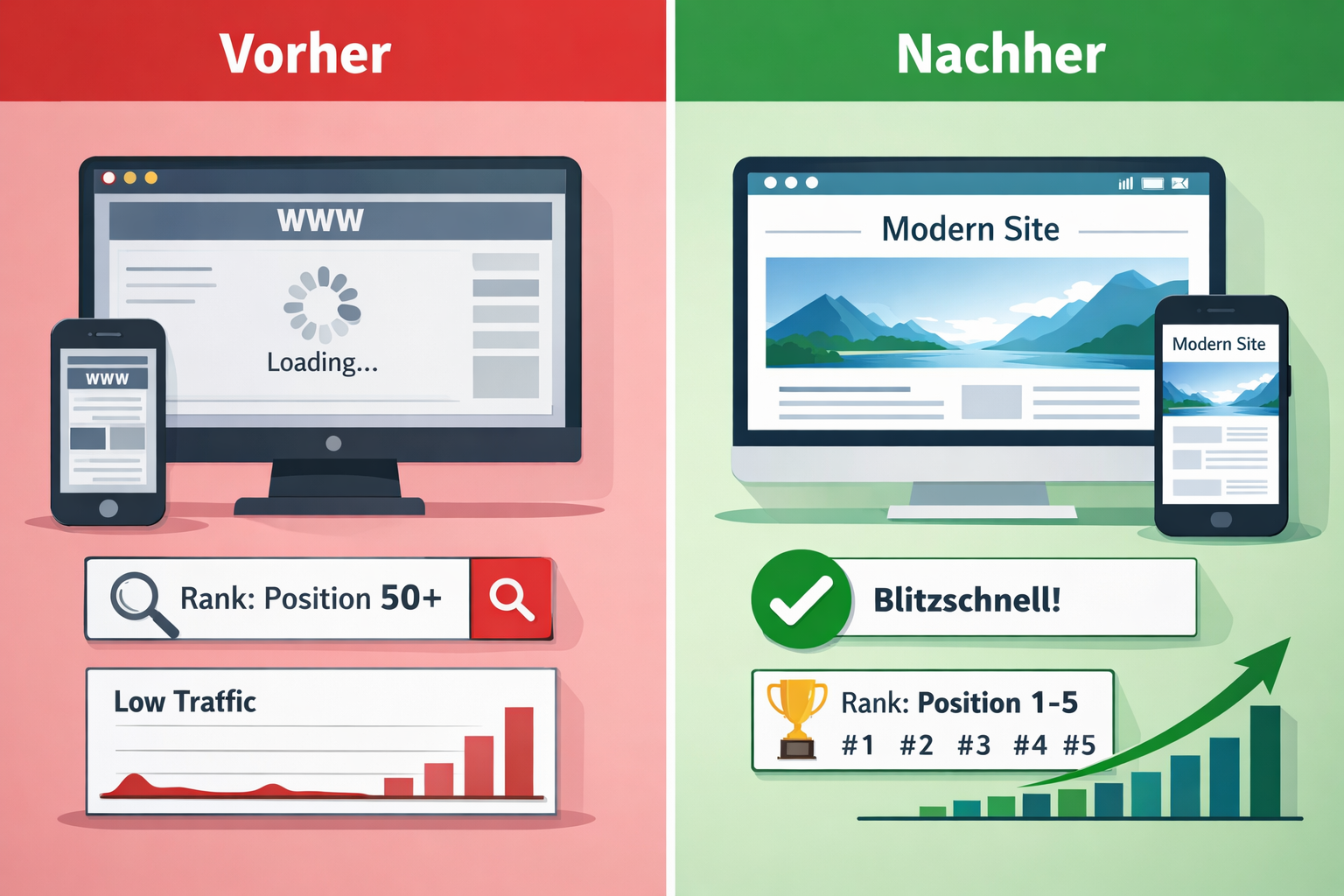
Even when working with professional service providers, mistakes can happen - often on the company side. You should know and avoid these most common stumbling blocks.
1. Too short a breath and unrealistic expectations
The problem:
Many companies expect dramatic results after 2-3 months and terminate the collaboration if these do not occur.
Why it hurts:
SEO takes 6-12 months for significant results. The first months are an investment in the foundation (technical, content, links)[1].
Solution:
- Plan for at least 12 months
- Define realistic milestones for months 3, 6, 9 and 12
- Focus on trend development, not absolute numbers
2. Lack of internal resources and collaboration
The problem:
The SEO agency needs access to CMS, developer resources, product information - but doesn't get this or only gets it with a delay.
Why it hurts:
Technical optimizations are left behind, content cannot be created, strategy remains theoretical.
Solution:
- Appoint an internal contact person with decision-making authority
- Ensure IT team prioritizes SEO changes
- Create clear processes for content approvals
Successful SEO 2026 requires interdisciplinary collaboration between editorial, IT/tech, UX and PR teams[1][4].
3. Focus only on rankings instead of business goals
The problem:
Companies measure success only by keyword positions, not by leads, sales or revenue.
Why it hurts:
Top rankings for irrelevant keywords don’t bring in customers. Position 1 for “cheap shoes” doesn’t help if you sell premium shoes.
Solution:
- Define business KPIs: leads, sales, revenue from organic traffic
- Prioritize purchase-ready keywords (transactional intent)
- Measure conversion rate, not just traffic
4. No clear content strategy
The problem:
Content is created ad-hoc without strategic planning – sometimes a blog post here, sometimes a product page there.
Why it hurts:
Without thematic clusters and logical structure, the semantic depth that Google and AI systems expect in 2026 is missing[2].
Solution:
- Develop topic clusters (pillar pages + supporting content)
- Create content calendars for 6-12 months
- Focus on quality rather than quantity (better to have 2 excellent articles than 10 mediocre ones)
5. Neglecting technical basics
The problem:
Companies invest in content, but technical problems (slow loading time, incorrect indexing, mobile problems) remain unsolved.
Why it hurts:
Even the best content will not rank if there is no technical basis. Core Web Vitals, Structured Data and JavaScript SEO will not be optional in 2026[3].
Solution:
- Conduct initial technical audit
- Prioritize technical fixes over content production
- Implement monitoring for technical metrics
For technical optimization see our guide to Website speed optimization.
6. Ignoring AI optimization and GEO
The problem:
SEO strategy only focuses on traditional Google rankings, ignores ChatGPT, Perplexity and Google AI Overviews.
Why it hurts:
AI-powered search is becoming increasingly dominant. Websites that are not optimized for citability in AI systems lose visibility[2][3].
Solution:
- Structure content for AI understandability (clear paragraphs, definitions, lists)
- Implement comprehensive schema markup
- Build authority and E-E-A-T signals
- Test if your content is cited in ChatGPT/Perplexity
7. Choose the cheapest solution
The problem:
Opting for the cheapest provider (€200-€300/month) instead of quality.
Why it hurts:
Serious SEO work takes time. At €300/month, a maximum of 3-4 hours can be invested - not enough for real results. Black hat methods or automated tools are often used here[1][10].
Solution:
- Invest at least €800-€1,200/month on local SEO
- For highly competitive industries: €2,000-€5,000/month
- Check references and working methods, not just price
8. No regular success monitoring
The problem:
Reports are not read, developments are not questioned, strategy is never adjusted.
Why it hurts:
Without control, you won't notice whether the agency is delivering or time is being wasted.
Solution:
- Monthly review calls with the agency
- Define clear KPIs and goals
- Critically question measures: "Why are we doing this? What is the expected result?"
9. Put all eggs in one basket
The problem:
100% of the marketing budget goes into SEO, other channels are neglected.
Why it hurts:
SEO takes time. Without other traffic sources (paid ads, social, email), there is no short-term sales.
Solution:
- Combine SEO with Google Ads for instant traffic
- Use social media for brand building (boosts SEO)[4]
- Build an email list for direct customer communication
Decision rule: SEO should make up 30-50% of your digital marketing budget, not 100%.
FAQ: Have the most important questions about SEO created
How long does it take for SEO to show results?
The first measurable improvements are visible after 3-6 months, significant results after 6-12 months. In highly competitive industries it can take 12-18 months. SEO is not a sprint, but a marathon - but with sustainable ROI.
How much does professional SEO cost per month?
Reputable SEO services cost between €800 and €7,500+ per month, depending on the scope and competition. Local companies often start at €800-€1,500, medium-sized B2B companies at €2,000-€4,000, e-commerce and corporations at €4,000-€15,000+.
Can I do SEO myself?
Basic SEO is doable by yourself if you invest time (10+ hours per week) and continually educate yourself. For highly competitive markets or if your business relies heavily on organic traffic, professional help is almost always worth it.
How do I recognize dubious SEO providers?
Red flags are: guarantees for top rankings in a few weeks, extremely low prices (under €300/month), secrecy about methods, no verifiable references, focus only on rankings instead of business goals. Reputable providers communicate transparently and set realistic expectations.
What is the difference between SEO and SEA?
SEO (Search Engine Optimization) is organic, unpaid optimization for long-term visibility. SEA (Search Engine Advertising) are paid ads for instant traffic. SEO takes time, but is more sustainable. SEA delivers immediate results but has ongoing costs. The combination of both is ideal.
Do I also need SEO for local businesses?
Yes, SEO is especially important for local businesses. Local SEO with Google Business Profile, local keywords and review management brings customers from the area. 46% of all Google searches have local intent - without SEO you're wasting these opportunities.
How important are backlinks in 2026?
Backlinks remain important, but quality clearly beats quantity. A link from a trustworthy source (major media, specialist portals) is worth more than 100 links from inferior sites. Even more important are 2026 brand mentions and E-E-A-T signals[1][2].
What is Generative Engine Optimization (GEO)?
GEO is the optimization for AI-powered answer engines such as ChatGPT, Perplexity and Google AI Overviews. Content must be structured in such a way that AI systems can understand it, summarize it and cite it as a source[2][3]. GEO will be just as important as traditional SEO in 2026.
Can SEO also harm my website?
Yes, dubious black hat methods (purchased links, keyword stuffing, cloaking) can lead to Google penalties, which can massively worsen rankings or lead to complete de-indexing. That's why choosing a reputable service provider is crucial[1][10].
How do I measure SEO ROI?
You calculate ROI as: (revenue from organic traffic – SEO costs) / SEO costs × 100. Track conversions from organic traffic in Google Analytics, assign them values (lead value, average purchase value) and compare with your monthly SEO investments.
Is SEO also worthwhile for small businesses?
Absolutely. Small local companies in particular benefit from SEO because they can become visible in their region with a manageable budget (€800-€1,500/month). Competition is often lower locally than nationally, and conversion rates for local searches are high.
What happens if I stop SEO?
Rankings are not automatically retained. Competitors continue to optimize, Google algorithms change. Without continuous work, rankings usually drop within 6-12 months. SEO is like fitness – once built, it requires maintenance, but less effort than building it.
Summary: Have SEO created successfully in 2026
Have SEO created In 2026, it will be more complex, but also more effective than ever. The landscape has evolved from pure keyword optimization to a holistic strategy that combines technical excellence, high-quality content and brand building across multiple platforms.
The most important findings:
- AI integration is essential: Optimization for ChatGPT, Perplexity and Google AI Overviews is just as important as traditional rankings[2][3]
- Quality beats quantity: E-E-A-T signals, trustworthy brand mentions and thematic depth are more important than keyword density[1][2]
- Technical basics are mandatory: Core Web Vitals, structured data and JavaScript SEO are no longer optional extras[3]
- Long-termism pays off: Plan for at least 12 months, but the ROI is sustainable and grows exponentially
- Interdisciplinary collaboration: Successful SEO 2026 combines content, technology, UX and PR[1][4]
Your next steps
If you want to have SEO created:
-
Define your goals: What do you want to achieve? More leads, higher sales, better brand awareness?
-
Set a realistic budget: At least €800-€1,200/month for local companies, €2,000-€5,000 for medium-sized B2B companies
-
Research 3-5 potential service providers: Check references, case studies and working methods
-
Conduct initial discussions: Use the checklist from this guide to make the right choice
-
Start with an audit: Have your website analyzed to identify potential
-
Plan long-term: Agree at least 12 months of collaboration with clear milestones
-
Stay involved: Monthly reviews, critical questions, continuous optimization
Most important warning: Avoid cheap offers under €300/month and promises of top rankings in a few weeks. Serious SEO takes time, expertise and fair pay.
Best chance for success: Choose a service provider with proven success in your industry, transparent working methods and realistic expectations. Combine SEO with other marketing channels for faster initial success.
SEO 2026 is no longer a secret – it is technical excellence combined with strategic thinking. Anyone who invests today will reap sustainable visibility and qualified traffic tomorrow that actually converts into customers.
Ready to start? Make an appointment now for a free initial consultation or start with one CHECK 360° websiteto analyze your current SEO potential.
References
[1] Seo Trends – https://datenbasiert.de/seo/seo-trends/
[2] Seo Trends – https://www.seo-kueche.de/ratgeber/seo-trends/
[3] Seo 2026 – https://www.checkdomain.de/blog/online-marketing/seo-suchmaschinenOptimization/seo-2026/
[4] Seo This Year – https://www.evergreen.media/ratgeber/seo-dieses-jahr/
[10] Ki Seo Trends 2026 – https://woxow.com/ki-seo-trends-2026/
KI-Offenlegung: HINWEIS: Bilder wurden mit KI erstellt or bearbeitet und sind keine realen Abbildungen. Teile der Texte wurden mit Hilfe von KI erstellt und redaktionell von einem Mensch bearbeitet.